
























Blood Moon Tonight: Total Lunar Eclipse Turns March 3 Full Moon Copper-Red for Billions

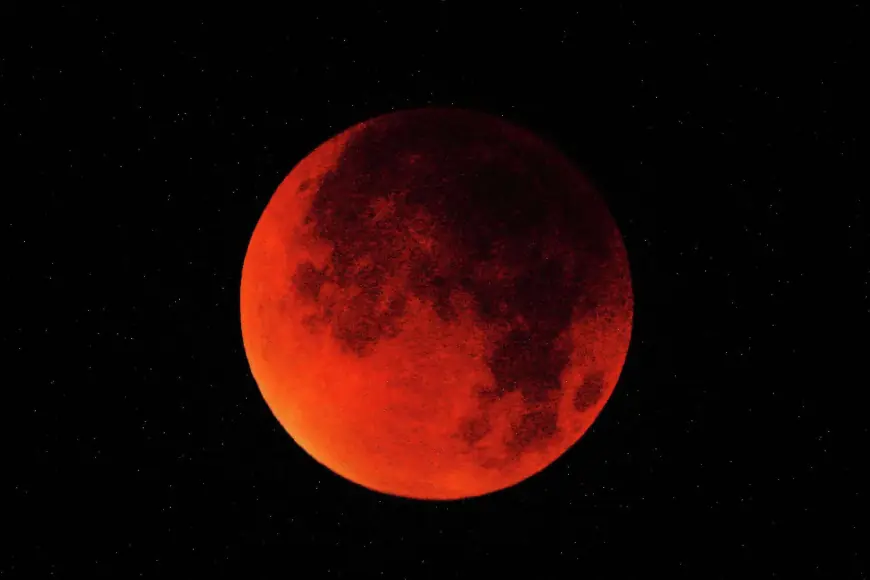
A Blood Moon will wash over the sky overnight into early Tuesday, March 3, 2026, as a total lunar eclipse pushes the full Moon deep into Earth’s shadow and tints it a coppery red. For viewers in the U.S. and Canada, the best viewing comes in the pre-dawn hours Tuesday (ET)—the kind of alarm-clock eclipse that rewards anyone willing to step outside for an hour and watch the Moon visibly change.
The headline for skywatchers is simple: totality begins at 6:04 a.m. ET and ends at 7:03 a.m. ET, with the Moon spending roughly 58–59 minutes fully eclipsed. In other words, you don’t need perfect timing—but you do want to be outside during that one-hour window if you want the deepest “blood” color.
What time is the Blood Moon in ET?
Here are the key moments that matter most for most people in Eastern Time:
-
Totality begins: 6:04 a.m. ET
-
Maximum eclipse (deepest red): around the middle of totality
-
Totality ends: 7:03 a.m. ET
The broader eclipse lasts much longer than totality, with earlier partial stages starting well before sunrise for North America. If you’re trying to plan around work or school, the “money hour” is still that 6:04–7:03 a.m. ET block—short, dramatic, and unmistakable.
Where the total lunar eclipse is visible
This eclipse’s visibility footprint is wide: North America, parts of Central America, East Asia, and Australia/Oceania are among the regions positioned for strong views, depending on local moonrise/moonset timing. For North America, the catch is that it’s a morning event—meaning cloud cover, low-horizon haze, and local weather can matter more than usual.
That geographic spread is why you’ll see different “best places” lists: some locations get the Moon high in a dark sky during totality; others get a lower Moon closer to sunrise, which can be visually stunning but harder to photograph cleanly. Either way, the eclipse is safe to watch with the naked eye—no special glasses required.
Why the Moon turns red
The Blood Moon color isn’t the Moon emitting red light—it’s Earth acting like a lens and a filter. During totality, the Moon sits in Earth’s umbra (the darkest part of the shadow). Sunlight that does reach the Moon has been bent through Earth’s atmosphere, and the atmosphere preferentially scatters blue light, letting more red-orange wavelengths through. The result is a Moon that can look copper, brick-red, or even brownish depending on how much dust, cloud, or haze is in Earth’s atmosphere along the ring of sunrises and sunsets around the planet.
That variability is why two people can describe the same eclipse differently. A cleaner atmosphere can produce a brighter, more orange totality; more aerosols or haze can deepen the red and dim the Moon.
How to watch and how to photograph it
Watching is easy: step outside, find the Moon, and give your eyes a minute to adjust. The best “upgrade” is simply getting away from bright lights so the color reads more clearly.
If you want photos, the eclipse behaves less like a bright full Moon and more like a dim landscape at dawn. That means:
-
Use a tripod (even a small one helps).
-
Longer exposures may be needed during totality, because the Moon gets dramatically darker.
-
Binoculars can make the color gradient and edge shadow much richer to the eye.
One more wrinkle that could delight early risers: under the right horizon conditions, some observers can briefly see the eclipsed Moon while sunrise begins—a rare-looking overlap effect that makes the scene feel almost staged.
What happens next
This eclipse is also showing up in forecasts as a “don’t miss it” event for a practical reason: the next total lunar eclipse isn’t until New Year’s Eve 2028 into New Year’s Day 2029, so the calendar gap is unusually long for casual skywatchers.
Four things will determine how memorable your Blood Moon is:
-
Cloud cover at dawn: clear skies turn this into a front-page celestial show; low clouds can wipe it out in minutes.
-
Moon altitude during totality: higher Moon = easier viewing and better photos; low Moon = more atmospheric drama and more visual distortion.
-
Atmospheric clarity: haze can deepen the red while dimming the Moon; clean air can make it brighter and more orange.
-
Whether you catch the one-hour totality window: that’s where the “Blood Moon” name earns itself.