

























Dubai Airport Closed: Abu Dhabi and Doha Absorb the Shock as Gulf Carriers Halt Flights In and Out

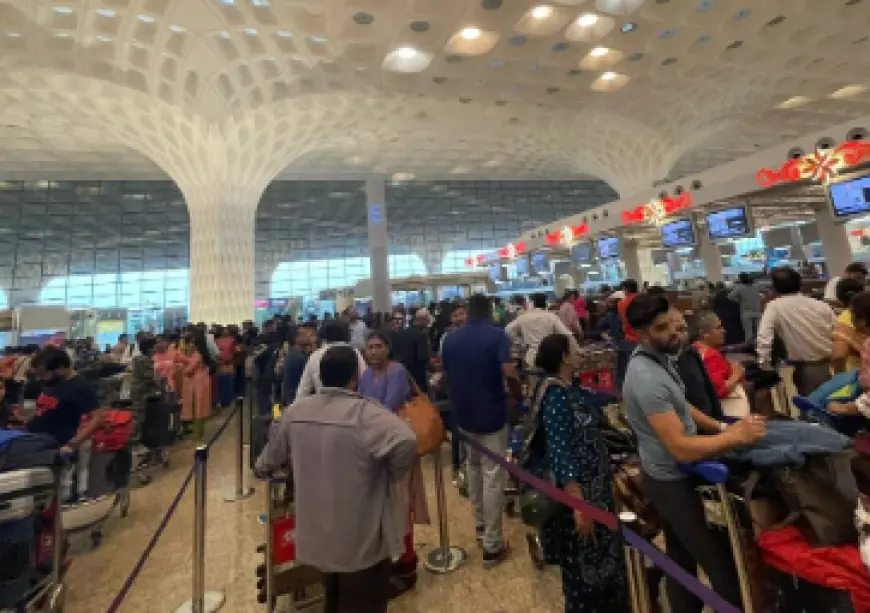
Dubai airport closed — again — became the defining travel headline on Monday, March 2, 2026, as regional airspace limits and security alerts forced the world’s busiest long-haul connecting corridor into a near standstill. The practical impact is bigger than Dubai itself: when a mega-hub can’t reliably handle flights in and out, airline networks fracture globally, leaving aircraft, crews, and passengers stranded far from where the system needs them.
By late morning Eastern Time (ET), airlines were still treating the disruption as structural rather than a brief delay. Dubai’s main airport and the city’s secondary field remained effectively offline for normal commercial schedules, while nearby hubs — Abu Dhabi and Doha — were managing a partial, uneven role as pressure valves. The end result is the worst kind of aviation problem: not a single cancellation, but a cascade where one missed “bank” of connections breaks thousands of onward itineraries.
Abu Dhabi and Etihad: Limited Restarts, Commercial Uncertainty
The most closely watched question Monday was whether Abu Dhabi could re-open enough to relieve the pressure on the region’s travel arteries. Etihad began operating a limited set of movements — including repositioning flights and select services under tight coordination — but the bigger commercial picture remained constrained, with normal schedules still heavily disrupted.
What matters here is not just whether a flight departs, but whether it can depart and arrive into a stable downstream network. A single Etihad departure to Europe doesn’t solve the system if connecting passengers can’t reach Abu Dhabi in the first place, or if return sectors can’t safely route back. This is why airlines tend to restart in stages: first they move aircraft to where they’re needed, then they repatriate stranded travelers, and only later do they rebuild regular timetables.
For travelers, Abu Dhabi’s status is a mixed signal. It suggests authorities see some corridors as workable, but it does not guarantee that a ticket will behave like a normal ticket. Even after airports “reopen,” carriers can keep canceling flights simply because crews are out of position, duty-time limits have been breached, or aircraft are stranded at diversion airports.
Qatar Airways and Doha: A Hub That Can’t Hub
Qatar Airways has treated the Doha situation with maximum caution, keeping operations suspended while waiting for a formal all-clear on airspace. That decision is painful — Qatar’s model depends on moving massive volumes of connecting passengers through a tight window — but it is also rational. A hub can’t run on improvisation. You either have predictable, safe routings, or you don’t have a hub.
Doha’s pause has a second-order consequence: it removes one of the primary alternatives travelers and airlines would normally use when Dubai tightens. That pushes more rerouting pressure onto non-Gulf gateways — from Turkey and the eastern Mediterranean to European hubs — and forces longer, fuel-heavier paths that reduce available aircraft hours for other routes.
The next practical milestone for Qatar Airways isn’t a press statement; it’s when the airline republishes a stable schedule and stops extending suspensions in short blocks. That’s the moment the industry interprets as confidence rather than hope.
Emirates, British Airways, Lufthansa, Singapore Airlines: The Global Ripple
When Emirates pauses, the effect is immediate across continents because its network is designed around Dubai as a switching station. Flights that were supposed to funnel through Dubai don’t just disappear; they leave passengers and cargo stuck at origin points or stranded mid-journey at diversion airports. Rebooking becomes a game of scarce inventory, especially in premium cabins and on long-haul routes where there are fewer daily frequencies.
International partners and competitors are reacting in parallel. British Airways and Lufthansa have scaled back or suspended certain routings through the region, not only because of destination risk but because detours can make some schedules operationally impossible (fuel planning, alternates, crew hours). Singapore Airlines, operating ultra-long-haul routes that often thread sensitive air corridors, has also had to adapt — with reroutes that can quietly turn a “normal” flight into an endurance event for both aircraft utilization and passenger patience.
This is where “in and out” becomes the key phrase. Airports don’t need to be physically damaged to be functionally closed. If aircraft cannot get in and out reliably, the terminals become waiting rooms, and the network logic collapses.
Flight Radar Reality: Diversions, Stranded Aircraft, and the Next 48 Hours
Anyone watching “flight radar” maps can see the story without a single headline: clusters of diversions to secondary airports, long arcs around closed corridors, and unusual ground holds where aircraft are parked far from home bases. But the visual drama hides a more important operational truth: the hardest part is not stopping flights — it’s restarting them.
A restart has to solve four problems at once:
-
Aircraft positioning: planes must be where the schedule says they are. Right now, many aren’t.
-
Crew legality: pilots and cabin crew must be rested and within duty limits. Disruptions blow up those rules fast.
-
Airport capacity: diversion airports can become saturated, slowing turnarounds and refueling.
-
Passenger reaccommodation: the backlog grows faster than airlines can clear it, especially when multiple hubs are constrained simultaneously.
That’s why the next 48 hours matter more than the last 48. If safe corridors reopen and stay stable for a full operating cycle, Emirates, Etihad, and Qatar Airways can begin rebuilding connection banks — and the world’s long-haul system starts knitting itself back together. If corridors remain uncertain, the industry shifts into an extended reroute era: fewer frequencies, longer flight times, higher costs, and persistent cancellations that can continue even after airports technically “reopen.”
For travelers, the most realistic expectation is a staggered return: first repatriation and repositioning, then limited commercial service, then — only after the network is rebalanced — something that resembles normal. Until then, “Dubai airport closed” isn’t just a local status update. It’s a global connectivity problem with consequences stretching from Europe’s morning departures to Asia’s overnight arrivals.