

























Lunar Eclipse Will Produce Blood Moon and Rare Selenelion Over Boston; Some Web Access Interrupted by Cloudflare Error

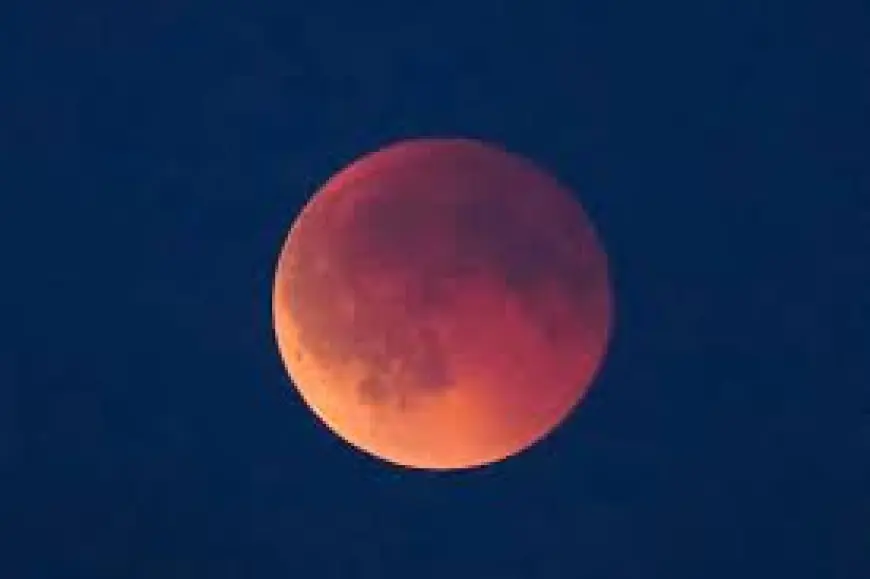
Updated on March 2, 2026 at 8: 27 a. m. EST — A total lunar eclipse will be visible in Massachusetts before sunrise Tuesday morning, offering a blood moon and a brief selenelion that matter because the timing aligns the setting eclipsed moon with the rising sun.
Lunar Eclipse in Boston: Timing and Visibility
The total phase of the eclipse will be visible in the Boston area from 6: 04 a. m. to 7: 02 a. m. Tuesday, with the partial eclipse beginning at 4: 50 a. m. The event will last just about an hour in totality, and the blood moon coloration will be visible for nearly that hour. Sunrise in Boston is 6: 16 a. m. and moonset is 6: 17 a. m., creating a window of roughly a couple of minutes when both the eclipsed moon and the rising sun appear on the horizon.
Selenelion and the "Worm Moon" Concurrence
The rare selenelion happens when the totally eclipsed moon and the sunrise are visible at the same time on opposite horizons; the East Coast will get a brief glimpse of that concurrence. The full moon on the same day is the March full moon, called the "worm moon, " a name tied to thawing ground and the emergence of earthworms. Combined, observers will see a totally eclipsed full moon, a blood moon, a worm moon and a selenelion in a single early-morning sequence.
Viewing Conditions, Safety and Practical Advice
Viewers are advised to seek high ground with unobstructed views of both east and west horizons. No special glasses or equipment are required to watch this lunar eclipse, in contrast with solar events that do require eye protection. Cloud cover is the primary obstacle; forecasts suggest clearer skies farther east in Massachusetts, with the coastline and southern New Hampshire expected to be clearest by 6 a. m. Light pollution should not be a major issue for those near the city, but temperatures will be very cold, with wind chills in the single digits reported for the viewing period.
Frequency and Calendar Context
Lunar eclipses occur with some regularity: there can be about two to five each year when partial eclipses are included. Total lunar eclipses, however, are less frequent—occurring roughly twice every few years. The next total lunar eclipse visible in the United States is on June 26, 2029. By contrast, the last notable total solar eclipse in the United States took place in April 2024; the next total solar eclipse visible somewhere in the United States will occur in 2033 for Alaska, while the rest of the country will wait until 2045.
Photography, Submissions and Web Access Notes
Photographers are invited to submit images to the WBZ Weather Watchers Network and on X at @WBZweather. For those looking for online coverage or photo galleries, be aware that some web pages may be temporarily unavailable because of a connection issue: an unknown error between Cloudflare and an origin web server can prevent a page from displaying. The problem stems from a mismatch between Cloudflare's cache and the origin web server, and Cloudflare monitors and automatically investigates these errors.
Cloudflare Error: How It Affects Online Viewing
Because the connection issue prevents the web page from being displayed, users attempting to access affected content will see an error notice rather than image galleries or live updates. To aid the troubleshooting process, operators are advised to pull the corresponding error log from their origin web server and submit it to the support team, including the Ray ID printed with the error. The Cloudflare Ray ID shown with this incident is 9d60d861c8112bc0; the page also lists "Your IP: Click to reveal 2a01: 4f8: c014: 863e::1" and states "Performance & security by Cloudflare. "
What makes this notable is the collision of a rare sky spectacle with practical hurdles: a narrowly timed selenelion that depends on precise sunrise and moonset minutes, and parallel technical interruptions that can impede shared coverage. Despite potential web interruptions and cold conditions, anyone with an unobstructed view of the horizons can look to the sky just after 6 a. m. to witness the sequence.