























Indian Wells Opens With Novak Djokovic Chasing a Reset on Tennis’s Toughest Hard-Court Stage

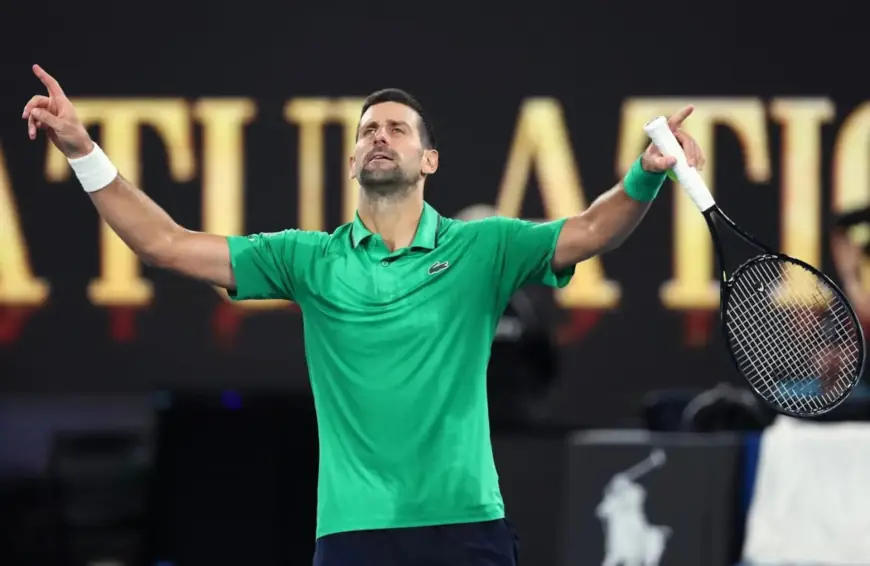
Indian Wells begins its main stretch this week in the California desert with Novak Djokovic arriving as both a top seed and a man carrying a rare recent blind spot: he hasn’t won the tournament since 2016 and, in the years since, has repeatedly fallen short of the late rounds by his standards. The draw ceremony is scheduled for Monday, March 2, at 6 p.m. ET, with the tournament set to run March 4–15 at the Indian Wells Tennis Garden.
For Djokovic, the timing matters. After opening 2026 with a runner-up finish at the Australian Open, Indian Wells becomes the first major test of the “Sunshine Swing” and a chance to bank Masters points early—especially important in a season where small dips can swing the top three.
Novak’s decade-long Indian Wells problem
The storyline around “Novak” at Indian Wells isn’t about whether he can still beat elite opponents—he can—but whether he can solve the specific rhythm of this event again. The desert conditions tend to reward patience, margin, and clarity in extended rallies, and Djokovic’s post-2016 record here has been defined by stop-start momentum rather than the surgical control he’s shown at other Masters stops.
That history turns every early match into a referendum. Indian Wells is a place where top seeds can look ordinary for a set while they calibrate timing, and where a single loose service game can turn into a three-set grind. For a player who’s made a career out of minimizing variance, the tournament has lately demanded more improvisation than usual—especially against younger hitters comfortable taking the ball early and rushing patterns at net.
The psychology is subtle: “redemption” isn’t about a headline moment; it’s about clearing the round-of-16 barrier and proving the event no longer sits in the “odd results happen here” category.
Indian Wells draw day and the seed picture
Monday’s draw slots Djokovic into a bracket that, on paper, is stacked at the top. The field is headlined by the current tour leaders and other top contenders expected to be on-site, with the event positioned as the first Masters 1000 of the season’s American hard-court run.
The practical consequence is that Djokovic’s path will likely include at least one high-pace baseliner by the middle rounds, the kind of opponent who can make Indian Wells feel slow until it suddenly doesn’t. The tournament’s structure also tends to compress recovery time once the second week begins, which means efficiency early is a competitive advantage: the players who avoid marathon matches in the first few rounds often look like different athletes by the quarterfinals.
Beyond the top seeds, the event has also leaned into wild cards and fresh storylines, including high-profile veteran and youth entries that add unpredictability to early rounds and qualifying. While these players are not supposed to derail a top seed, they can complicate rhythm—especially if the match becomes more about managing awkward patterns than outgunning the opponent.
What “Indian Wells” means for Djokovic’s 2026 calendar
In the ranking and scheduling chess of 2026, Indian Wells is less a standalone tournament than a hinge. Djokovic’s season has already shown volatility—withdrawals early in the year, followed by a deep major run—and Indian Wells is the first opportunity to convert that form into Masters-level points before Miami arrives.
There’s also a style question embedded in the week. Indian Wells often exposes two things: return positioning under slower conditions, and the willingness to finish points at net when baseline exchanges get sticky. Djokovic has historically been great at both, but the margins tighten when the draw is filled with players who can take time away even on a slower court.
Four forward scenarios are now in play, and each has a clear trigger:
A clean run to the second week if Djokovic serves efficiently in his opener and avoids long third sets in the first two matches—an indicator he’s timing returns and controlling pace early.
A “one bad set” wobble if he’s forced into repeated tie-breaks; that usually signals he’s not getting enough free points or is sitting slightly off on second-serve returns.
A statement win if he draws a top-10 caliber hitter in the round of 16 or quarterfinals and wins in straight sets; that would reset the narrative that Indian Wells has been a problem venue since 2016.
Another early exit if he gets pulled into a physical, high-variance match before the quarterfinals; that’s the pattern Indian Wells has punished him with in recent years, and it would sharpen questions about whether this stop is becoming uniquely resistant to his usual control-first game.
Either way, the draw on Monday night is the starting gun. For Djokovic, Indian Wells in 2026 isn’t about proving he’s still elite. It’s about proving this particular tournament can be made predictable again—because if it can, the rest of the spring hard-court swing starts to look a lot more manageable.