




















Kelly Osbourne Fires Back After BRIT Awards Appearance Sparks Fresh Body-Shaming Storm

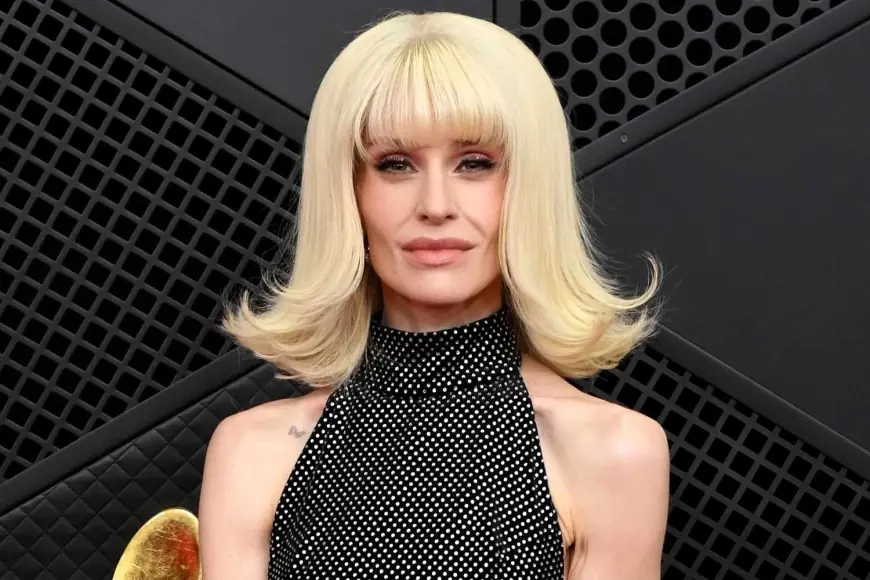
Kelly Osbourne has pushed back publicly after her appearance at the 2026 BRIT Awards triggered a wave of comments about her weight and health, calling the reaction dehumanizing and saying she’s currently living through “the hardest time” of her life. The remarks came in the immediate aftermath of the ceremony, where she appeared in person to honor her late father, Ozzy Osbourne, placing the focus squarely on grief and boundaries rather than speculation about her body.
What might have been a straightforward tribute moment turned into a familiar internet pattern: a red-carpet photo becomes a referendum, and the person in it is treated like a topic instead of a human being. Osbourne’s response landed because it didn’t just swat away critics—it challenged the incentive structure that keeps this cycle going.
BRIT Awards backlash and grief
The BRIT Awards appearance carried emotional weight before the cameras even started flashing. Osbourne stepped into a highly public setting tied directly to her father’s legacy, with the kind of scrutiny that follows famous families long after the headline-making years of reality television. In that context, the backlash wasn’t merely rude—it collided with mourning.
Her message made a clear distinction: public attention is one thing; weaponizing someone’s pain is another. By framing the comments as cruelty aimed at a person who is “clearly going through something,” she underlined what often gets lost online—people don’t grieve on a schedule that matches a news cycle, and they don’t owe proof of suffering to strangers.
That matters because tributes can create a paradox for celebrity families. Showing up keeps a loved one’s name honored in the room. But showing up also exposes them to the most transactional part of fame: images stripped of context and recirculated for engagement. Osbourne’s pushback is, in part, an attempt to reclaim context.
“Too thin” talk and the Ozempic shadow
The commentary around Osbourne’s appearance quickly drifted into familiar modern shorthand: accusations of cosmetic intervention, assumptions about medications used for weight loss, and amateur diagnosis dressed up as concern. It’s a trend that has expanded far beyond her, fueled by a culture that treats sudden physical change as a mystery to solve rather than a private matter.
For public figures, the “too thin” discourse is uniquely no-win. If they say nothing, the speculation fills the vacuum and hardens into a story. If they respond, the response becomes “evidence” that something must be wrong. Osbourne chose the only lane that reliably breaks the loop: not debating the specifics, but challenging the behavior—why people feel entitled to pick apart a body, and what it says about them when they do.
There’s also a secondary dynamic at play: policing thinness can be a socially acceptable mask for the same body surveillance that once targeted weight gain. The language changes—“worried,” “just asking,” “concerned”—but the underlying transaction remains control through commentary.
What this means for Kelly Osbourne’s next move
Osbourne’s statement is likely to have two practical effects. First, it draws a line that can shape how she handles public appearances in the near term: fewer informal photo moments, tighter messaging, and more controlled settings where she can speak about her father on her own terms. Second, it puts pressure on the gatekeepers around celebrity images—stylists, event organizers, and the broader publicity ecosystem—to acknowledge that “visibility” is not neutral when it reliably triggers abuse.
In the coming weeks, several scenarios could follow, depending on what Osbourne does next and how the conversation evolves:
If she returns quickly to public events, it signals she’s refusing to be pushed into hiding—turning her response into a claim of space rather than retreat.
If she limits appearances, it won’t necessarily mean the criticism “won”; it could indicate a decision to protect emotional bandwidth during an already punishing period.
If her family or representatives amplify the message, the story may shift from one celebrity’s clapback to a broader conversation about harassment tied to grief and mental health.
If the commentary intensifies, it could force platforms and event institutions to confront moderation and image distribution practices that currently reward the worst behavior with the widest reach.
Osbourne has spent much of her career being treated as public property—first as a teenager in a famous household, later as a media personality whose look was constantly up for debate. What’s changed is the speed and scale of judgment, and the way modern body discourse pretends to be compassionate while functioning as spectacle. Her response wasn’t a plea for praise; it was a demand for basic decency at a moment when she says she needs support, not scrutiny.
The immediate question isn’t whether the internet stops—it won’t. The real test is whether her boundary-setting changes the cost of cruelty, even slightly, by making it harder for people to pretend their comments are harmless.