
























Brent Crude Price jumps as ships are attacked and shipping near Strait of Hormuz grinds to a halt

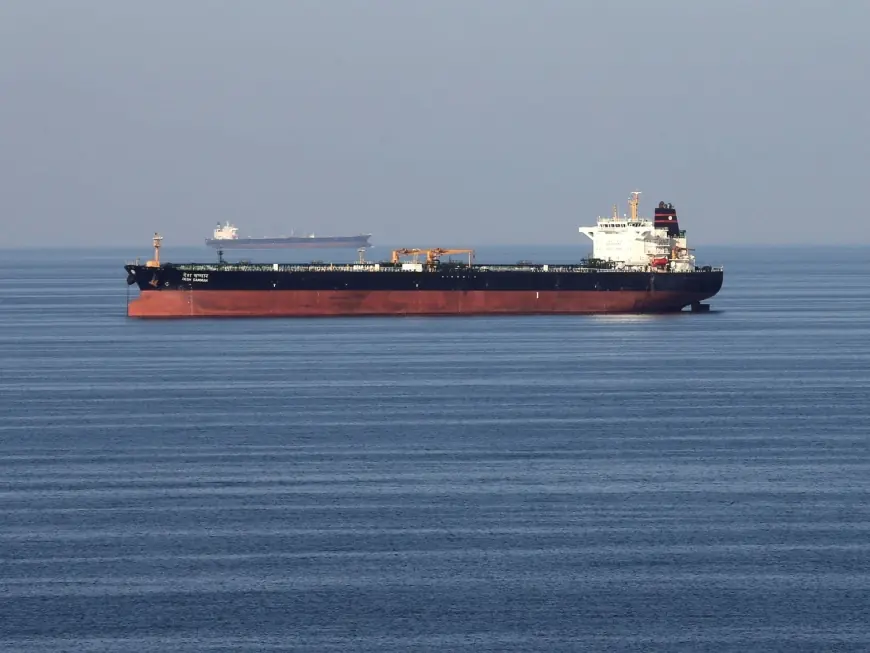
The brent crude price spiked as military strikes and retaliatory attacks across the Middle East disrupted shipping through the Strait of Hormuz, forcing vessels to anchor and piling tankers on either side of the waterway. The moves pushed oil, natural gas and gold higher while stock markets in Europe and Asia slipped.
Attacks near the Strait of Hormuz force vessels to anchor and halt traffic
At least three ships were attacked near the Strait of Hormuz at the weekend, and two vessels travelling through the Strait were attacked on Sunday. The UK Maritime Trade Operations Centre said two vessels had been struck and that an "unknown projectile" exploded in very close proximity to a third. Iran warned vessels not to pass through the crucial waterway in the south of the country, and international shipping has almost come to a standstill at the entrance to the Strait.
Brent Crude Price and market moves in London, Paris and Frankfurt
The shock to shipping coincided with sell-offs in equities: the FTSE 100 fell 1% in London, with the owner of British Airways among the biggest fallers after disruption to Middle East airspace. Banks including Barclays, Standard Chartered and HSBC saw share prices slide. In mainland Europe, the CAC-40 fell 1. 8% in France while Germany's Dax extended declines to fall 2. 1% in early afternoon trading.
Price swings across oil, gas and gold as benchmarks jump then retreat
Markets first pushed Brent crude up sharply: one move sent Brent up 10% to touch more than $82 a barrel on Monday after the initial attacks, though Brent later fell back to $79 a barrel. Another snapshot of trading showed a barrel of Brent at $79. 41 per barrel early on Monday, a rise of 9% from a recent Friday level. US-traded light crude was recorded up at different levels: one measure showed US-traded oil up around 7. 6% at $72. 20, while West Texas Intermediate was cited at $72. 79 a barrel early on Monday, up about 8. 6% from roughly $67 on Friday. Natural gas prices surged by as much as 25%, and the price of gold rose 2% to $5, 388 an ounce.
Military strikes, missile barrages and political signals keep pressure on supply
Military strikes by the US and Israel on Iran showed no sign of lessening while Iran responded with missile barrages across the region, disrupting the global energy supply chain. US President Donald Trump suggested that strikes on Iran could last weeks and indicated attacks would continue until US objectives were met. Traders were betting that supply of oil from Iran and elsewhere in the Middle East would slow or grind to a halt, and tankers were piling up on either side of the Strait of Hormuz — a channel through which about a fifth of the world’s seaborne oil trade flows and through which about 20% of the world's oil and gas is shipped — either wary of attack or unable to get insurance for the voyage.
Analysts, OPEC+ response and consumer warning
Jorge Leon, head of geopolitical analysis at Rystad Energy, described the most immediate development as an effective halt of traffic through the Strait of Hormuz, preventing 15 million barrels per day of crude oil from reaching markets, and warned that unless de-escalation signals emerge swiftly, a significant upward repricing of oil could follow. The OPEC+ group of oil-producing nations agreed to increase output by 206, 000 barrels a day in a planned move intended to cushion price rises; eight countries in that group — Saudi Arabia, Russia, Iraq, the United Arab Emirates, Kuwait, Kazakhstan, Algeria and Oman — were named as boosting production.
Market commentary and wider economic risks
Saul Kavonic, head of energy research at MST Marquee, said, "The market isn't panicking, " adding that there is more clarity that so far oil transport and production infrastructure hasn't been a primary target by any side and that the market will be watching for signs that traffic through the Strait of Hormuz returns, which would see oil prices subside again. Some analysts warned prices could go over $100 in the event of a prolonged conflict, which in turn could push inflation and affect interest-rate decisions. Robin Mills, chief executive at Dubai-based consultancy Qamar Energy and a former executive at Shell, said the jump in prices will feed through almost immediately because oil traders are following the news closely, but noted oil prices remain below where they were two years ago and said we are not in full-blown oil crisis mode yet. Edmund King, president of the AA, warned the disruption could drive up petrol prices around the world, and commentators noted higher global energy prices mean consumers will pay more for petrol at the pump and for groceries and other goods.
Regional shutdowns, stock falls in Asia and Iran's exports
Iran temporarily shut down parts of the Strait of Hormuz in mid-February for what it described as a military drill, which led to a jump in oil prices by about 6% in the days that followed. On Monday Japan's Nikkei index fell 1. 3%, blue-chip stocks in China were off about 0. 1%, and MSCI's broad index of Asia-Pacific shares outside Japan fell 1. 2%. Iran exports roughly 1. 6 million barrels of oil a day, mostly to China, which may need to look elsewhere to meet energy needs if Iran's exports are disrupted.