






















Trump Order Targets Anthropic As Claude AI Becomes A Flashpoint In Pentagon Tech Policy

A fast-moving dispute between the Trump administration and Anthropic has turned a once-niche debate about AI safeguards into a live test of how the U.S. government will buy and deploy frontier systems. Over the weekend of March 1, 2026, President Donald Trump publicly directed federal agencies to sever ties with Anthropic’s Claude AI, while Defense Secretary Pete Hegseth acknowledged that military systems cannot simply “rip and replace” an embedded model overnight, setting a transition window instead. In parallel, OpenAI moved quickly to position itself as the alternative vendor for defense use, pulling Sam Altman’s company deeper into the national-security supply chain at the exact moment scrutiny over domestic surveillance, public data, and autonomous targeting is peaking.
The immediate consequence is practical before it is ideological: procurement teams, program managers, and contractors now have to decide what gets paused, what gets grandfathered, and which guardrails are contractual versus voluntary—while the political fight over who “controls” advanced AI becomes part of campaign-style messaging.
What Is Anthropic Technology?
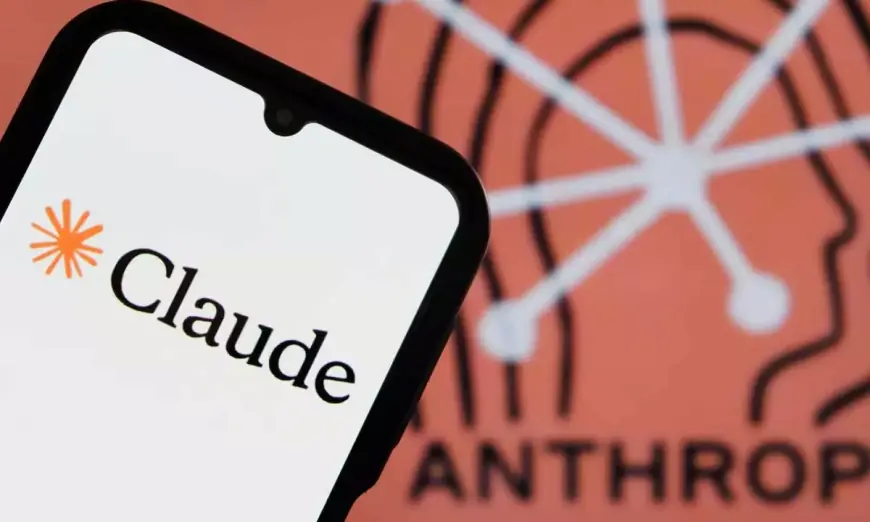
Anthropic is a U.S.-based AI company best known for building the Claude family of large language models—systems that generate text, write and review code, and assist with complex reasoning tasks. Its central pitch has been that scaling capabilities should come paired with enforceable safety constraints, not just promises. The company has pushed a training approach often described as “constitutional” alignment—using an explicit set of principles to guide model behavior—and it has tried to translate those principles into usage rules that limit certain categories of harm, including mass surveillance and fully autonomous lethal decision-making.
That posture is now colliding with the realities of government demand. Defense and intelligence customers want broad utility across planning, analysis, and operational workflows—especially where speed matters. But the closer a model gets to mission-critical loops, the more the fine print matters: if a vendor insists on contractual prohibitions, the government has to accept narrower use; if it refuses, the vendor risks being sidelined. Anthropic’s bet has been that refusing some revenue today protects the company—and the country—from a bigger governance failure tomorrow. The White House and Pentagon, at least publicly, are signaling they see those red lines as friction.
The controversy is also feeding speculation about “Anthropic stock” even though the firm is not publicly traded in the way many retail investors mean when they search that term. The tradable reality is indirect: the value accrues through private stakes held by large strategic backers and late-stage investors, and through how quickly enterprise customers expand commitments to Claude versus rivals. That makes every government contract rumor, restriction, or reversal feel like a market-moving event even without a ticker.
Dario Amodei, Pete Hegseth, And The Federal Ban Fight
At the center is CEO Dario Amodei, who has framed Anthropic’s stance as a principled refusal to loosen restrictions that could enable domestic monitoring at scale or accelerate autonomous weapons pathways. Hegseth and other defense officials have countered—sometimes sharply—that Anthropic is overstating the government’s intentions and attempting to force policy outcomes through contracting. The rhetorical escalation matters because it changes incentives inside the bureaucracy: once a vendor becomes a political symbol, it becomes harder for career officials to treat the relationship as a normal procurement decision.
The operational tension is simpler. If Claude is already embedded in toolchains—especially via contractors—removing it instantly can create gaps: analysts lose familiar workflows, teams rebuild prompts and evaluation harnesses, and systems that were tuned around one model’s behavior begin to degrade. That is why the “ban” has been paired with talk of a phased drawdown rather than a hard cutoff. A transition period also buys time for a replacement vendor to stand up equivalents, certify access controls, and satisfy classification requirements.
There is also an accountability question that neither side has fully resolved in public: if a model was used in sensitive military contexts despite stated vendor limits, who bears responsibility—the government user, the integrator, or the vendor whose tool was placed in the environment? The answer determines whether future AI deals are written with tighter audit obligations, tougher penalties, or broader indemnities.
OpenAI, Sam Altman, And The Race For The Pentagon Stake
OpenAI’s push into defense work is not just a revenue story; it is a power story. Becoming the default model provider for classified and near-classified workloads creates lock-in through tooling, training, and institutional familiarity. It also shifts the center of gravity in the rivalry between OpenAI and Anthropic: the fight is no longer only about benchmark performance or developer mindshare, but about who becomes the “safe enough” standard inside government.
That move comes with its own risk. The same concerns that dogged Anthropic’s negotiations—how models handle Americans’ data, how “public” information can still be assembled into sensitive dossiers, how prompt logs are stored, and whether downstream users can repurpose outputs—do not disappear when the vendor changes. If anything, the scrutiny intensifies because replacing one supplier with another does not answer the underlying policy question: what exactly is permitted when the government has a powerful general-purpose model inside national-security workflows?
The political keywords swirling around this—Trump, Hegseth, OpenAI, “open ai,” and even references to major newspaper reporting without naming it—are a signal that the story is being pulled into partisan framing. That framing may prove temporary; procurement often outlasts politics. But in the short term, it raises the odds that contracts become proxy battles for broader cultural fights over “woke” tech, censorship claims, and corporate influence.
Where this goes next hinges on triggers that are already visible:
If federal agencies publish a formal blacklist process with specific compliance tests, Anthropic can try to re-enter by accepting narrower scope or offering a government-only configuration with stronger auditing.
If the Pentagon formalizes a six-month migration plan with named programs, OpenAI’s deal could harden into a long-term stake that shapes standards across other agencies.
If Congress steps in with statutory limits on domestic AI-enabled collection—especially around aggregation of public data—both companies will retool products to match, and the winner will be the one whose safeguards are easiest to verify.
And if any operational incident links AI assistance to an avoidable targeting error or unlawful surveillance, the entire market for frontier-model government work could tighten overnight, with new mandatory logging, model cards tailored to classified settings, and penalties that force vendors to choose between scale and control.
For now, the fight is less about which model is “best” and more about which company can convince Washington that its technology can be powerful without becoming ungovernable.