























Jim Carrey 2026 Rumors Swirl After “New Face” Clips, Makeup Transformations, And Online Hoaxes

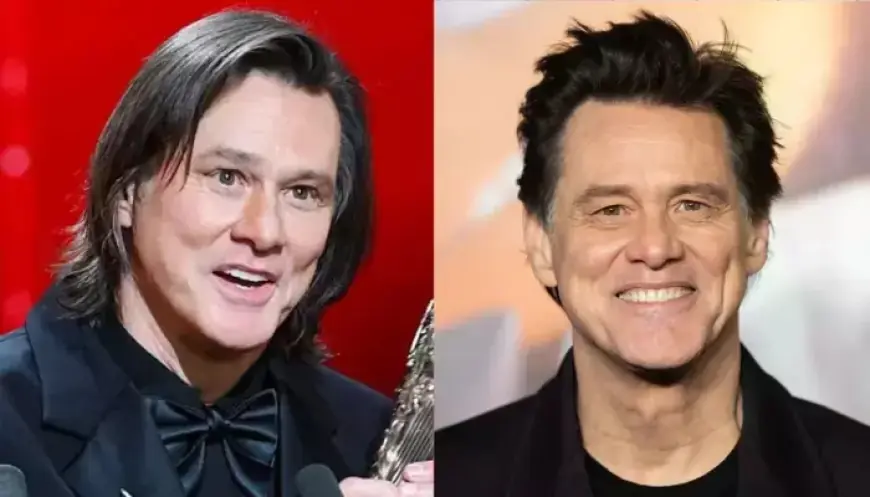
By early 2026, “Jim Carrey now” searches have become less about a new film announcement and more about a familiar internet pattern: a burst of short, low-context clips that claim the actor has a “new face,” has had plastic surgery, or has somehow been replaced. The core reality is simpler than the captions. There is no verified public evidence supporting the more extreme claims—“Jim Carrey clone” being the loudest—and much of what’s circulating is best understood as a mix of aging-in-the-spotlight, heavy styling, lookalike performance, and the attention economy doing what it does.
Carrey has long been a magnet for online mythmaking because his face is, in a strange way, part of his brand: elastic, expressive, instantly recognizable. That makes it uniquely vulnerable to misdirection. A single screenshot from an event, a compressed video with odd lighting, or a filter that over-smooths skin can create a “what happened to Jim Carrey” narrative in minutes—especially when reposted across accounts labeled “jim.carrey” or mis-spelled handles that imply authenticity while offering none.
“Jim Carrey New Face” And Makeup Misdirection
A lot of the “Jim Carrey new face” chatter tracks to visual distortions that don’t require any conspiracy at all. Modern phone cameras aggressively process faces—sharpening edges, smoothing texture, and shifting tones depending on lighting. Add stage makeup, a different haircut, weight fluctuation, or even a wider-angle lens, and you can get a clip that looks uncanny to viewers who remember an earlier era of “Jim Carey” or “Jim Carry” comedies.
More importantly, the internet is currently saturated with transformation content: prosthetics, contouring, wigs, dental veneers, and performance acting that can convincingly mimic celebrities in seconds. In that ecosystem, “makeup” is not just lipstick and powder; it’s special-effects craft presented as everyday glam. When a caption says “Jim Carrey plastic surgery,” it often rides on visuals that were never meant to document reality in the first place.
Alexis Stone, Lookalikes, And The Performance Of Celebrity
One name that keeps popping up alongside “Jim Carrey 2026” is Alexis Stone, a figure widely associated with high-skill celebrity transformations. When artists like this appear in feeds, they don’t just create a look—they create a moment of doubt that platforms reward: the pause, the double-take, the comment, the share. That attention loop is the product.
This is where the confusion becomes predictable. A transformation artist can resemble a celebrity enough to trigger face-recognition instincts, especially in short clips. A lookalike can also borrow familiar mannerisms—smiles, eyebrow lifts, the rhythm of speech—and suddenly a viewer isn’t watching “a person who resembles Jim Carrey,” but “Jim Carrey now,” supposedly caught off-guard in the wild.
The incentive structure matters: accounts that push “did Jim Carrey have plastic surgery” headlines are not trying to be accurate. They’re trying to win the algorithm’s auction for your attention. Confusion is a feature, not a bug.
Is Jim Carrey Still Alive, And Other Hoax Mechanics
The recurring “is Jim Carrey still alive” question follows a playbook used against many famous people: take an absence of frequent public appearances, add a recycled photo, then attach a definitive-sounding claim with no provenance. The hoax spreads because it offers an emotional jolt—shock, concern, curiosity—and because correcting it is less shareable than posting it.
The “Jim Carrey clone” angle is the same mechanism with a sci-fi skin. It’s a more clickable version of an older rumor category: “they replaced him.” The problem is that it trains audiences to read normal variation—aging, styling, health changes, camera distortion—as evidence of a hidden event. Once that frame takes hold, any image can be “proof,” because the conclusion comes first and the pixels are forced to fit.
A more grounded way to evaluate a viral clip is to ask three questions:
-
Is the source account verifiable, or is it a throwaway name (often with misspellings like “jim carey” or “jim carry”) that mimics a fan page?
-
Is there continuous, uncut footage with consistent audio, or only fragments stitched together?
-
Does the claim rely on a single “before/after” still—often the weakest form of evidence in the age of filters?
Is Jim Carrey Left Handed, And Why Trivia Fuels The Cycle
Even seemingly harmless questions—like “is Jim Carrey left handed”—end up in the same rumor ecosystem because trivia keeps people searching, commenting, and comparing clips. Once a thread is active, it becomes a convenient container for everything: plastic surgery speculation, fake sightings, deepfake clips, and the occasional genuine piece of biography, all mashed together.
The more the conversation becomes a game of “spot the difference,” the more it drifts from anything confirmable. That’s why you’ll see unrelated names tossed into the mix—such as “Min Ah”—as if attaching a makeup artist or stylist label automatically legitimizes a claim. Sometimes it’s a real person’s name used out of context; other times it’s simply an attention hook.
What Happens Next For “Jim Carrey Now” Narratives
The most likely path from here is not a single definitive debunking—those rarely travel farther than the rumor—but a cycle of escalating edits:
One scenario is that transformation videos become more convincingly “documentary,” using faux news captions, staged street footage, and audio that mimics Carrey’s cadence. Another is that a single public appearance—formal or casual—gets mined for stills that restart the “new face” storyline. A third is that fan accounts labeled “jim.carrey” amplify old footage as if it’s current, blurring timelines so thoroughly that “Jim Carrey 2026” becomes a genre rather than a date.
The trigger that actually changes the temperature is simple: a clear, current, verifiable appearance in a context that’s hard to fake—long-form, continuous video; multiple independent cameras; consistent ambient audio. Short of that, the internet will keep doing what it does best: turning a famous face into an endlessly editable canvas, then pretending the edits are evidence.