
























F15 Crash in Kuwait Intensifies Regional Risk Amid Nuclear Safety Warnings

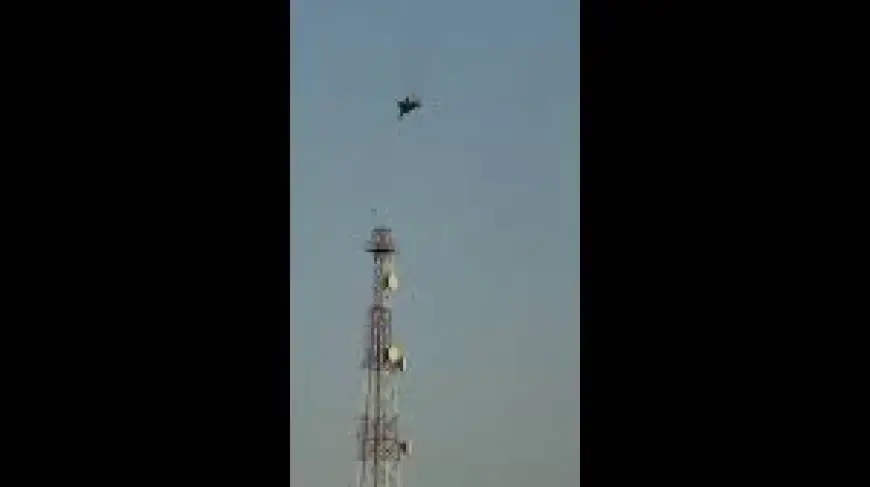
The falling of a f15 over Kuwait is now another thread in a wider, precarious pattern that is amplifying regional risk and uncertainty. With footage of a jet crash near Kuwait City, statements that three US fighter jets went down, and renewed warnings about potential radiological danger at nuclear facilities, the immediate concern is how civilian populations and nuclear sites may be exposed if military operations continue to expand.
Risk and uncertainty: what is already elevated and why it matters
Here’s the part that matters: the series of military incidents and public warnings has pushed safety concerns into the foreground. Officials have said there is a real possibility of radiological release if civil nuclear power stations are attacked, and evacuation of areas the size of major cities was described as a plausible outcome by the head of the international nuclear inspectorate at a recent board meeting. Those remarks underscore growing uncertainty about both battlefield escalation and collateral risks to civilian infrastructure.
F15 crash details and immediate operational claims
Video footage appears to show an F-15 fighter jet falling from the sky and crashing near Kuwait City; the clip was filmed from the west of the city on the edge of the Al Jahra area. Military statements say three US fighter jets went down in what was described as an apparent friendly fire incident. All six crew members ejected or bailed out and are in stable condition; Kuwait has stated that US crew bailed out safely after crash-landing. The initial headline framing said Kuwait mistakenly shot down three US fighter planes, a detail now part of the evolving account of the incident.
Nuclear sites, warnings and the inspectorate’s assessment
At the same board meeting the inspectorate head warned that a radiological release from attacks on civil nuclear stations could force mass evacuations of city-sized areas. He noted a strong sense of frustration that a diplomatic agreement on sensitive nuclear issues has so far eluded parties and said he had been involved in talks providing technical assistance. The inspectorate reported no indication that Iran’s nuclear installations—including the Bushehr power plant and the Tehran research reactor—have been damaged or hit. Efforts to contact Iran’s nuclear regulatory authorities were described as continuing with no response so far.
- The Natanz nuclear facility was said to have been hit during US and Israeli airstrikes on Iran; Natanz was listed among sites struck in the US and Israeli airstrikes in June 2025.
- The inspectorate head warned that several countries in the region operate nuclear facilities: the United Arab Emirates has four operating nuclear reactors; Jordan and Syria have operational nuclear research reactors.
- He also said Bahrain, Iraq, Kuwait, Oman, Qatar, and Saudi Arabia have been attacked, and that these countries use nuclear applications of some sort—heightening the stakes for nuclear safety in the region.
Regional combat picture and other developments
Fighting with Iran-backed Hezbollah was described by military officials as likely to last many more days. Separate coverage of the wider conflict noted that Israeli attacks have killed 31 people in Lebanon, while strikes and retaliations are reported across the region. Political fallout is appearing in multiple capitals: one live update headline recorded that a prominent political figure expressed disappointment in another over support for Iran, indicating the diplomatic reverberations that accompany the military escalation.
Micro Q& A — immediate questions and near-term signals
Q: Are the downed jets confirmed as friendly fire? A: Statements characterize the incident as an apparent friendly fire event; details remain part of the unfolding account.
Q: Were the crews harmed? A: All six crew ejected or bailed out and are described as in stable condition.
Q: Could nuclear sites be affected next? A: The inspectorate warned that attacks on civil nuclear power stations could produce radiological release and large-scale evacuation needs; that risk is being highlighted as operations continue.
The real question now is how military commanders, regional authorities and international safety bodies will respond to reduce the risk of further accidents and to protect nuclear infrastructure.
What’s easy to miss is that the collision of high-tempo military operations with facilities that host nuclear reactors or research installations creates a compound risk: a battlefield accident can have effects that reach far beyond immediate combatants. Experts have said the attacks by Israel and the US on Iran are illegal, as they were in violation of the ban on the us (text unclear in the provided context).
It’s easy to overlook, but the mix of crash footage, official admissions about jets going down, and renewed inspectorate warnings creates a set of operational and humanitarian questions that could determine whether this episode remains a localized incident or escalates into a broader regional emergency.