
























Michael J. Fox thanks Tracy Pollan in rare Actor Awards appearance, spotlighting family over legacy

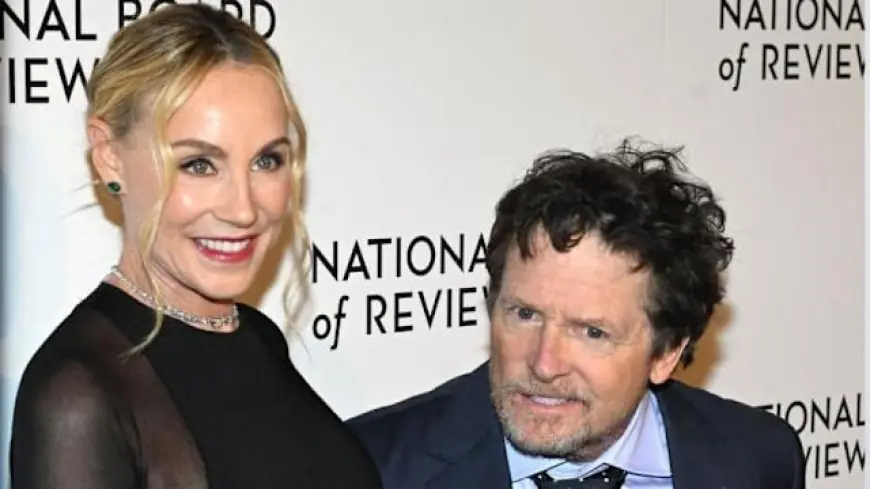
Michael J. Fox made a surprise, tightly paced appearance at the Actor Awards on Sunday night, March 1, 2026, using the ceremony’s opening “I Am an Actor” segment to tell the room what his career ultimately gave him: Tracy Pollan. In a few emotional minutes onstage in Los Angeles, Fox traced his path from a young performer arriving from Canada to the set where he met Pollan, calling her the greatest gift that came from his work. He attended the show with his son Sam, puncturing the sentiment with a quick joke that landed before the applause swelled into a standing ovation.
For an industry that still measures value in credits and comeback arcs, Fox’s message was pointed. The most durable part of his story isn’t the highlight reel—it’s the partnership that held while Parkinson’s disease reshaped his days.
Tracy Pollan remains the center of Fox’s public story—and that’s the point
Fox’s decision to put Pollan at the emotional center wasn’t a nostalgia play. It was a reframing. For years, his illness has threatened to become the single organizing idea of how people talk about him: the diagnosis, the visible symptoms, the bravery. On Sunday, he redirected the narrative toward the infrastructure that makes endurance possible—marriage, parenting, routine, and the quiet negotiations that happen offstage.
Pollan has long resisted being cast as either saint or supporting character. When she speaks about their life now, the emphasis is less on grand statements and more on mechanics: taking things a day at a time, protecting normalcy where they can, and leaning on their children as the family’s center of gravity shifts. That practicality is what makes their story feel unusually credible in celebrity culture. It’s not polished as a brand. It’s organized like a household.
The dynamic also pushes against a common cultural instinct: to spotlight the person with the diagnosis while blurring everyone else into background. Parkinson’s doesn’t operate that way. It spreads through schedules, roles, finances, and emotional bandwidth. In that sense, Fox naming Pollan so directly is not just romantic—it’s accurate. It acknowledges that chronic illness is lived by more than one person, even when one person’s symptoms are visible.
Michael J. Fox’s return to acting is built around accommodation, not denial
Fox’s appearance also landed amid his selective return to on-camera work, including a guest role in the third season of the series “Shrinking,” his first acting job in several years. What matters isn’t simply that he’s back. It’s the conditions under which “back” is possible.
There’s a subtle but important shift in what a late-career role means for someone managing Parkinson’s. The older entertainment model rewarded concealment: you worked as if nothing had changed, until you couldn’t. The newer model—still rare, still uneven—asks whether a production can adapt instead: schedules adjusted, scenes shaped around stamina, environments designed to reduce risk, and collaborators committed to making space rather than making demands.
Fox has the cultural leverage to insist on that kind of design. Not many do. That’s why each carefully chosen role carries weight beyond the performance itself. It signals to producers, agents, and writers that accessibility can be part of the creative plan, not an afterthought, and that a performer’s changed body doesn’t have to mean the end of meaningful work.
It also changes the emotional math of advocacy. A public appearance refreshes attention. Attention can translate into donations, volunteers, and political goodwill for research funding. But the deeper impact is quieter: it helps normalize the idea that living with Parkinson’s can include work, humor, and ordinary ambition—without pretending the disease isn’t there.
The foundation’s latest focus turns toward caregivers—and Pollan’s role fits the shift
In late February 2026, the foundation associated with Fox released a digital care-partner guide designed to support people caring for someone living with Parkinson’s. The timing is telling. For years, the center of gravity in Parkinson’s public conversation has been the quest for better treatments, and the fundraising that fuels research. That work remains urgent. But families don’t live in research timelines. They live in mornings when medication timing matters, in afternoons when balance is unreliable, and in nights when sleep is interrupted by rigidity, cramps, or anxiety.
A caregiver-focused push recognizes the daily reality: the invisible labor is enormous. Care partners manage logistics, anticipate symptom changes, navigate insurance and appointments, adjust homes, and absorb the stress of unpredictability. That labor can be emotionally isolating, especially when friends and extended family don’t know what to say—or assume that “doing fine” means “no longer hard.”
This is where Pollan’s public voice matters. She doesn’t sell inspiration as a substitute for help. She tends to translate a famous family’s experience into something practical and widely applicable: don’t try to solve the whole future at once; build routines that can flex; treat caregiving as a role that changes over time; and make room for the caregiver’s health as a non-negotiable priority, not a luxury.
The next steps are less about a single headline and more about a set of signals worth watching over the coming months. If Fox continues to accept acting work under carefully structured conditions, it will reinforce the idea that accommodation can be part of mainstream production planning. If the foundation keeps investing in caregiver education and community support, it suggests a broader strategy: not only funding breakthroughs, but also reducing harm and burnout in the years families spend waiting for them. And if Pollan remains the person Fox names first in moments like Sunday’s, it’s a reminder—quiet, deliberate, unmistakable—that the most consequential parts of this story have always been the ones that happen at home.