

























Sanju Samson: sanju samson’s 97 takes India past West Indies and sets up England semi

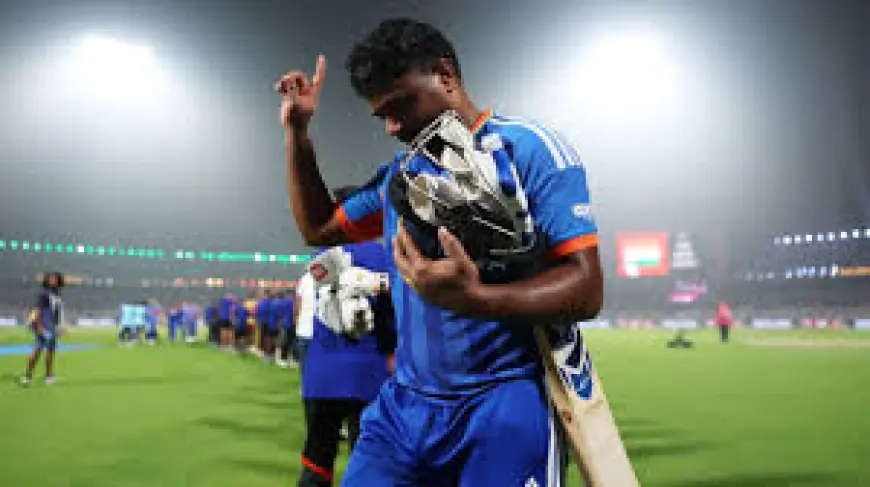
Sanju Samson ended a tense Super 8s campaign with an unbeaten 97 as India chased down 196 to beat West Indies by five wickets at Eden Gardens, a win that sends the co-hosts into a semi-final against England in Mumbai. The innings mattered not only for the victory but because it rescued India after a difficult Super 8s phase.
Samson's innings and the chase at Eden Gardens
sanju samson produced a chanceless 97 not out off 50 balls, striking 12 fours and four sixes as India reached 199 for 5 in 19. 2 overs while chasing 196. He finished the job by hitting a six and then a four off Romario Shepherd, getting India over the line with four balls to spare. Tilak Varma contributed 27 off 15 as the next-highest Indian score, and the victory ended a run in which India had never previously chased more than 173 to win a World Cup match in the 20-over format.
Scorecard: West Indies total and key bowling figures
West Indies posted 195 for 4 in their 20 overs. Roston Chase top-scored with 40 off 25. Jasprit Bumrah finished with two wickets, recorded as 2-36, and Jason Holder took two wickets for 38 in India's reply as listed in the match figures. Rovman Powell and Jason Holder added late unbeaten knocks of 34 and 37 respectively to push the West Indies to a competitive total.
Bumrah, partnerships and how West Indies built their innings
Roston Chase was handed an unexpected opening role in Twenty20 internationals and provided early stability. He and Shai Hope compiled a partnership of 68 off 53 balls, and Chase later combined with Shimron Hetmyer for 34 off 16. One account notes that the latter pairing ended when Jasprit Bumrah dismissed both in a single over; another description highlights Bumrah outfoxing a batter with a slower ball before snaring Shimron Hetmyer for 27 with a delivery that angled across and took a thin edge.
Fielding lapses, tetchiness and missed chances
India were sloppy in the field after electing to insert the West Indies. The hosts dropped three catches, with Abhishek Sharma guilty of a particularly poor fumble, and they also missed a run-out chance. The errors generated tetchiness and a few cross words on the field as the match tightened.
Implications: Group standing, Pakistan/Colombo uncertainty and the semi-final draw
The victory secured India the runners-up spot in Super 8s Group 1 behind South Africa and set up a semi-final meeting with Group 2 winners England at the Wankhede Stadium in Mumbai on Thursday (13: 30 GMT). For the third consecutive T20 World Cup, England will face India in the semi-finals after the co-hosts eliminated West Indies in a winner-takes-all match that functioned as a de facto quarter-final.
Sanju Samson, recalled to the side after having lost his place on the eve of the tournament following India's humbling Super 8s defeat by South Africa, batted through the innings and was 31 years old in the account that described him lifting his 50th delivery over mid-on to seal the win by five wickets with four balls remaining. The other semi-final is scheduled for Wednesday between New Zealand, runners-up in England's Super 8s group, and South Africa, who sealed top spot by beating Zimbabwe by five wickets in Delhi.
South Africa had earlier beaten New Zealand by seven wickets in the first group stage, continuing a 100% record against the Black Caps in five T20 World Cup encounters, though the teams had not met in 12 years prior to this tournament. The tournament's fixture locations were the subject of late uncertainty: a possibility of relocating a semi-final and the final to Colombo was extinguished when Pakistan, needing an emphatic win over Sri Lanka, prevailed by only five runs; ticket sales for fixtures went on sale only last Tuesday, and sales were launched for two finals in two countries with less than two weeks' notice. England completed their last Super 8s fixture on Friday and then spent two days in Colombo waiting for confirmation on where their semi-final would be played, a delay extended by the International Cricket Council's decision not to schedule the final round of fixtures in each group simultaneously, stretching primetime broadcast slots over three days.
One longer editorial passage in an account was cut off mid-sentence and is unclear in the provided context.