
























Spacex Launch Today: Falcon 9 Delivers 29 Starlink Satellites in March Push from Cape Canaveral

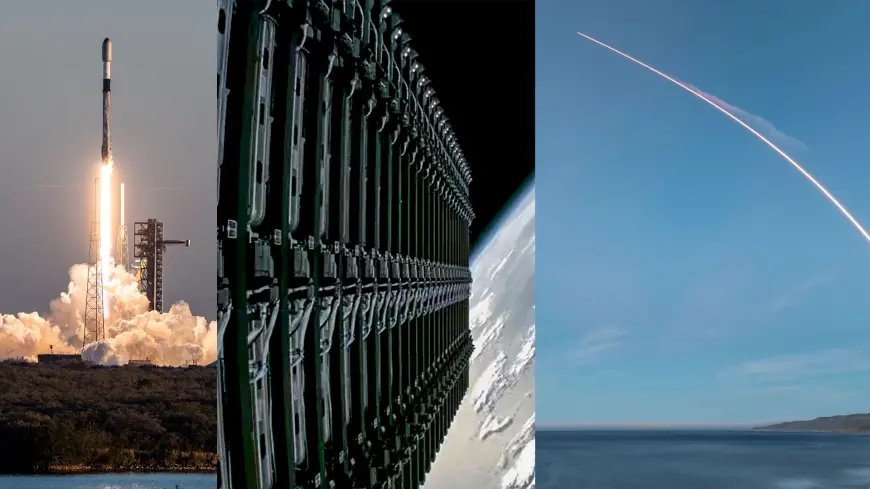
An update at Mar. 1, 11: 03 p. m. EST (0403 UTC) confirmed deployment of the 29 Starlink satellites — the latest step in a rapid cadence of flights and the reason spacex launch today matters for constellation capacity and recovery operations. The flight also marked one of multiple recent missions that kept the company active from both coasts.
Spacex Launch Today: What happened at Cape Canaveral
Liftoff of the Falcon 9 rocket from Space Launch Complex 40 at Cape Canaveral Space Force Station occurred at 9: 56: 40 p. m. EST (0256: 40 UTC). The mission, identified as the Starlink 10-41 flight, placed 29 Starlink satellites into orbit and represented the company’s 22nd mission of the year supporting its broadband internet satellite constellation in low Earth orbit.
The flight used first stage booster B1078, on its 26th flight after earlier missions including Crew-6, Nusantara Lima and USSF-124. Less than 8. 5 minutes after liftoff, B1078 touched down on the droneship Just Read the Instructions, positioned in the Atlantic Ocean off the coast of South Carolina. That landing was the 152nd on that vessel and the 580th booster landing for the program to date.
The 45th Weather Squadron forecast a 90 percent chance for favorable weather during the Sunday night launch window, while noting a small chance of interference from cumulus clouds.
February finale and the three-flight week
February 2026 concluded with a trio of Falcon 9 launches that together put more than 80 satellites into low Earth orbit. The sequence and key details were:
- Tuesday, Feb. 24 at 6: 04 p. m. EST (2304 GMT): Falcon 9 lifted 29 Starlink satellites from Space Launch Complex 40 (SLC-40) at Cape Canaveral.
- Wednesday, Feb. 25 at 9: 17 a. m. EST (1417 GMT; 6: 17 a. m. PST): A Falcon 9 launched 25 Starlink units from Space Launch Complex 4 East (SLC-4E) at Vandenberg Space Force Base in California.
- Friday, Feb. 27 at 7: 16 a. m. EST (1216 GMT): A third Falcon 9 carried 29 Starlink satellites from SLC-40 at Cape Canaveral.
All three launches successfully deployed their Starlink payloads, listed as Groups 6-110, 17-26 and 6-108.
Boosters, drone ships and constellation tallies
Each of the February flights saw its first stage return to an ocean-based droneship. Tuesday’s booster, B1092, landed on Just Read the Instructions in the Atlantic, completing its 10th mission. Wednesday’s booster, B1093, landed on Of Course I Still Love You in the Pacific, marking its 11th flight. Friday’s booster, B1069, completed its 30th trip to space and back on the A Shortfall of Gravitas droneship stationed in the Atlantic.
The three February flights added 83 satellites to the commercial broadband constellation, pushing the network to more than 9, 850 units in Earth orbit, a total tracked by satellite tracker Jonathan McDowell. Earlier in the week, a separate Sunday morning launch of 25 Starlink satellites brought the year-to-date deployed total to 566 satellites.
Trajectory choices, launch cancellations and follow-up plans
The Starlink 10-41 mission returned to a north-easterly trajectory after a run of mostly south-easterly missions for the better part of four months. Operational adjustments in trajectory highlight mission planning choices across different launch sites.
A scheduled Falcon 9 launch was called off about a half-hour before liftoff from Cape Canaveral on Monday because of strong upper-level winds. Officials aim to try again to send 60 Starlink Internet satellites into orbit on Wednesday after bypassing a planned Tuesday attempt due to poor weather in the offshore booster recovery area.
Other manifest items and mission wrap-ups
Two communications spacecraft built by Boeing and owned by Eutelsat and Asia Broadcast Satellite were noted as slated to ride a Falcon 9 into orbit on a Sunday launch, with imagery showing the satellites stacked and prepared for liftoff from Cape Canaveral.
Separately, closing out a 30-day mission, a Dragon cargo capsule departed the International Space Station on Monday for a re-entry sequence that culminated in a parachute-assisted splashdown in the Pacific Ocean southwest of Los Angeles.
Site note for readers
A Florida news site displayed a message that a reader’s browser was not supported and urged downloading a modern browser for the best experience.
Recent updates described here reflect a rapid operational tempo across multiple launch complexes, frequent booster recoveries on three different droneships, and an ongoing buildup of the Starlink constellation as the company transitions from February activity into early March operations.