
























Lucas Drones Join Tomahawk Strikes as U.S. Burns Through Limited Tomahawk Stockpile

U. S. forces used one-way attack drones alongside Tomahawk cruise missiles in strikes on Iran, a move that highlights an effort to preserve expensive munitions while exposing strains on existing stockpiles. The deployment of lucas drones—low-cost systems modeled after Iranian Shahed designs—arrived as officials and defense leaders warned that continued use of high-end strike weapons is drawing down reserves needed for other potential conflicts.
Lucas Drones and Task Force Scorpion Strike
Central Command’s Task Force Scorpion Strike employed one-way attack drones in combat for the first time during Operation Epic Fury, using an American copy of an Iranian design called the LUCAS. The drone, developed by Spectreworks, costs roughly $35, 000 apiece and can be configured for both strike and reconnaissance roles. The LUCAS had previously been test-launched from a U. S. Navy ship in the Persian Gulf in December, and Task Force Scorpion Strike was formed in December under personnel from U. S. Special Operations Command-Central after Defense Secretary Pete Hegseth ordered an accelerated push to acquire cheaper autonomous weapons.
What makes this notable is the deliberate substitution of inexpensive, expendable systems for pricier precision munitions: the deployment of lucas drones created a lower-cost option for strikes while expanding the tactical toolkit for CENTCOM operations. The emergence of a one-way drone squadron reflects a procurement shift that pairs rapid fielding of expendable platforms with more traditional guidance-intensive weapons.
Tomahawk Stockpile and Production Plans
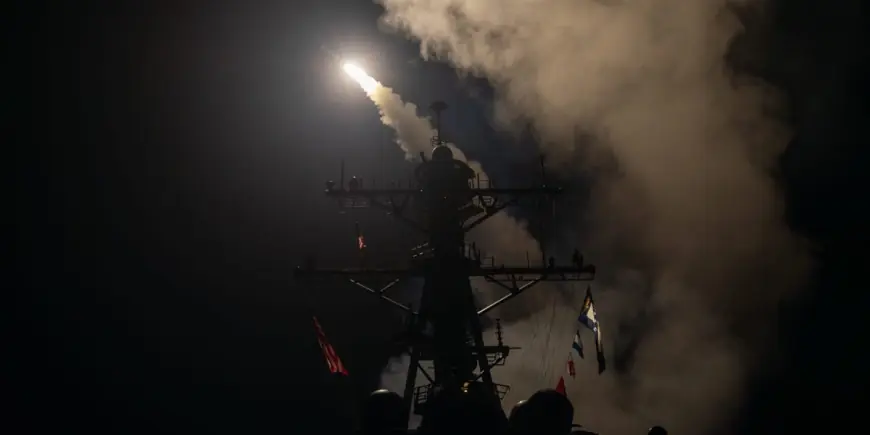
Navy warships launched Tomahawk cruise missiles as part of the same operation, contributing to growing concern that U. S. inventories of long-range, precision strike weapons are being depleted. The recent use follows Tomahawk employment in multiple theaters over recent years, including strikes tied to operations in Yemen and Nigeria, and prior action against Iranian targets.
Analysts note that a U. S. naval deployment that included 13 destroyers could, if all were within range, field between 150 and 250 Tomahawks, and the conversion of one of the four Ohio-class submarines to carry cruise missiles would add up to 154 more missiles. The Pentagon has not disclosed the exact number of Tomahawks fired in the recent strikes. In response to concerns about supply, RTX Corporation agreed to expand production, aiming to boost annual Tomahawk output to more than 1, 000 missiles a year under a multi-year effort.
Senior naval leadership has emphasized the need to scale up production of precision, long-range munitions. Admiral James Kilby previously urged increases for systems such as Tomahawk and other long-range weapons. Meanwhile, former Defense Secretary Mark Esper warned that the United States is not set up to sustain a protracted campaign that would draw deeply on weapons inventories, and retired Admiral James Stavridis highlighted the logistical challenge after hundreds of precision weapons have been used in recent operations.
Operational Trade-offs and Strategic Implications
The combined use of high-end cruise missiles and low-cost drones demonstrates a cause-and-effect chain shaping current operational choices: heavy reliance on Tomahawks in recent strikes has hastened concerns about stockpile depletion, which in turn accelerated procurement and fielding of cheaper, one-way drones to maintain strike capacity without exhausting scarce guided missiles. CENTCOM’s integration of small, expendable systems is a direct response to the pressure on munitions inventories.
The timing matters because long-range cruise missiles are seen as essential for potential high-intensity operations in other theaters, creating a trade-off between immediate retaliatory strikes and longer-term readiness. The Pentagon’s path forward has included both ramping up production of established missiles and fielding novel, lower-cost alternatives to stretch limited inventories.
Officials have mixed the use of Tomahawks with other strike assets, including ground-launched systems such as HIMARS, while the new drone squadron adds a distinct, lower-cost option. The immediate effect is a diversified strike package in the current campaign; the broader implication is increased pressure on defense industrial base capacity and logistics planning if such operations continue.