
























Centcom Response Under Scrutiny as U.S.-Israeli Strikes Continue After Khamanei’s Death

U. S. -Israeli strikes on Iran continued Sunday following the killing of the Iranian Supreme Leader Ayatollah Ali Khamanei on Saturday, and centcom publicly rebutted an Iranian claim as casualties, explosions and widespread warnings spread across the region. The developments deepen uncertainty about Iran’s future and raise the prospect of broader instability.
Casualties and military claims
On Sunday, three U. S. service members were reported killed and five were seriously injured in the strikes; the identities of the victims were not made available. In a post on his social platform, President Donald Trump revealed that U. S. military forces sank nine Iranian naval ships, saying some of them were relatively large and important.
Centcom rebuts IRGC aircraft claim
The Islamic Revolutionary Guard Corps claimed that a U. S. military aircraft was struck. U. S. Central Command debunked that claim in a social media post on Sunday. centcom’s public rebuttal became part of the broader information battle unfolding alongside kinetic operations.
Explosions in Tehran and visual aftermath
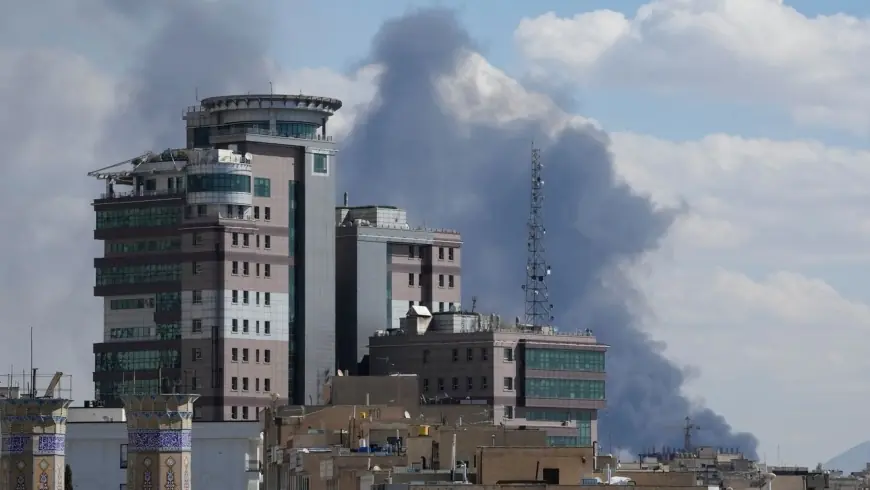
There were explosions in Tehran as Israel made its way through Iran’s capital. A plume of smoke rose after a strike in Tehran on Sunday, March 1, 2026, captured by photographer Vahid Salemi, underscoring the scale of the attacks on the capital.
Iran’s retaliation and threats
Iran has retaliated by firing missiles and drones at U. S. and Israeli military bases as well as at the Saudi capital and the global business hub of Dubai. The Islamic Revolutionary Guard Corps has threatened to launch what it called its “most intense offensive operation” ever, specifically targeting U. S. and Israeli bases.
Political shifts and leadership changes in Iran
Khamanei’s death has thrown the future of the Islamic Republic into uncertainty and poses the risk of creating regional instability. Meanwhile, Iran has selected a 66-year-old cleric to join the leadership council that is currently governing the country until a new supreme leader is chosen.
U. S. priorities and diplomatic precautions
A chairman of the U. S. Intelligence Committee said the priority for the U. S. remains Iran’s vast missile arsenal. U. S. embassies across the Middle East have told their employees to continue sheltering in place on Sunday amid ongoing strikes, and American citizens living or traveling in the region have been advised to take similar precautions. The State Department has issued a “worldwide caution” notice advising Americans abroad everywhere, with a specific emphasis on the Middle East.
Regional statements and what’s next
Israeli Defense Minister Israel Katz vowed a “non-stop air train” of strikes against Iran, signaling an intent to sustain pressure. The combination of leadership uncertainty in Tehran, confirmed casualty reports, public military claims and denials, and diplomatic cautions has left the region on heightened alert. Details remain fluid and some elements are unclear in the provided context; developments may continue to evolve.