
























Dubai News: Explosions, Airport Death and Widening Gulf Strikes Shake the Region

Missile and drone attacks that followed US and Israeli strikes on Iran have propelled violence across the Gulf, leaving airports damaged, at least one confirmed death at Abu Dhabi’s main airport and multiple injuries in Dubai and beyond. The disruption has grounded flights to and from several states and amplified regional alarm as retaliatory strikes hit facilities, ports and hotels.
Dubai News: Fairmont hotel and Palm Jumeirah
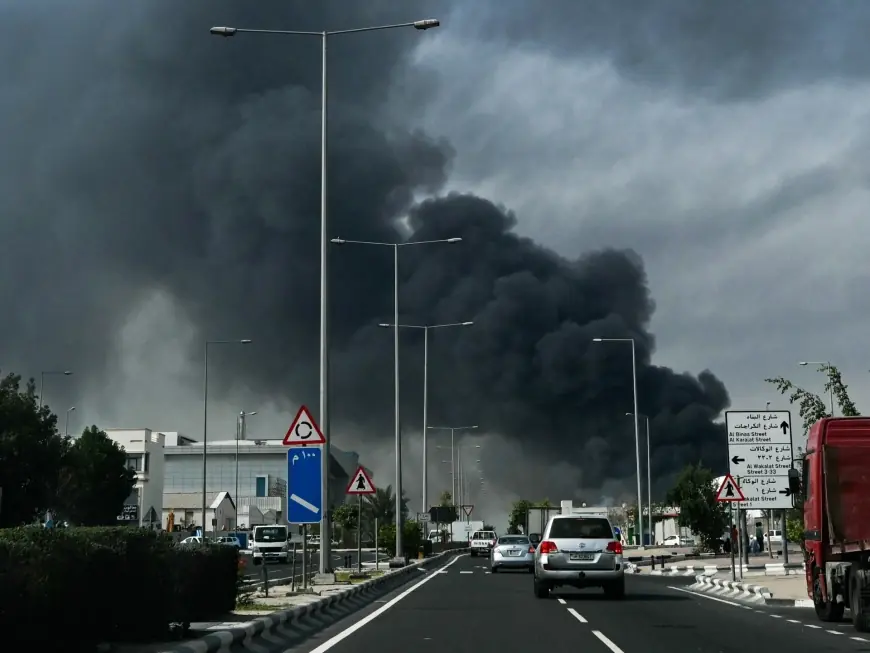
An Iranian missile struck the Fairmont hotel on Dubai’s Palm Jumeirah, setting the five‑star property alight and producing footage of fires near the hotel entrance; that incident led to four people being injured. Officials also said fires and smoke reached the Burj Al Arab after debris from an intercepted drone caused a small fire on the hotel’s facade. City images showed puffs of white smoke from missile interceptions and darker plumes over Jebel Ali port as the attacks continued.
Zayed international airport and Abu Dhabi Airports
Abu Dhabi Airports posted on X that an "incident" at Zayed international airport resulted in one fatality and seven injuries, adding that the post was later deleted. The authority described the casualty as an Asian national and warned against circulating rumours while declining to give a cause. Flights to and from Abu Dhabi were grounded on Saturday as a precaution and expected to remain disrupted on Sunday.
Dubai International, concourses and terminal damage
Dubai’s media office wrote on X that Civil Defence teams "responded immediately and brought the incident under control, " while also saying part of Dubai International airport sustained "minor damage. " Aviation one terminal had been damaged during an overnight Iranian attack, and Dubai confirmed that four staff were hurt when a concourse sustained minor damage.
Casualties across the UAE and national identifications
The fallout across the United Arab Emirates has produced differing casualty accounts: the Ministry of Defence in Abu Dhabi said at least three people were killed in the UAE attacks and identified them as Pakistani, Nepalese and Bangladeshi nationals; other official airport statements cite a single fatality at Abu Dhabi and multiple injuries. The overlapping reports underline the fluidity of information as emergency teams continue to respond.
Duqm commercial port, Oman mediation and Gulf reactions
The Duqm commercial port in the Al Wusta Governorate of central Oman was struck by two drones, injuring an expatriate worker. Oman had been mediating negotiations between Iran and the United States before the weekend strikes, and the Gulf Cooperation Council condemned the attack. Majed al‑Ansari, a spokesperson for Qatar’s Ministry of Foreign Affairs, said the strike on Oman "is an attack on the very principle of mediation. " Flights to and from the UAE, Qatar, Israel and Bahrain have been cancelled amid the disruption.
Regional military moves: missiles, drones and Operation Epic Fury
Iran’s retaliatory campaign, described in regional statements as a response to US and Israeli strikes that killed the country’s supreme leader, Ayatollah Ali Khamenei, and other top officials, has involved large numbers of weapons. Iranian authorities said they fired 137 missiles and 209 drones across the UAE on Saturday, and Qatari 65 missiles and 12 drones were fired toward Qatar, most intercepted but leaving 16 people injured there. Elsewhere, a drone crashed near Erbil International Airport, producing a large plume of smoke, and Jordanian defence systems intercepted missiles over Amman and northern areas.
Iraqi groups, US bases and regional proxies
Bases belonging to the Iran‑backed Popular Mobilization Forces in Iraq were struck by either US or Israeli operations, killing at least two members of Kataib Hezbollah. Kataib Hezbollah and Yemen’s Houthis warned they would join strikes on US military bases across the region. Thousands of US soldiers remain deployed in Gulf states lying just across the water from Iran, a factor that officials and militaries say is central to the pattern of targeting.
Travel, tourism and international advisories
Flights from the affected airports were grounded or cancelled, and tourist safety concerns have surged: one account noted that almost 100, 000 British nationals were stranded in the Middle East as airports including Dubai and Doha closed. The UK Foreign Office advised British citizens to shelter in place, avoid travel to Israel and Palestine, sign up to Register Your Presence and stay indoors in secure locations while it works to support nationals.
What makes this notable is the speed at which a series of air and sea assets, hotels and airports have been drawn into a widening conflict: within hours of the initial US and Israeli strikes, Iran’s response targeted more than six countries and its proxies intensified the regional reach. The timing matters because authorities now face simultaneous emergency responses at luxury tourism sites, commercial ports and major international airports, complicating evacuation, care and operational continuity.
Leaders across the region have been in rapid diplomatic contact: Turkiye’s president, Recep Tayyip Erdogan, spoke by phone with Saudi Crown Prince Mohammed bin Salman and expressed concern about the trajectory of the confrontation. In Washington, the campaign has been referred to as Operation Epic Fury, and officials note the recent fighting has spread beyond the narrower exchanges of the June 2025 conflict that had been largely confined to Israel and Iran.