























Ndiaga Diagne Identified as Austin Mass Shooter Who Killed 2 at Buford's Bar on 6th Street; FBI Probes Terrorism Nexus

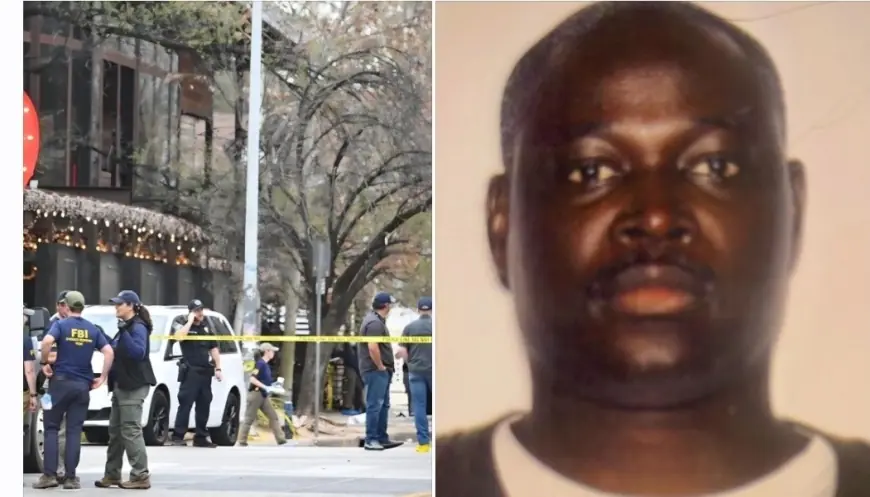
Two people are dead and 14 others were hospitalized — three in critical condition — after a gunman opened fire on patrons outside Buford's Backyard Beer Garden on West 6th Street in Austin, Texas, at approximately 1:59 a.m. ET Sunday. The shooter, identified by multiple law enforcement sources as 53-year-old Ndiaga Diagne, a naturalized U.S. citizen originally from Senegal, was killed by Austin police officers at the scene. The FBI's Joint Terrorism Task Force confirmed it had identified "indicators" of a potential terrorism nexus and has opened a formal investigation.
How the Austin Mass Shooting Unfolded on 6th Street
Diagne arrived in a large SUV and circled the block near Buford's bar multiple times before activating his hazard flashers, rolling down a window, and opening fire with a handgun at patrons seated on the patio. He then drove a short distance west and parked on Wood Street, exited the vehicle carrying a rifle, and continued shooting at people walking along the popular nightlife corridor. Three Austin police officers converged on him at a nearby intersection and fatally shot him. Austin-Travis County EMS Chief Robert Luckritz confirmed first responders were on scene treating patients within 57 seconds of receiving the initial call.
The attack struck one of Austin's highest-traffic entertainment stretches as bars reached closing time, filling the sidewalks with patrons. Eyewitness Kelson Lee, 25, who was approximately one block away, told local media he walked into Buford's and found multiple victims on the floor. A bomb squad was later deployed to search Diagne's Pflugerville, Texas home and his vehicle; no explosive devices were found in either location.
Terrorism Nexus Under Investigation as Diagne's Background Emerges
FBI acting special agent in charge Alex Doran stated publicly that investigators had found indicators pointing to a potential nexus to terrorism, while cautioning that the finding was preliminary and the investigation was ongoing. Law enforcement sources told multiple national outlets that Diagne was wearing a sweatshirt reading "Property of Allah" and a shirt bearing an Iranian flag design at the time of the shooting. A Quran was also recovered from his vehicle. Two law enforcement sources separately noted that Diagne had prior documented mental health episodes in Austin, and investigators are now examining whether he self-radicalized.
The Department of Homeland Security confirmed Diagne originally entered the United States on March 13, 2000, on a B-2 tourist visa. He later became a naturalized citizen and had previously lived in New York City before relocating to Pflugerville, a suburb northeast of Austin. The attack came less than 24 hours after U.S. and Israeli military strikes on Iran killed Supreme Leader Khamenei, a timeline investigators are treating as potentially significant. Texas Governor Greg Abbott directed the Texas Department of Public Safety to increase weekend patrols statewide and warned that Texas would respond with force against anyone seeking to exploit the Middle East conflict to target the state.
What Comes Next for Austin and the Federal Investigation
The University of Texas president confirmed that some of the victims were members of the university community, adding pressure on Austin officials to provide faster public clarity on identities and motive. Families searching for loved ones have been directed to the Austin Police Department's Victim Services Unit. Additional law enforcement briefings were scheduled for Sunday afternoon, with investigators expected to address the terrorism question with more specificity once digital evidence — including social media and internet activity — has been reviewed by the Joint Terrorism Task Force and ATF.
The shooting has reignited debate about security on Austin's 6th Street corridor, which draws tens of thousands of visitors weekly and where a large-scale 2021 mass shooting injured multiple people during peak hours. Whether Sunday's attack is ultimately classified as an act of terrorism or as violence linked to untreated mental illness — or both — the federal and local investigative architecture now assembled around the case is the most intensive deployed in Austin in recent memory, and the findings are expected to carry consequences well beyond the city.