
























Planets Aligning Tonight: A Practical Guide for Skywatchers and Photographers Preparing for the Six-Planet Parade

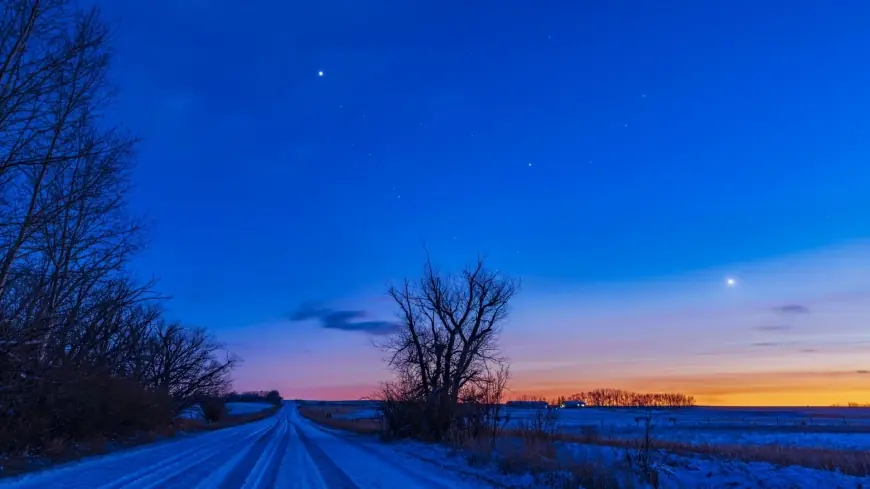
If you’re prepping because the planets aligning tonight is on your radar, focus first on location and timing: this is a low-horizon show that rewards preparation, equipment and a bit of luck with the weather. Amateur photographers and backyard stargazers will feel the pressure first — stake out a raised, horizon-clear spot and have a smartphone astronomy app ready to map the scene as twilight deepens.
planets aligning tonight — who should go out and what they’ll need
Here’s the part that matters: casual viewers can catch bright planets with the unaided eye, while anyone hoping to record the full six-planet parade will want tools and planning. The ability to spot each planet depends on preparation, equipment and weather. We truly hope it doesn't rain on your parade. When you purchase through links on our site, we may earn an affiliate commission. Here’s how it works.
Where each planet will appear in the sky (embedded view, not a step-by-step timeline)
- Mercury: sitting roughly 10 degrees above the late-winter skyline — about the width of a clenched fist at arm's length — with Venus close to its left and both low near the setting sun.
- Venus: close to Mercury and described as floundering in the glow of the setting sun.
- Saturn: glowing less than 10 degrees to the upper left of Venus, with a nearby distant cousin two degrees to its right (Neptune).
- Neptune: two degrees to the right of Saturn, too dim for the unaided eye; under dark skies a telescope with an aperture of 8 inches (200 millimeters) or more can reveal a tiny bluish disk, but its low-horizon placement and solar glare make it challenging on nights surrounding Feb. 28.
- Uranus: located by sweeping a scope across the patch of sky 5 degrees below the Pleiades open star cluster, to the right of the "V" formation in Taurus in the hours following sunset.
- Jupiter: shining high in the eastern sky, with the waxing gibbous moon below it, the moon’s reflected light obscuring the stars of the constellation Cancer.
Practical viewing and equipment tips
Stake out a raised location with a clear view of the horizon well ahead of time. Smartphone stargazing apps that use augmented reality can point you directly to the planets so there’s no need to guess. The next two planets — Neptune and Uranus — will need added magnification, and even then the odds are stacked against you in light-polluted or hazy conditions. Under dark skies, an 8-inch (200 mm) telescope can reveal Neptune’s tiny bluish disk; remember to ensure the sun is firmly below the horizon before pointing telescopic equipment in its general direction.
Micro Q&A: Quick answers for immediate decisions
Q — Can you see all six planets with the naked eye?
A — Not all of them. Neptune will be too dim for unaided viewing; Uranus and Neptune generally require magnification or a telescope. Jupiter, Saturn, Venus, Mercury can be spotted more easily, though Mercury and Venus follow the sun out roughly an hour after sunset and appear briefly as the sky darkens.
Q — What’s a reliable way to find Uranus?
A — Sweep a scope across the sky about 5 degrees below the Pleiades and to the right of the "V" formation in Taurus in the hours after sunset; a smartphone AR app can simplify that search.
Q — Any safety or timing cautions?
A — Yes: confirm the sun is fully below the horizon before aiming telescopes toward low-horizon targets; Neptune’s proximity to solar glare makes it challenging on nights surrounding Feb. 28.
Notes, tools and a brief production aside
Sign up to the monthly entertainment newsletter to keep up with coverage of night-sky events and related features. Breaking space news, the latest updates on rocket launches, skywatching events and more are often packaged with photo tips and planning notes. The site’s sci‑fi reader's club and other community features offer additional photo showcases and discussion.
Award-winning night sky photographer Josh Dury grappled with the sheer scope of the scene along with the glow of the setting sun and other challenges to capture a [unclear in the provided context].
What's easy to miss is how much horizon clearance matters — even experienced observers can be thwarted by a single roofline or a nearby tree.
It’s easy to overlook, but the combination of a clear western horizon, a phone app for pointing, and the right telescope aperture are the practical levers that separate a quick glance from a full six-planet capture. The real question now is whether weather and timing will cooperate where you are.