
























Planets Aligning Tonight: A Practical Guide for Skywatchers Preparing for the Six-Planet Parade

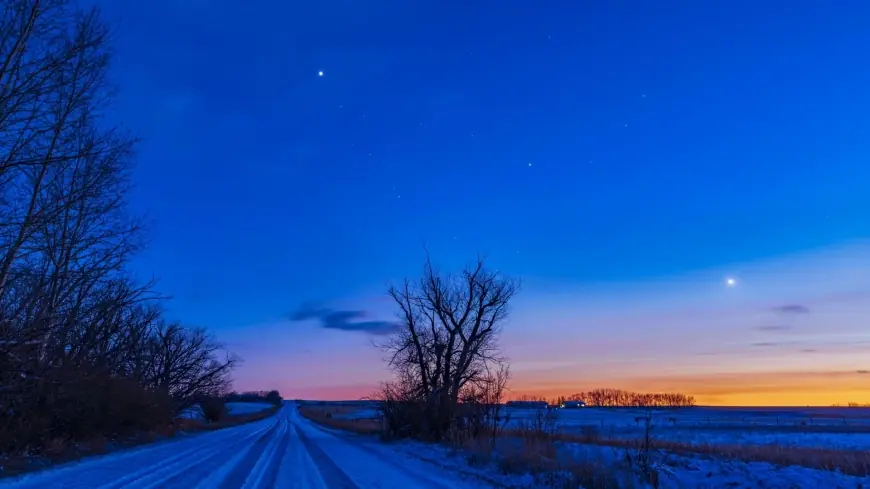
If you're hoping to catch the planets aligning tonight, this is written with beginner observers and amateur photographers in mind: most of the visible action will be low in the western sky and demands a clear horizon, good timing and a bit of patience. The article also notes practical trade-offs — some planets are naked-eye bright while others need an 8-inch (200 mm) or larger telescope and dark skies.
Planets Aligning Tonight — a short checklist for viewers
Here’s the part that matters for anyone heading outside: stake out a raised location with an unobstructed view of the horizon well before sunset; use a smartphone stargazing app with augmented-reality overlays to rehearse where each planet will appear; and remember that weather will determine whether the parade is visible — "we truly hope it doesn't rain on your parade. " The site's page also notes newsletter signups, a sci‑fi reader club and that purchases through links may generate an affiliate commission.
How the six-planet parade will look (embedded details)
- Mercury: expected low and challenging, shining about 10 degrees — roughly the width of a clenched fist at arm's length — above the late winter skyline, with Venus close to its left.
- Venus: close to Mercury and briefly visible as the sky darkens before following the sun out of sight about an hour after sunset.
- Saturn: glowing less than 10 degrees to the upper left of Venus, with Neptune positioned roughly two degrees to Saturn's right but too faint for unaided eyes.
- Neptune: likely invisible without magnification; under dark skies a telescope of 8 inches (200 millimeters) or more can reveal a tiny bluish disk, though its low position and solar glare make it difficult on nights surrounding Feb. 28.
- Uranus: findable with a scope by sweeping about 5 degrees below the Pleiades and to the right of the "V" of Taurus in the hours after sunset.
- Jupiter: shining high in the eastern sky, with the waxing gibbous moon below it; the moon's reflected light will obscure stars in the constellation Cancer.
Tools, timing and safety notes for observers
Smartphone astronomy apps with augmented reality are recommended for newcomers to pinpoint planets without guessing. Telescopic observers should take care: ensure the sun is firmly below the horizon before aiming any scope, and expect Neptune and Uranus to require magnification and darker skies. Mercury and Venus will slip below the horizon roughly an hour after sunset but can become briefly easier to see as the sky darkens and they approach the horizon.
Mini timeline and quick realities (compact)
- Evening, before sunset: pick and settle into a raised site with a clear western horizon.
- Shortly after sunset: Mercury and Venus will be low in the west and visible briefly as darkness deepens.
- Nights surrounding Feb. 28: Neptune will sit about two degrees right of Saturn and will be a telescope challenge; exercise extra caution with telescopes near dusk.
What's easy to miss is how mixed the viewing needs are: Jupiter and the moon give an obvious eastern target, while Mercury, Venus and the dimmer ice giants demand different locations, instruments and timing.
Night-sky photographer Josh Dury is mentioned as having grappled with the scene's scale and the glow of the setting sun while attempting to capture images, a reminder that even experienced imagers face practical obstacles during these low-horizon events.
If you’re wondering why this keeps coming up for a few nights: the parade's geometry places several planets low toward the western horizon while others appear elsewhere in the sky, so observers who plan for both horizons and varying equipment will see the most.
Writer's aside: The real test will be local weather and horizon clarity — both are as decisive as the planets' positions themselves.