
























Missiles Fly Overhead: Australians Stranded at Airports in Chaos

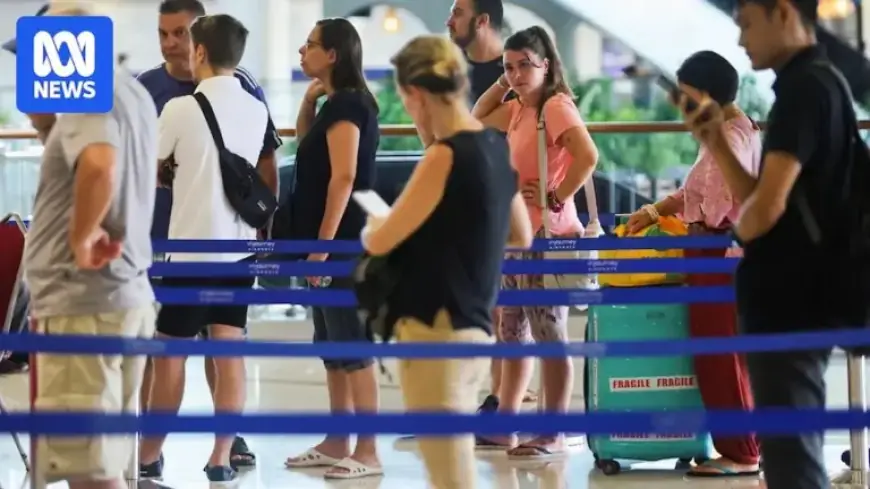
The ongoing hostilities in the Middle East have created widespread chaos, leaving many Australians stranded and anxious. Reports from travelers depict harrowing experiences and highlight the impact of airspace closures following missile strikes. With international airports grappling with an influx of stranded passengers, it has become a significant crisis.
Missile Strikes and Travel Disruptions
Recent events escalated on a Saturday when the United States and Israel initiated strikes on Iran. In response, countries including Iran, Iraq, Israel, Syria, Kuwait, and the United Arab Emirates swiftly closed their airspace. This action led to a staggering number of flight cancellations and caused thousands of travelers to be left without options.
Personal Accounts from Stranded Travelers
Trina Hockley, a Brisbane resident, found herself in a distressing situation while connecting through Doha on her way back from Lapland. She recounted sleeping on the floor of Hamad International Airport as missiles were reportedly heard above. After being told no hotel rooms were available, she spent a night in discomfort, worried as her heart medication supplies dwindled.
Ms. Hockley described her experience as “complete chaos,” noting her family in Australia was panicking about her fate. Many passengers share similar sentiments, struggling to find flights or accommodations amidst the turmoil.
Travel Industry Response
The Australian Travel Industry Association’s CEO, Dean Long, acknowledged the challenging circumstances for those stranded, urging calm among travelers. He emphasized the importance of waiting for updates from airlines and not to cancel flights, as doing so could limit consumer rights, such as refunds and rebooking options.
Flight Cancellations and Damage Reports
- Flight tracking service FlightAware reported over 19,900 delayed flights globally and more than 2,600 cancellations by Sunday afternoon.
- Qatar Airways and Virgin Australia had to turn flights back due to airspace closures.
- Several airports, including Dubai International and Zayed International in Abu Dhabi, reported damage due to missile interceptions, leading to injuries and at least one fatality.
Advice for Stranded Travelers
Travelers currently affected by these disruptions should heed the following advice:
- Do not cancel your flights yourself; wait for your airline or travel agent to reach out.
- Check for updates through airline websites or official social media channels.
- Document receipts and communication with airlines to support any potential claims.
Airline Reactions
Virgin Australia has committed to contacting affected customers directly, offering options for free booking changes and travel credits for all clients scheduled to fly to Doha until early March. Meanwhile, Emirates has temporarily suspended operations to and from Dubai, advising travelers to explore alternative arrangements.
Wider Impact on Cruising and Travel Policies
The crisis extends beyond air travel, with numerous cruise passengers also affected. MSC Cruises announced that its ship, Euribia, would remain in Dubai instead of departing as scheduled, as the region’s airspace closure has made navigation unsafe.
For Australians contemplating travel to affected areas, the Department of Foreign Affairs and Trade (DFAT) has raised its advice to “Do Not Travel” for both the United Arab Emirates and Qatar, encouraging citizens to stay informed and heed local guidance. As the situation evolves, the safety of passengers remains a paramount concern.