

























Dubai Airport Hit amid regional strikes as RAF jets and UK government heighten defences

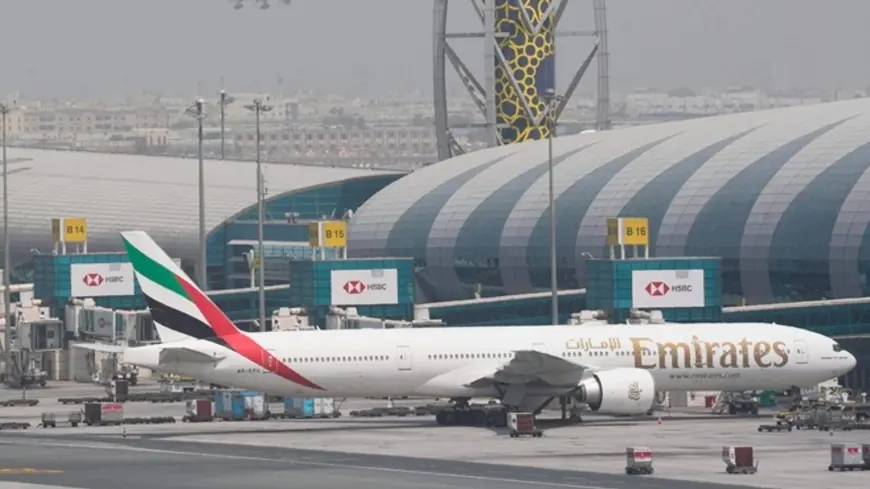
British planes are operating over the Middle East as defensive missions while flights have been grounded after a sequence of US and Israeli strikes on Iran and immediate Iranian counterattacks. The disruption has left airports and hotels in the United Arab Emirates damaged, produced casualties, and prompted urgent travel and shelter advisories.
Starmer speaks to Donald Trump after US-Israel strikes on Tehran
Prime Minister Sir Keir Starmer held a phone call with former President Donald Trump after the United States and Israel launched strikes on several Iranian cities, including Tehran, following the collapse of negotiations to limit Iran’s nuclear programme. The UK did not take part in the initial waves of the attacks, and Starmer reiterated that British planes were "in the sky" in the Middle East as part of a defensive operation "to protect our people, our interests and our allies. " He also chaired the government’s emergency Cobra committee on Saturday to coordinate the UK response.
RAF deployments: Typhoons, six F-35s and Akrotiri countermeasures
Fighter jets have been conducting defensive sorties from bases in Qatar and Cyprus to intercept incoming drones and missiles after Iranian retaliation. Last month the UK deployed RAF Typhoons to Qatar to protect al-Udeid airbase and other allied facilities, and an additional six F-35s together with air-defence, radar and counterdrone systems were sent to RAF Akrotiri in Cyprus. The Ministry of Defence declined to specify which countries or bases were being defended, while British forces are present at the US bases that came under attack in small numbers.
Dubai Airport Hit: Dubai International and Palm Jumeirah incidents
Multiple incidents in the UAE followed overnight exchanges. Dubai’s media office said a concourse at Dubai International sustained "minor damage" that left four staff injured. Separately, in the Palm Jumeirah area a building incident produced a plume of smoke near the Fairmont The Palm hotel and four people were injured. Aviation assessments indicated at least one terminal had been damaged during what was described as an overnight Iranian attack.
Abu Dhabi Zayed airport casualty figures and airport groundings
Abu Dhabi Airports confirmed an incident at Zayed airport that resulted in one fatality — identified in the statement as an Asian national — and seven injuries. Takeoffs and landings at both Abu Dhabi and Dubai airports were grounded on Saturday as a precaution; operators expect disruptions to continue into Sunday. Flights to and from the UAE, Qatar, Israel and Bahrain were among those cancelled, heightening tourist safety concerns as the military campaign expanded.
Civil Defence response and hotel damage in Dubai
Civil Defence teams in Dubai responded immediately to a minor fire on the facade of the Burj al Arab after a drone interception and brought the blaze under control with no injuries reported. Another luxury hotel in the city suffered fire damage earlier on Saturday that officials believe was caused by remnants from a falling missile.
Government warnings, consular support and security posture
The Foreign Office instructed British nationals in Bahrain, Kuwait, Qatar and the UAE to "immediately shelter in place" and advised against all travel to Israel and Palestine, urging people to remain indoors in a secure location and to follow local authority instructions. The UK has stepped up protections for bases and personnel to their highest level, and a government spokesperson said the immediate priority is the safety of UK nationals, with consular assistance available 24/7. Officials also stressed that the UK has bolstered defensive capabilities in the region and stands ready to protect its interests while seeking to avoid wider escalation.
Starmer joined France’s Emmanuel Macron and Germany’s Friedrich Merz in a joint statement urging Iran to refrain from indiscriminate military strikes and to cease violence and repression; the three leaders said they were in contact with the US, Israel and regional allies. In contrast, Iran’s Supreme National Security Council threatened a "crushing" response to the US-Israeli attacks.
What makes this notable is the convergence of military, diplomatic and civilian disruption: the US-Israeli campaign — described by officials as aimed at regime change and targeting nuclear and missile sites — triggered immediate Iranian counterstrikes that have directly affected civilian infrastructure and commercial aviation. The timing matters because the UK’s recent deployments of Typhoons and F-35s to the region have shifted its posture from purely diplomatic alignment to active defensive operations, producing tangible effects on flight schedules and prompting shelter orders for hundreds of thousands of Britons who may be affected.
Starmer also warned that the Iranian regime poses a direct threat beyond the battlefield, citing more than 20 potentially lethal attacks on UK soil over the past year, and said Iran must never be allowed to develop a nuclear weapon. The government rejected earlier requests to make additional RAF bases available for the initial strikes, a choice officials linked to the UK's stated aim of limiting escalation.
With airports closed, staff and travellers displaced, and emergency services operating across multiple sites, the immediate focus for authorities remains protecting civilians, supporting British nationals in the region and preventing further spread of hostilities.