























Is America Going to War With Iran Right Now? Ayatollah Khamenei, Dubai Attack Reports, and Bombing Iran Today Explained

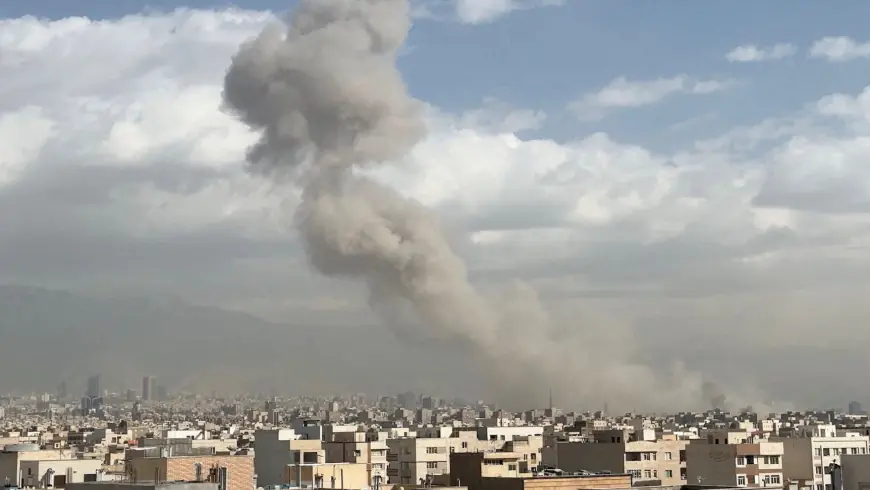
The United States and Iran are now in direct, fast-moving conflict after President Donald Trump authorized strikes inside Iran early Saturday, Feb. 28, 2026 (ET). The bombing Iran today has triggered an Iranian missile attack across the region, sparked conflicting claims about Ayatollah Khamenei, and disrupted travel through Dubai—raising a blunt question for many Americans: are we at war with Iran right now?
The situation remains fluid, but the basic contours are clear: sustained U.S. operations, rapid retaliation, and widening regional consequences that are being felt far beyond the Middle East, including in the US, the UK, Canada, and Australia.
Did Trump Attack Iran and Why Did US Bomb Iran?
Yes—did Trump attack Iran is no longer a theoretical question. Trump announced “major combat operations,” describing the campaign as aimed at Iran’s missile infrastructure and other military assets. The White House framing has tied the decision to what it characterized as imminent threats and Iran’s strategic programs, while also signaling political pressure on Tehran’s leadership.
The strikes appear designed to degrade Iran’s ability to launch and sustain missile and drone fire, reduce command-and-control capacity, and deter further escalation. However, the scale of the action has also increased the likelihood of a longer fight, as Iran has already responded with retaliation beyond Israel.
Ayatollah Khamenei and the Supreme Leader of Iran: Is Iran Leader Killed?
Conflicting information has spread online about Ayatollah Khamenei, the Supreme Leader of Iran, including rumors that the iran leader killed narrative is confirmed. As of Saturday morning ET, Iranian officials have indicated Khamenei survived, though damage was reported in areas tied to senior leadership locations in Tehran. The uncertainty has become a major accelerant for misinformation, with “khamenei iran” and “iran ayatollah” trending alongside strike footage.
What matters operationally is that Iran’s state system and command structure are still functioning. Retaliatory launches indicate Iran retains the ability to coordinate large-scale responses even amid heavy strikes.
Iran School Hit: Iran Elementary School and Iran Girls School Claims
One of the most alarming developments has been reports that an iran school hit occurred during the overnight strikes, including claims involving an iran elementary school and an iran girls school. Iranian state-linked accounts have alleged children were among the casualties at one or more sites, and those claims have quickly become central to Iran’s domestic and diplomatic messaging.
Independent verification remains difficult amid restricted information flow and the fog of war. Still, the political impact is immediate: any confirmed civilian deaths—especially involving schools—raise the likelihood of intensified retaliation, stiffen domestic resolve inside Iran, and increase international pressure for de-escalation.
Dubai Attack and Dubai Airport Disruption: What Happened in the UAE?
As Iranian retaliation expanded across the Gulf, reports emerged of a Dubai attack involving an explosion and fire activity in the Palm area. The UAE also moved to protect air traffic as the regional threat picture changed rapidly, contributing to severe disruption at Dubai airport.
Dubai’s aviation network is a vital connector for travelers moving between North America, Europe, and Australia. With airspace closures and reroutes across multiple countries, flights have been canceled or diverted, and passengers have faced delays and missed connections. That matters especially for:
-
UK travelers transiting through Dubai for South Asia and Australia
-
Canadians connecting onward through the Gulf for Africa and the Indian subcontinent
-
Australians using Dubai as a primary gateway into Europe
Did Trump Declare War on Iran and Is the United States at War?
Many Americans are asking: did trump declare war on iran? No formal declaration of war has been issued. Modern U.S. conflicts frequently proceed without formal declarations, but that legal detail does not reduce the operational reality.
So, is the united states at war—or “are we in war with iran”? The U.S. and Iran are engaged in direct armed conflict right now. Whether it becomes a prolonged, full-scale war depends on the next steps: expanded target sets, duration of daily strikes, Iranian casualty impact on U.S. forces, and whether Congress asserts limits or grants broader authorization.
The political debate is already sharpening in Washington. Some lawmakers have criticized the action as lacking congressional approval, while others have endorsed the strikes. Senator John Fetterman publicly praised the operation, illustrating how the conflict is scrambling typical partisan alignments even in the opening hours.
Key Timeline So Far (ET)
| Timeframe (ET) | Event | Why It Matters |
|---|---|---|
| Early Feb. 28, 2026 | U.S. launches strikes inside Iran | Marks major escalation and sustained operations |
| Morning Feb. 28, 2026 | Iranian missile and drone retaliation | Signals reciprocal conflict, raises risk of wider war |
| Feb. 28, 2026 | Dubai airport disruption and Dubai attack reports | Shows spillover into Gulf security and global travel |
Iran Update: Whats Going On in Iran Next?
For now, the defining features are speed and uncertainty: iran update headlines are changing hour by hour, with new retaliatory launches, evolving casualty figures, and shifting aviation restrictions. The biggest near-term risk is miscalculation—an attack that causes significant U.S. casualties or hits critical infrastructure could trigger a far broader U.S. response.
The clearest answer to “are we going to war” is that the United States and Iran are already in direct conflict. Whether it hardens into a long war will be decided by escalation choices over the next 24–72 hours (ET), and by whether diplomacy can re-enter the picture before the strike-retaliation cycle becomes self-sustaining.