

























Total Lunar Eclipse Blood Moon: When and How to Watch the Red Moon in 2026

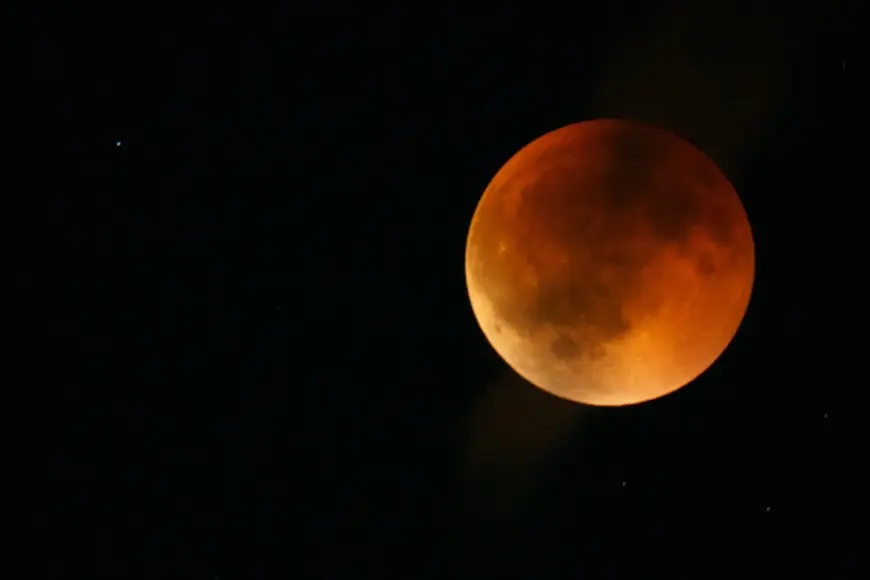
Skywatchers across the United States, the United Kingdom, Canada, and Australia are preparing for a dramatic celestial event: a total lunar eclipse blood moon set to light up the night sky in March 2026. During a total lunar eclipse, the Moon turns a deep copper-red color — a phenomenon commonly called a “blood moon.”
Unlike a solar eclipse, no special glasses are required to safely view a total lunar eclipse. If skies are clear, the event will be visible to the naked eye.
What Is a Total Lunar Eclipse Blood Moon?
A total lunar eclipse blood moon occurs when:
-
The Sun, Earth, and Moon align in a straight line.
-
Earth moves directly between the Sun and the Moon.
-
Earth’s shadow completely covers the Moon.
When the Moon passes fully into Earth’s darkest shadow (the umbra), sunlight filtering through Earth’s atmosphere bends and scatters. Shorter blue wavelengths scatter away, while red and orange light reach the Moon — giving it the signature reddish glow.
The deeper the Moon travels into Earth’s shadow and the more dust or particles in Earth’s atmosphere, the darker and redder the Moon can appear.
When Is the Next Total Lunar Eclipse Blood Moon? (ET Times)
The next widely visible total lunar eclipse blood moon is expected on March 13–14, 2026, with peak totality occurring during overnight hours in North America.
Here are approximate peak times in Eastern Time (ET):
| Phase | Time (ET) |
|---|---|
| Partial eclipse begins | 11:58 p.m., March 13 |
| Totality begins | 1:12 a.m., March 14 |
| Maximum eclipse | 1:58 a.m., March 14 |
| Totality ends | 2:44 a.m., March 14 |
Visibility:
-
United States & Canada: Excellent overnight viewing.
-
United Kingdom: Visible during early morning hours before moonset.
-
Australia: Limited or partial visibility depending on region.
Local times will vary slightly depending on exact location.
How to Watch the Blood Moon
Watching a total lunar eclipse blood moon is simple:
-
No eye protection is needed.
-
Binoculars enhance detail and color depth.
-
A telescope reveals subtle shading and lunar surface features.
-
Find a dark location away from city lights for the best experience.
Unlike solar eclipses, lunar eclipses are safe to observe with the naked eye at all stages.
Why the Moon Turns Red
The red color is caused by Earth’s atmosphere acting like a giant lens. During totality:
-
Sunlight bends around Earth.
-
Blue light scatters.
-
Red light passes through and illuminates the Moon.
Volcanic eruptions, wildfires, or atmospheric pollution can intensify the red hue by increasing particles in the air.
How Rare Is a Total Lunar Eclipse Blood Moon?
Total lunar eclipses happen about once every 2.5 years somewhere on Earth. However, visibility depends on your geographic location and weather conditions.
While not extremely rare, a total lunar eclipse blood moon remains one of the most visually striking astronomical events visible without equipment.
What Makes 2026’s Blood Moon Special?
This 2026 total lunar eclipse blood moon stands out because of its strong visibility across North America and parts of Europe. Clear skies could deliver several hours of viewing, including nearly 90 minutes of full totality.
For many skywatchers, this will be the first total lunar eclipse visible since 2022, making anticipation particularly high among amateur astronomers and photography enthusiasts.
As March approaches, experts recommend checking local weather forecasts and planning ahead. If conditions cooperate, the total lunar eclipse blood moon promises a dramatic and unforgettable night under the stars.