
























Is America Going to War With Iran? What the Escalation Means Now

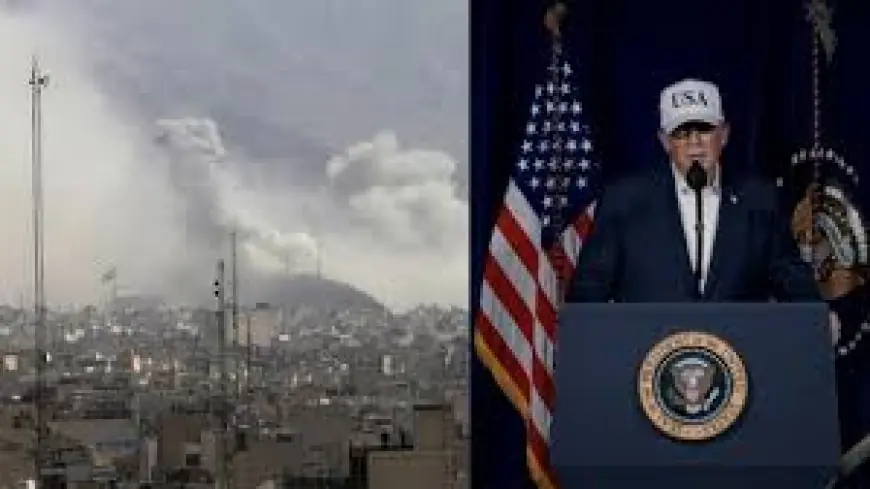
As of Feb. 28, 2026 (ET), the U.S. and Iran are engaged in active military exchanges following coordinated American and Israeli strikes inside Iranian territory. Iran has responded with missile and drone attacks targeting U.S. positions and Israel. The scale and speed of escalation have raised concerns that the confrontation could expand into a broader regional war.
What Is Happening Right Now?
The United States has launched what officials described as major combat operations aimed at degrading Iran’s military infrastructure, including missile-related facilities and defense assets. The strikes marked a significant shift from limited retaliatory actions to a coordinated, high-impact campaign.
Iran’s response has been immediate. Missile launches and drone activity targeting U.S. military assets and Israeli territory indicate that hostilities are no longer one-sided. Regional airspace disruptions, heightened military alerts, and emergency measures across Gulf states signal that the confrontation has entered a dangerous phase.
At present, the situation meets many operational definitions of armed conflict.
Is This Officially a War?
The United States has not issued a formal declaration of war against Iran. In modern conflicts, formal declarations are rare. Military engagements often unfold without that legal label, especially when initiated under executive authority.
From a practical standpoint:
-
Sustained U.S. air and missile strikes are ongoing.
-
Iran has carried out retaliatory attacks.
-
U.S. forces in the region are on elevated alert.
-
Naval and air assets have been repositioned to prepare for potential further escalation.
Military analysts note that if operations continue over multiple days with expanded targeting, the conflict would resemble a sustained war campaign—even if no formal declaration is issued.
Why the Conflict Escalated
The Trump administration has framed the strikes as a necessary response to what it described as imminent threats posed by Iran’s missile capabilities and broader military posture. Officials have argued that the action was intended to restore deterrence and prevent further strategic advancement by Tehran.
Iran, for its part, has characterized the strikes as an act of aggression and vowed to respond proportionately. The exchange of force has quickly created a cycle in which each side justifies further action as defensive.
Could This Become a Full-Scale War?
Whether America is “going to war with Iran” now depends on what happens next. Several developments would signal a move toward full-scale war:
-
Expanded U.S. targeting beyond military infrastructure into broader strategic sites.
-
Large-scale Iranian attacks causing significant U.S. casualties.
-
Mobilization of additional U.S. ground forces in the region.
-
Formal congressional authorization for prolonged combat operations.
If neither side de-escalates, the confrontation could widen geographically, potentially drawing in regional actors and affecting global energy routes.
Global Implications
The potential for war between the United States and Iran carries consequences far beyond the Middle East. Energy markets are already reacting to instability near key shipping corridors. U.S. allies in Europe, Canada, Australia, and the Gulf region are monitoring developments closely.
A prolonged conflict could disrupt oil supply chains, increase defense commitments abroad, and strain diplomatic relations across multiple alliances.
The Bottom Line
America is already engaged in direct military conflict with Iran. Whether that conflict evolves into a prolonged, full-scale war depends on escalation decisions made in the coming hours and days.
For now, the situation remains fluid. Military exchanges are active, rhetoric is hardened, and the risk of broader war is higher than at any point in recent years.