























US at War With Iran: Live Updates — Khamenei Fate Unknown, Iran Fires Back Across 8 Countries

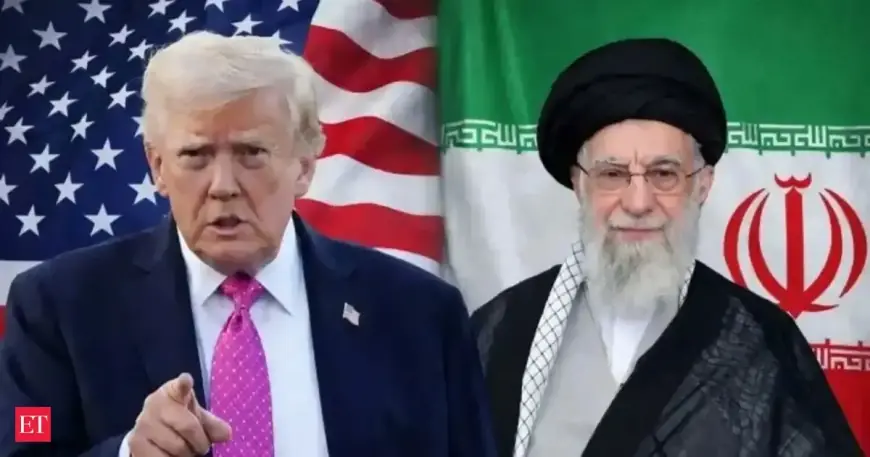
The United States is at war with Iran as of Saturday, February 28, 2026. Operation Epic Fury is actively unfolding right now. US and Israeli forces launched simultaneous strikes on Tehran in the early morning hours ET, targeting Iran's nuclear program, missile infrastructure, and top leadership. Iran has retaliated against US bases across eight countries. The fate of Supreme Leader Khamenei remains unconfirmed. This is the most dangerous moment in the Middle East in a generation.
Is Khamenei Dead? Israel Reports "Very High Success" Targeting Iranian Leadership
Israel's Channel 12 reports Israel assesses "very high success" in eliminating Iranian leadership, and that "it is not clear that Khamenei did not undergo a dramatic event." Israel may have hit the Supreme Leader. The ambiguity is deliberate — Israeli intelligence is still assessing the strike results as battle damage evaluations come in.
Iranian Foreign Minister Abbas Araghchi said that to the best of his knowledge, Supreme Leader Ali Khamenei and President Masoud Pezeshkian are still alive. Iran's constitution says that if the Supreme Leader dies, the current president, the head of the judiciary, and a cleric from the Guardian Council will assume his duties. Iranian state media confirmed the president is "safe and sound," but offered no visual proof of Khamenei's condition.
US Planned Escalating Strikes With Pause-and-Assess Off-Ramps Built In
The US has planned an escalating series of strikes with off-ramps along the way, according to a senior US official. Each round will be over a one to two-day period with pauses to reset and assess battle damage. The architecture of the campaign is designed to give Iran a window to stand down between rounds — but only if Tehran signals a willingness to negotiate.
In an exclusive interview with NBC News, Iranian Foreign Minister Abbas Araghchi said Iran was interested in de-escalation and willing to talk if the US stopped its attacks. That signal — the first public Iranian offer of dialogue since the bombing began — has not yet received an official White House response as of Saturday morning ET.
Iran Now at War With 8 Countries Simultaneously — Except Oman
Iran has retaliated, targeting Israel and US assets in multiple Middle East countries, including Qatar, the UAE, Kuwait, Bahrain, Syria, Jordan, Saudi Arabia, and Iraq. The scale of the retaliatory campaign stretches from the Persian Gulf to the Levant — the broadest simultaneous Iranian missile operation ever recorded.
Iran has launched air strikes against targets in all countries in the Gulf region with the exception of Oman, which has mediated nuclear talks between the US and Iran. Oman said it was dismayed by the air strikes which threaten to undermine ongoing negotiations, with its foreign minister stating: "I am dismayed. Active and serious negotiations have yet again been undermined. I pray for the innocents who will suffer."
School Strike Kills Dozens of Children in Southern Iran
Iranian officials and state-run media claimed Saturday that a US or Israeli strike hit a girls' elementary school in the country's far south, killing dozens of students. "The destroyed building is a primary school for girls in the south of Iran. It was bombed in broad daylight, when packed with young pupils," Iranian Foreign Minister Araghchi said. The school week in Iran begins on Saturday, meaning the building was full of children at the time of impact.
Iran's foreign minister declared the strike a war crime and vowed a response. Iran's exiled crown prince Reza Pahlavi posted a video on social media amid the strikes, telling Iran's military and security forces: "Your duty is to defend the people, not a regime that has taken our homeland hostage. Join the people and help bring about a stable and secure transition. Otherwise, you will go down with Khamenei's sinking ship."
Tehran Civilians Running Through the Streets, Internet at 4%
Massive explosions have been heard in Tehran, according to the semiofficial Iranian news agency Fars, with people running for cover following explosions in the Iranian capital on Saturday, February 28. Footage from the ground showed civilians sprinting through Jomhouri Street and University Avenue as thick plumes of smoke rose over the city's skyline.
Iran's internet connectivity collapsed to just 4% of normal levels within hours of the strikes beginning — a deliberate blackout measure consistent with crisis protocols used during previous conflicts. Iraq closed its airspace entirely, with its transport ministry confirming all air traffic was evacuated before the closure took effect. Airspace closures now stretch from Iran through Iraq, Kuwait, Bahrain, Qatar, the UAE, and Jordan simultaneously.
World Reaction: Macron, Pakistan, EU, and Australia Condemn the War
French President Emmanuel Macron pledged France "stands ready to deploy the necessary resources to protect its closest partners, should they request it," but warned: "The ongoing escalation is dangerous for all. It must stop." Pakistan's foreign minister condemned what he called "unwarranted attacks" on Iran in a direct phone call with Tehran's foreign minister Saturday morning.
The European Union's foreign policy chief Kaja Kallas called the conflict "perilous" and said she was working with Israel and Arab officials to pursue a negotiated peace, while confirming the EU was evacuating some staff from the region. Australian Prime Minister Anthony Albanese indicated his government believed the US had acted without sufficient international coordination — a rare public rebuke from one of Washington's closest allies.
What Happens Next: Off-Ramps, Strait of Hormuz, and the 60-Day Clock
The US is at war with Iran without a congressional declaration, without UN authorization, and without allied backing beyond Israel. The War Powers 60-day clock started ticking Saturday morning ET. Democratic and bipartisan Republican opposition is mounting in Congress. A War Powers vote is expected the week of March 2 when lawmakers return to Washington.
In a brief overnight phone interview, President Trump said he wants Iran to be a "safe nation." "All I want is freedom for the people," he told reporters. "I want a safe nation, and that's what we're going to have." Whether the world's fifth-largest military — one that has survived 47 years of sanctions, internal revolt, and two wars with Israel — accepts those terms or escalates further will define the next 48 to 72 hours of a conflict now watched by the entire planet.