

























Iran War Live: Operation Epic Fury Rages as Iran Fires Back Across Entire Middle East Region

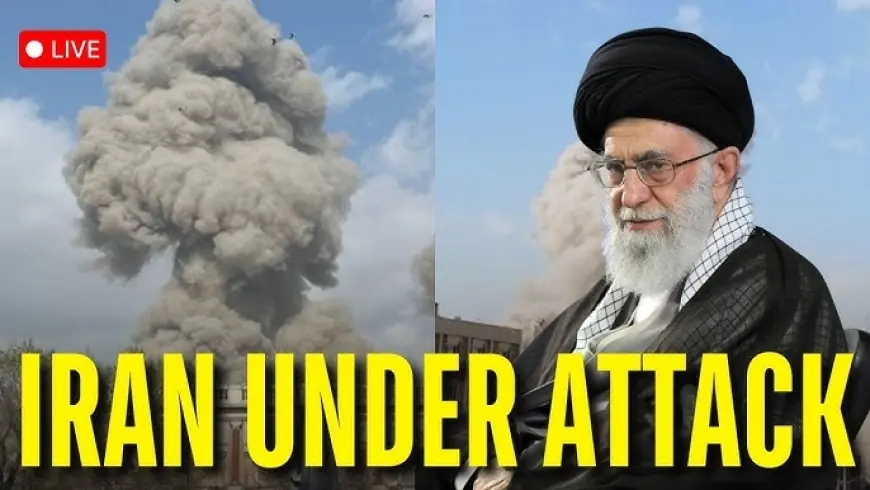
The Iran war is escalating by the hour on Saturday, February 28, 2026. The United States and Israel launched Operation Epic Fury against Tehran in the early morning hours ET, striking Iran's nuclear sites, missile facilities, and leadership compounds simultaneously. Iran has retaliated with a sweeping missile offensive targeting every Gulf nation hosting US troops except Oman — and the death toll is rising across multiple countries.
Iran War Latest: Khamenei Compound Struck, Supreme Leader Evacuated
Smoke billowed above the compound of Supreme Leader Ayatollah Ali Khamenei in Tehran on Saturday. Satellite imagery from Airbus showed black smoke rising from the compound, with damage indicating several buildings inside were directly hit by strikes. The compound, known as the beyt-e rahbari, has served for decades as the seat of the ayatollah's grip on power.
Khamenei is not in Tehran and has been transferred to a secure location, according to an official quoted by Reuters. Ayatollah Ali Khamenei and other senior Iranian officials were targets, according to a person familiar with the matter. It remains unclear whether any senior Iranian political or military figures were killed in the opening hours of the Iran war.
School Strike in Southern Iran Kills at Least 40 Children
An Israeli strike hit an elementary girl's school in Minab, a city in the Hormozgan province of southern Iran, killing at least 40 people, according to state-run IRNA news agency. The strike on civilian infrastructure immediately drew international condemnation and is expected to dominate the diplomatic response to the Iran war in the coming days.
Dozens were reportedly killed by an Israeli strike that hit a school in Iran's southern county of Minab, while Iranian state media reported explosions in central Tehran. The International Committee of the Red Cross called on all parties to spare civilian infrastructure including hospitals, homes, and schools from attack, warning that humanitarian aid cannot match the pace of suffering caused by continuous conflict.
Iran Fires Missiles Across Seven Countries in Unprecedented Retaliation
Iran retaliated, targeting Israel and US assets in multiple Middle East countries, including Qatar, the UAE, Kuwait, Bahrain, Syria, Jordan, and Iraq. Iran has launched air strikes against targets in all countries in the Gulf region with the exception of Oman, which mediated nuclear talks between Washington and Tehran. The scale and speed of Iran's retaliation exceeded what many analysts had anticipated given the damage done to its missile arsenal during the Twelve-Day War of June 2025.
A text message sent out to cellphones in Iran said the country's response "will be faster, more forceful, and more extensive than the 12-day war." The message, verified by NBC News, added that "Iran's armed forces have begun a comprehensive response against American and Israeli bases." Iran's foreign minister separately warned every Gulf nation that allowing the US and Israel to use their territory made them legitimate targets.
Iran War Death Toll: Civilians Killed in Syria, Israel Lightly Hit
Syrian state media reported at least four people killed and several wounded after an Iranian missile hit an industrial area of southern Syria's Sweida. In Israel, air defense systems intercepted Iranian barrages over Jerusalem and other cities, with one man reported lightly injured as sirens rang across the country. Israel declared a nationwide state of emergency and ordered all civilians to shelter in place.
Israel's Energy Minister Eli Cohen ordered a temporary suspension of activity at some natural gas wells in the Mediterranean Sea, with alternative fossil fuels to be used to keep power functioning — mirroring the energy disruptions seen during the June 2025 Twelve-Day War. The shutdown of Israeli gas platforms adds an energy dimension to the Iran war that could ripple through European markets within days.
World Reacts: Congress Furious, Europe Alarmed, Russia Condemns
Democratic Senator Tim Kaine denounced the Iran strikes as "dangerous, unnecessary, and idiotic," calling for the Senate to immediately return to session to vote on a War Powers Resolution to block US forces from further hostilities against Iran without congressional approval. He called the operation a "colossal mistake" and urged every senator to go on record about the action.
Finland's President Alexander Stubb said the US is largely operating outside traditional international law, noting: "Usually, justification for these types of attacks has been sought either from the UN or at least from allies. Now, there has not been much asked about this." French President Emmanuel Macron declared that the outbreak of war carries "grave consequences for international peace and security" and said France stands ready to protect its closest partners in the region if requested.
Tehran Civilians Panic as Iran War Comes Home
Cars clogged many of Tehran's roads as residents rushed to pick up children at school or left work early to head home. The government asked those already home to stay put. Long lines formed at bakeries and gas stations as people stocked up on essentials. Iran's internet connectivity collapsed to just 4% of normal levels within hours of the strikes beginning — consistent with blackout measures deployed in previous conflicts.
Several missiles struck University Street and the Jomhouri area in Tehran, with smoke seen rising over the city. Explosions were also reported in Tehran's northern Seyyed Khandan area, in the western Ilam province, and in the cities of Isfahan and Qom. Iran's government urged all citizens not already outside to remain indoors as the Iran war entered its most dangerous early phase.
Oil Markets and Strait of Hormuz: The Iran War's Global Economic Risk
The biggest economic risk centers on the potential for Iran to close the Strait of Hormuz, where a fifth of all the world's oil and liquefied natural gas passes through on the way to export markets. Analysts have estimated that Iranian moves to close the strait could send oil prices to $100 per barrel. Futures markets had already priced in significant risk premium ahead of Saturday's strikes.
Oman's foreign minister, who had been mediating US-Iran nuclear talks, responded with alarm: "I am dismayed. Active and serious negotiations have yet again been undermined. I urge the United States not to get sucked in further. This is not your war." With Operation Epic Fury described by the Pentagon as a multiday campaign, and Iran vowing a response more devastating than the Twelve-Day War, the Iran war shows no signs of de-escalation as Saturday evening ET approaches.