

























Qatar Airways to Slash Capacity as Hamad International Runs on One Runway

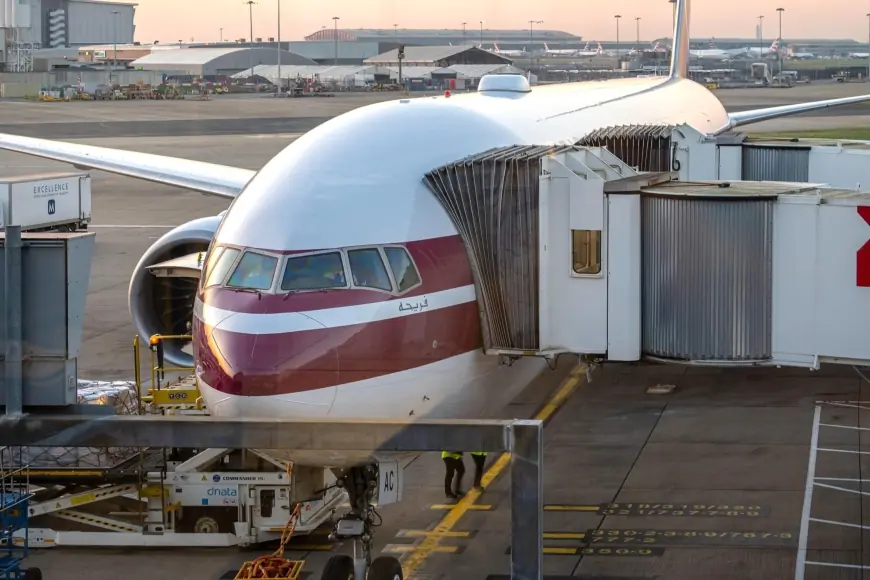
Qatar Airways will temporarily reduce its global flying programme while Hamad International Airport (HIA) operates on a single runway between April 13 and June 13, 2026. The changes — part of planned runway maintenance embedded in long‑term hub upgrades — are timed to preserve schedule reliability during the works.
Hamad International runway work and timeline
Hamad International will operate with one runway instead of two from April 13 to June 13, 2026, as a planned maintenance phase for runway upgrades proceeds. The carrier expects dual‑runway operations to be restored by early June 2026, ahead of the northern‑hemisphere summer, when traffic to Europe, Asia and North America typically rises. HIA originally opened in April 2014 and serves as the main international gateway for the country, providing both passenger facilities and substantial cargo capacity.
Qatar Airways capacity cuts and 8. 2% reduction
ch‑aviation capacity data show Qatar Airways will reduce overall capacity by approximately 8. 2% between the first week of April and the first week of May, the period when runway work is expected to peak. The airline says selected service adjustments have been coordinated in alignment with the planned maintenance at its Doha hub as part of routine network planning embedded in a long‑term infrastructure programme.
London Heathrow, Colombo Bandaranaike and Paris CDG hit hardest
The reductions are uneven across the network. On the Doha–London Heathrow pairing, weekly seats are pared back by 4, 818 — a 22. 2% decline — with weekly flights cut from 66 to 48. Services to Bandaranaike International Airport in Colombo will lose 2, 267 seats (a 26. 5% drop) and move from four daily frequencies to three; Paris Charles de Gaulle will see 2, 025 fewer seats (19. 9%), also stepping down from four daily services to three. ch‑aviation data indicate long‑haul, high‑volume routes are among the most affected.
UK monthly schedule adjustments and other affected airports
Separately, data supplied by Midas Aviation show the airline plans an 8% reduction in UK flights for July, with London Gatwick hardest hit — falling from 62 to 48 flights for the month, a reduction of almost a quarter. The Doha–London Heathrow schedule is shown shrinking from 292 to 287 flights in July, and Manchester will see flights decline from 111 to 93 over the same month, a 16% drop. Other departures flagged as impacted include Johannesburg OR Tambo, Venice Marco Polo, Peshawar and San Francisco.
Cirium scheduling data show seats from Doha to the UK were up 4% in the first quarter of 2026 compared with the same period last year. Ireland has recorded the largest increase, climbing by more than 40%. By contrast, seat bookings to Bulgaria (-45. 2%), Hungary (-47. 8%), Belgium (-26. 2%) and France (-15. 1%) are down.
Operational rationale and industry context
When a hub airport reduces runway capacity, schedule integrity must be protected: airlines typically cut frequencies rather than risk widespread delay and congestion. The strategy here is explicit — frequency adjustments are being used to maintain reliability while the airport undergoes planned upgrades, with full operations resuming once the second runway returns to service. What makes this notable is the attempt to balance a modest overall capacity drop of about 8. 2% with targeted reductions on peak long‑haul markets to avoid systemic disruption.
The short‑term cuts are framed as a necessary trade‑off to ensure the network can absorb lower runway throughput and then resume full service in time for the busier summer season. Travelers planning travel in April or May Doha are being steered to book ahead to secure seats during the maintenance window.
Other aviation items flagged alongside the update
The same industry roundup that carried the runway and schedule details also referenced several other aviation items: Italy's Aerolinee Siciliane aims for a mid‑2Q26 launch; the US exempts aircraft, engines and parts from new 10% tariffs; Iraqi Airways is mentioned in connection with an alleged $60 million spares procurement scam; a US carrier named Sterling is contemplating its post‑Saab future and Argentum growth; and Canada’s Air Transat is seeking support for a restructuring plan.