

























Chicago Bears Stadium Indiana Bid Escalates After New Law, Setting Up High-Stakes Illinois Showdown

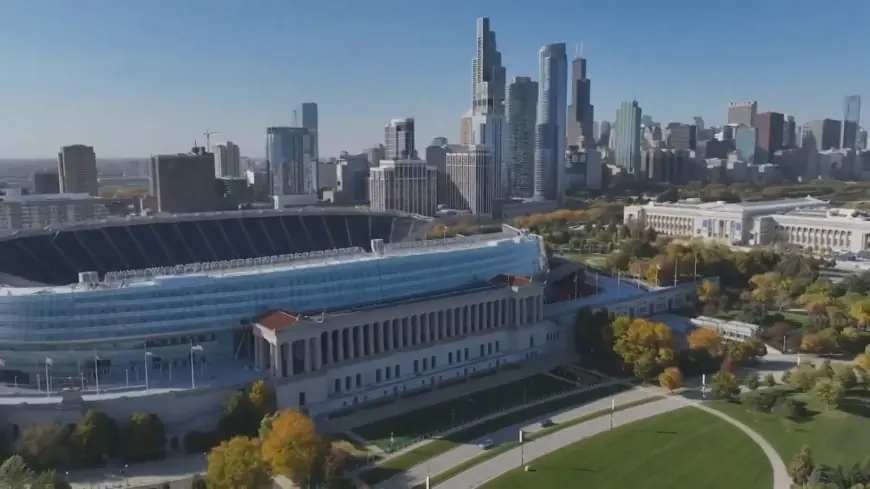
The push for a Chicago Bears stadium Indiana took a major step forward this week after Indiana lawmakers approved—and the governor signed—legislation designed to create a financing and governance framework for a potential new domed stadium and entertainment district in Northwest Indiana. The move intensifies an interstate competition with Illinois, where leaders are advancing their own policy changes to keep the Bears anchored closer to Chicago.
For fans and business leaders watching from the U.S., U.K., Canada, and Australia, the significance is bigger than a stadium: it’s a rare, high-profile example of how modern sports franchises leverage location, taxes, and infrastructure funding to shape billion-dollar projects that can redefine a region’s economy and identity.
Chicago Bears Stadium Indiana: What Indiana Passed and Why It Matters
Indiana’s new law establishes a regional stadium authority empowered to pursue land acquisition, financing, construction, and long-term operations for a new Bears venue in Northwest Indiana. The plan centers on the Hammond area near Wolf Lake, positioned close enough to the Chicago metro footprint to market itself as a “near-Chicago” solution while still shifting major tax and development benefits across state lines.
The structure is meant to speed up negotiations by giving Indiana a single entity with defined powers—one that can bundle public financing tools, coordinate infrastructure work, and negotiate with the team. Indiana officials have also discussed an aggressive timeline that targets a stadium opening later this decade, aiming to translate legislative momentum into a binding agreement.
The Money Question: Taxes, Bonds, and the Incentives Behind the Plan
Public financing is the core of the proposal’s appeal—and the biggest flashpoint. The Indiana framework leans on dedicated tax streams in Northwest Indiana, including hospitality-related mechanisms and admissions-style levies, intended to support bonds and cover portions of stadium-related costs and district buildout.
Supporters argue a dome stadium paired with a mixed-use district can generate year-round activity, not just eight or nine home games, creating hotel stays, restaurant traffic, and event revenue that expand the tax base. Critics counter that stadium math rarely matches the sales pitch, with the public often carrying risk if projected activity falls short.
For the Bears, the financial calculus is straightforward: a modern venue can unlock premium seating revenue, naming rights, expanded sponsorship inventory, and major-event hosting—assets that Soldier Field’s current configuration and governance structure have struggled to maximize.
Illinois Response: Property Tax Flexibility and the Arlington Heights Path
Illinois is not conceding the fight. State lawmakers have been advancing a bill aimed at offering large-scale developers more flexibility in how property taxes are negotiated for mega-projects—an approach widely viewed as tailored to the Bears’ long-discussed Arlington Heights site, where the team controls the former racetrack property but has been stuck in a prolonged tax dispute and political stalemate.
Illinois leaders have signaled that retaining the Bears is about more than pride; it’s about keeping jobs, visitor spending, and long-term development momentum within the state’s economic orbit. The political challenge is that public officials face backlash when incentives appear to favor a wealthy franchise, especially when voters are sensitive to cost-of-living pressures and broader budget priorities.
What’s Happening Now: Due Diligence, Site Work, and the Next Decision Window
Both sides are now in a race to make their offer “real” in the way that matters most to an NFL franchise: certainty. Indiana’s law is a concrete step that reduces ambiguity around who can negotiate and how funding could be structured. Illinois is attempting to reduce its own uncertainty by changing the rules that have slowed the Arlington Heights track.
The Bears have framed the moment as a due-diligence phase, suggesting a final location decision is not yet locked. The next stretch of weeks is likely to be defined by site feasibility work, infrastructure commitments, and the details that determine whether a stadium district can function year-round—transport access, parking, public safety costs, and what happens to existing stadium obligations in Chicago.
| Key Milestone | What It Signals | Why It Matters |
|---|---|---|
| Indiana signs stadium authority law (late Feb. 2026 ET) | A ready-to-negotiate governance framework | Speeds deal-making and financing planning |
| Illinois advances property tax flexibility bill (late Feb. 2026 ET) | A targeted attempt to unblock Arlington Heights | Keeps Illinois path viable for the Bears |
| Bears complete due diligence (next 1–2 months) | Site and financing reality check | Determines whether a term sheet is possible |
| Target opening window discussed for 2029 | Aggressive build schedule | Impacts lease planning and interim seasons |
Why This Story Resonates Beyond the Midwest
A Chicago Bears stadium Indiana isn’t just a local headline—it’s a case study in modern sports economics that audiences in London, Toronto, and Sydney recognize from their own debates about public funding, regeneration projects, and team leverage.
In the U.K., fans are familiar with stadium-led redevelopment promises around transport upgrades and district building. In Canada and Australia, public-private tension around major venues is a recurring political issue, especially when taxpayers are asked to underwrite projects that primarily enrich private stakeholders.
For now, the Bears’ future remains unsettled, but the trajectory is clear: Indiana has built a fast-moving legal and financial runway, Illinois is scrambling to make its offer competitive, and the team holds the leverage. The next formal steps—term sheets, binding financing commitments, and disclosed project costs—will determine whether this becomes a serious relocation moment or a pressure campaign that ultimately ends with a new stadium staying closer to Chicago.