























Iran News Highlights – February 28, 2026

On February 28, 2026, significant events unfolded in Iran as the United States and Israel conducted coordinated military strikes across the country. This marked a critical escalation in military tension, targeting key Iranian leadership and military infrastructure.
US and Israel Conduct Military Strikes in Iran
The military operation, described by U.S. President Donald Trump as a “major combat operation,” aimed to neutralize “imminent threats” posed by Iran, particularly regarding its nuclear ambitions. Strikes were reported in multiple cities including:
- Tehran
- Isfahan
- Qom
- Tabriz
- Karaj
- Bushehr
Key targets included the compound of Iranian Supreme Leader Ayatollah Ali Khamenei and the residence of President Masoud Pezeshkian. Reports indicated that Khamenei had been relocated to a secure location prior to the strikes.
Casualties and Infrastructure Damage
The consequences of the strikes were severe. Reports indicated that several senior commanders of the Islamic Revolutionary Guard Corps (IRGC) were killed. In the governor of Minab’s statements, at least 24 civilians were reported killed in an Israeli airstrike targeting a school.
The strikes also impacted vital infrastructure across central Tehran, hitting areas such as University Street and Jomhouri. In Tabriz, missile sites were targeted, and a radar installation in Bandar Baher was reportedly struck.
Additionally, the Iranian communication networks suffered as internet connectivity dropped dramatically to just 4%, and mobile services were disrupted across various regions.
Political Responses and Protests
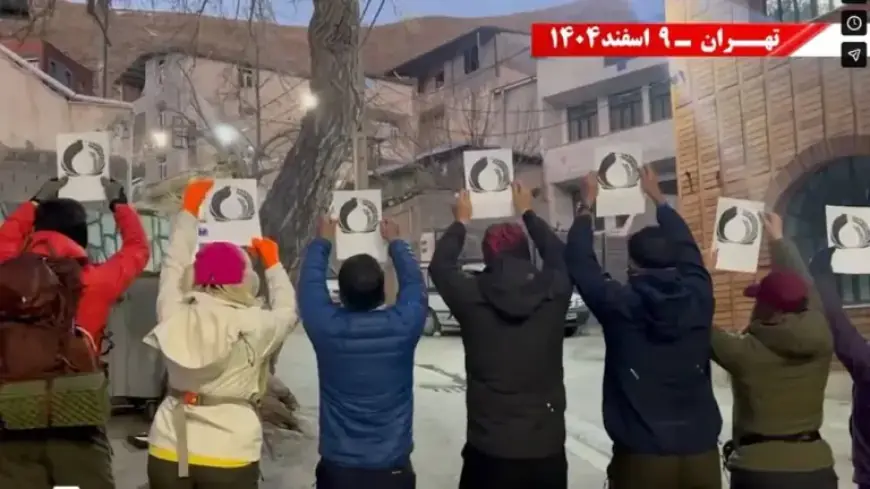
Amidst the heightened military conflict, the Iranian regime faced widespread protests, particularly led by students who called for a democratic republic. On February 23, students from Tabriz University issued a manifesto rejecting both the current regime and the previous monarchy, rallying under the banner of freedom.
On February 26, 2026, Maryam Rajavi, a prominent opposition figure, delivered a speech emphasizing unity against regime repression during Ramadan. She called for solidarity among all oppressed nationals in Iran.
International Solidarity Events
Across the globe, expressions of support for the Iranian uprising manifested in various gatherings:
- Paris: An exhibition at Place de la Bastille commemorated victims of the uprising.
- Melbourne: Freedom-loving Iranians gathered to honor martyrs from the January protests.
- Manchester: Academics organized an event to promote solidarity and called for participation in a rally in London.
Conclusion
The events of February 28, 2026, signify a critical juncture in Iran’s complex socio-political landscape. As international military actions unfold, both internal protests and external solidarity continue to reshape the narrative surrounding freedom and governance in Iran.