

























Impact of the Parliament Square defacement and the arrest of Caspar San Giorgio

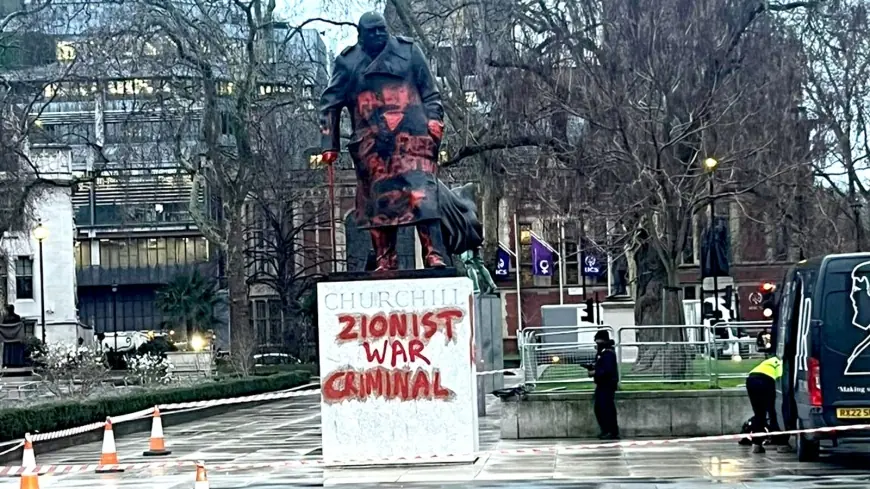
The graffiti attack on the Winston Churchill statue in Parliament Square has immediate consequences for policing, heritage protection and community relations — and the individual named in charging papers, caspar san giorgio, is now at the center of those consequences. The appearance of slogans such as "Never again is Now", "Free Palestine" and other phrases has put custodians, government officials and Jewish community groups on alert while an active police response unfolds.
Who feels the impact first and how
Here’s the part that matters: the physical monument was closed off and cleaning operations began quickly, but the incident has rippled wider. Law enforcement resources were mobilised within minutes of officers being alerted. Political and community representatives have issued strong condemnations, and local authorities moved to secure the site while the legal process for the arrested individual proceeded.
Caspar San Giorgio: arrest, charge and custody status
The man identified as Caspar San Giorgio is 38 and listed as of no fixed address. He was arrested shortly after 04: 00 GMT on Friday and was taken into custody; a charging update shows he was charged with criminal damage and was remanded into custody, with a planned appearance at Highbury Corner Magistrates' Court later. Earlier police accounts described an arrest on suspicion of racially aggravated criminal damage, and a later update indicated an additional arrest on suspicion of supporting Palestine Action, a proscribed organisation, under the Terrorism Act. One police statement noted the first officers reached the scene within two minutes of being alerted shortly after 4am on Friday 27 February.
What was painted on the statue and the scene at Parliament Square
The bronze statue of Sir Winston Churchill in Parliament Square was sprayed with multiple slogans. Phrases recorded at the scene include "Zionist war criminal", "Stop the Genocide" (also seen as "stop the genocide"), "Free Palestine", "Never again is Now" and "Globalise the Intifada". Some of the graffiti was in red paint. The statue was cordoned off and cleaning work was under way the following morning. Observers noted an image of the monument that included symbols alongside the slogans.
Official and community reactions
Government representatives described the vandalism as "completely abhorrent" and said the perpetrator must be held to account; a Home Office spokesperson called the vandals a "disgrace" and said Churchill is a figure of national pride. A Greater London Authority representative said officials were appalled and were working to remove the graffiti as quickly as possible. Jewish organisations expressed disgust at the targeting of the wartime prime minister's statue, with leaders saying the act combined hostility toward Jews with disdain for Britain.
History of the statue and prior incidents
The bronze monument, created by Ivor Roberts-Jones, stands about 12ft (3. 6m) tall and was unveiled in 1973 by Lady Churchill, also named Clementine Churchill. It is one of a group of statues around Parliament Square that includes well-known statesmen. The statue has been vandalised several times before: in June 2020 it was scrawled with graffiti accusing Churchill of being a racist during a Black Lives Matter protest triggered by the death of George Floyd, and later in 2020 an activist linked to an environmental protest was ordered to pay more than £1, 500 for defacing the plinth by painting "racist" on it. In December, law-enforcement guidance from two police forces said anyone found using the slogan "globalise the intifada" would face arrest; that guidance followed two terror attacks referenced by authorities.
It’s easy to overlook, but the statue’s repeated targeting means both conservation work and policing have become recurring, tangible costs for the site and its stewards.
The real question now is how the legal process and subsequent public debate will unfold while the monument is cleaned and the individual charged remains in custody.
What’s easy to miss is how quickly officers were on scene and how many different official strands — policing, government comment, community responses and heritage preservation — are being drawn in by a single act of vandalism.