

























US and Israel Strike Iran; Trump Urges Iranian Government Overhaul

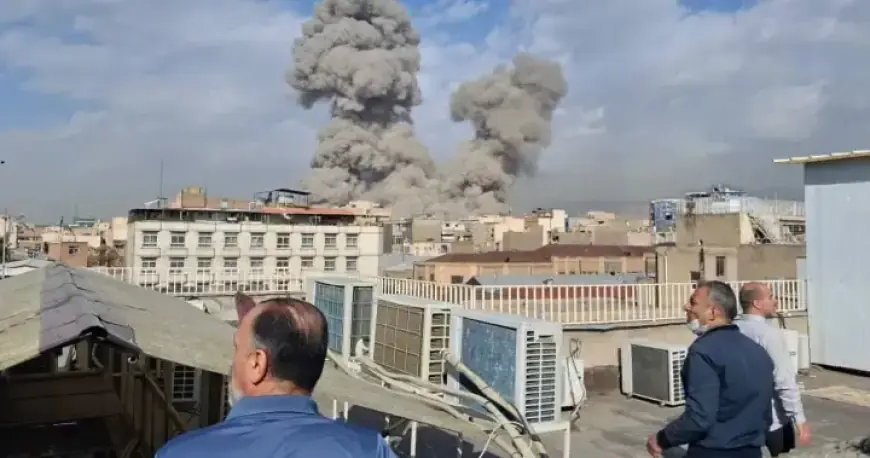
The United States and Israel have embarked on a significant military operation against Iran, marking a dramatic escalation in tensions in the region. This coordinated strike began on Saturday, targeting key locations across Iran. U.S. President Donald Trump has urged the Iranian population to “take over your government,” indicating a desire to dismantle Iran’s long-standing theocratic regime.
Details of the Attack on Iran
The initial focus of the strikes appeared to be on the residence of Iran’s Supreme Leader, Ayatollah Ali Khamenei, located in downtown Tehran. There have been reports of smoke rising from the capital, but details on Khamenei’s presence during the attack remain unclear.
In a video statement, Trump condemned the Iranian regime, emphasizing that the United States has been a target of violence from Iran for nearly five decades. He justified the military action, stating, “For 47 years, the Iranian regime has chanted Death to America.” Trump advised Iranians to seek shelter, then encouraged them to reclaim their government once the strikes concluded.
Responses from Iran and Allies
In retaliation, Iran’s Islamic Revolutionary Guard Corps launched a “first wave” of drones and missiles aimed at Israel. Israeli officials issued nationwide warnings as they prepared to intercept incoming threats. Additionally, reports indicated that a missile was aimed at the U.S. Navy’s Fifth Fleet, stationed in Bahrain.
Throughout the region, alarms sounded in Kuwait, Qatar, Iraq, and the United Arab Emirates, with airspace closures reported in these countries. Iranian-affiliated Houthis in Yemen threatened renewed assaults on shipping routes in the Red Sea and potential attacks on Israel.
- Iran’s Foreign Ministry pledged a fierce response to the attacks, asserting their right to defend their sovereignty.
- Prime Minister Benjamin Netanyahu described the joint operation as crucial for dismantling the existential menace that Iran poses.
Military Developments and Casualties
The operation is characterized as “major combat operations” by Trump, highlighting more extensive goals than merely curbing Iran’s nuclear ambitions. The conflict has roots dating back to the Islamic Revolution of 1979, transforming Iran from an ally into a significant adversary.
While acknowledging potential American casualties, Trump noted that such risks are inherent in warfare. At the same time, he accused Iran of advancing its nuclear program and missile capabilities targeting the U.S.
Current Status and Reliability of Information
As the strikes unfolded, there were reports of explosions ringing out across Iran, particularly in Tehran. The Iranian government has not released information regarding casualties from the assaults, but the situation remains fluid. Emergency protocols were activated in Israeli hospitals in anticipation of casualties from incoming missile strikes.
U.S. embassies in Qatar, the United Arab Emirates, and Israel have advised staff to shelter in place, echoing safety recommendations for American citizens in the region. The ongoing military activity signals a critical juncture in U.S.-Iran relations, with uncertainty looming about the future of regional stability and Iran’s nuclear ambitions.