
























Anthropic boss rejects Pentagon demand to drop AI safeguards as Claude and claude become flashpoint

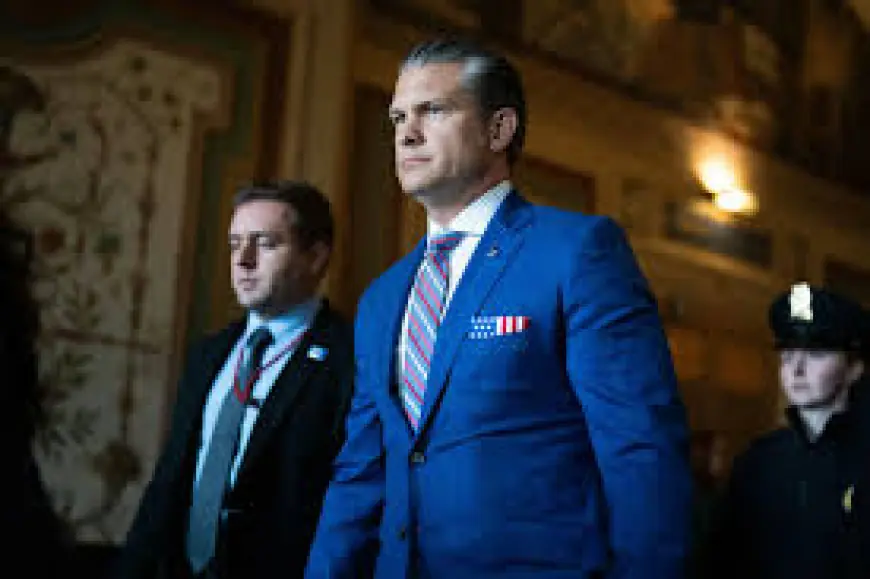
Anthropic chief executive Dario Amodei said on Thursday the company will not accept contract language that could allow claude to be used in ways that "undermine, rather than defend, democratic values, " and that it would rather not work with the Pentagon than agree to such uses. The dispute has escalated after a meeting between Anthropic and US Secretary of Defense Pete Hegseth that left open the prospect of Anthropic being removed from the department's supply chain.
Meeting with Pete Hegseth ended with demand for "any lawful use" and a supply‑chain threat
Amodei's comments came two days after a meeting with Pete Hegseth in which the Pentagon pressed Anthropic to accept the principle of "any lawful use" of its tools. That session ended with a threat to remove Anthropic from the Defense Department's supply chain, a step the department framed as a response to security concerns.
Dario Amodei says company will not allow mass surveillance or autonomous weapons
Amodei said on Thursday the company would rather not work with the Pentagon than agree to uses of its technology that may "undermine, rather than defend, democratic values. " He said "these threats do not change our position: we cannot in good conscience accede to their request. " At issue, he said, are potential uses of Anthropic's AI tools like Claude for "Mass domestic surveillance" and "Fully autonomous weapons. " He added that "such use cases have never been included in our contracts with the Department of War, and we believe they should not be included now. "
Amodei also warned: "Should the Department choose to offboard Anthropic, we will work to enable a smooth transition to another provider. "
How Claude became central as Anthropic flags problematic contract wording
An Anthropic spokeswoman said on Thursday that the company received updated contract wording from the Defense Department on Wednesday night, but that the new draft represented "virtually no progress on preventing Claude's use for mass surveillance of Americans or in fully autonomous weapons. " She said "new language framed as compromise was paired with legalese that would allow those safeguards to be disregarded at will, " and added that "these narrow safeguards have been the crux of our negotiations for months. "
Emil Michael pushes back, says military must be trusted and existing rules bar feared uses
Emil Michael, the US Undersecretary for Defense, personally attacked Amodei on social media on Thursday night, writing that the executive "wants nothing more than to try to personally control the US Military and is ok putting our nation's safety at risk. " In an interview, Michael said: "At some level, you have to trust your military to do the right thing. " He also said the uses of AI Anthropic fears are already barred by law and by Pentagon policies and added: "We do have to be prepared for what China is doing. "
Pentagon escalation options include the Defense Production Act and supply‑chain designation; critics call the grounds flimsy
A Pentagon official previously said that should Anthropic not comply, Hegseth would ensure the Defense Production Act was invoked on the company. The act gives a US president the authority to deem a given company or its product so important that the government can require it to meet defence needs. Hegseth also threatened to label Anthropic a "supply chain risk, " meaning the company would be designated as not secure enough for government use.
A former DoD official who asked not to be named said on Thursday that Hegseth's grounds for either measure were "extremely flimsy. " A representative of the Defense Department could not be reached for comment.
Department of War naming and executive‑order detail
The Department of War is a secondary name for the Defense Department under an executive order signed by US President Donald Trump in September, a change noted by Anthropic as it pushed back against proposed contract language tied to military use.