
























Lesotho Nurses Trek to Inaccessible Village After Poverty Blocks Children from Vaccination

In lesotho a team of frontline nurses moved into hard-to-reach hills after discovering a mother whose children had missed routine immunizations because she could not afford tiny but essential costs. The intervention took place during a nationwide measles and rubella campaign in late October 2025 and highlights how economic barriers can place free public healthcare out of reach.
Lesotho: Motebang Hospital team responds to Khanyane household
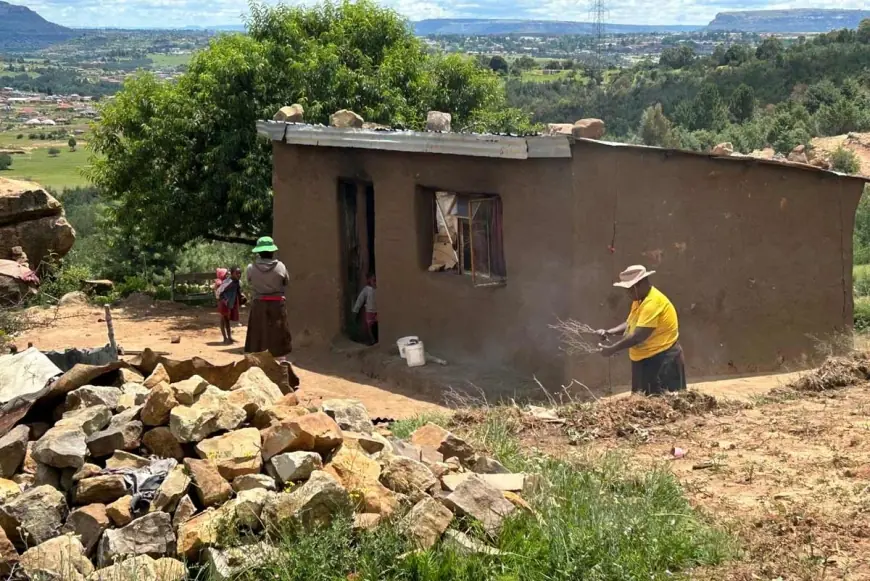
A single-room clay home on the slopes of the Fothane Hills in Khanyane, Leribe district, became the focus of intensified outreach when nurses learned that extreme poverty had left a family isolated from public health services. The mother, 35-year-old Mabafula Ntšihlele, told outreach workers she lives about ten kilometres from Motebang Hospital and had been unable to bring her children for vaccination because she could not pay for a medical booklet costing about US$1. 50 or the roughly US$1. 60 return transport fare.
Between 20 and 25 October 2025, lesotho ran an intensive nationwide measles and rubella vaccination campaign. Minister of Health Selibe Mochoboroane instructed village health workers to ensure every child under five be found and vaccinated, telling them explicitly that not a single eligible child should be missed. Village health worker Makoetle Koetle reported that when Ntšihlele’s under-five children did not appear at the temporary vaccination point, the family was flagged to nursing staff.
’Mamoferefere Zim, manager of nursing services at Motebang Hospital and supervisor of the Leribe campaign, said she felt compelled to visit even after being told the village was inaccessible by car. The team’s decision to bridge that distance themselves was driven by the clear link between poverty and exclusion: without transport money, nappies, clean clothes and the modest booklet fee, families could not access free services at the clinic.
Statistics South Africa: January 2026 records 11% tourism rise and 1. 13 million overnight visitors
While frontline health workers tackled access gaps in rural lesotho, neighbouring South Africa recorded a sharp rise in inbound travel. Statistics South Africa shows a year-on-year increase of 11 percent in tourist arrivals in January 2026, with 1, 133, 533 overnight visitors contributing to a total of 3, 373, 931 movements when arrivals, departures and transits are combined.
The tourism upswing has been attributed to improved air connectivity, strategic partnerships and initiatives to ease visa processes, drawing visitors from markets including the United Kingdom, China, Bahrain, Morocco, Kenya and Egypt. Those shifts are measurable: enhanced mobility and travel facilitation translated directly into higher overnight volumes at the start of 2026.
The juxtaposition of these developments underscores a simple cause-and-effect pattern: in South Africa, policy measures and connectivity improvements drove travel growth; in lesotho, the absence of small financial means—booklet fees and transport—kept families from accessing care despite available services. What makes this notable is the parallel visibility of mobility’s benefits for tourism and of mobility’s costs as barriers to essential health services in the same region.
Officials and health supervisors framed their responses around that dynamic. In Lesotho, targeted outreach by Motebang Hospital’s nursing team and the direct instructions from the Minister of Health catalyzed a focused effort to reach children in the hardest-to-reach households during the five-day vaccination push. In South Africa, government and industry actions that improved connectivity translated into a measurable 11 percent rise in tourist arrivals in a single month.
Both stories illustrate how concrete decisions—whether to send a team on foot into an inaccessible village or to expand airline links and visa facilitation—produce rapid, measurable effects. For policy makers and implementers in the region, the immediate implication is clear: small costs and logistical gaps can exclude vulnerable people from health programmes even as broader mobility trends deliver large gains in other sectors.
As public-health teams in rural Leribe continued to navigate transport challenges and dignity-related obstacles for families like Ntšihlele’s, the statistics from January 2026 provided a contrasting metric of regional mobility and economic opportunity. The outcomes in both cases will remain contingent on sustained operational choices at local and national levels.