























Bridgerton’s Season 4 Shockwaves: New Lady Whistledown, Francesca’s Grief and a Shifted Sex‑Scene Tone

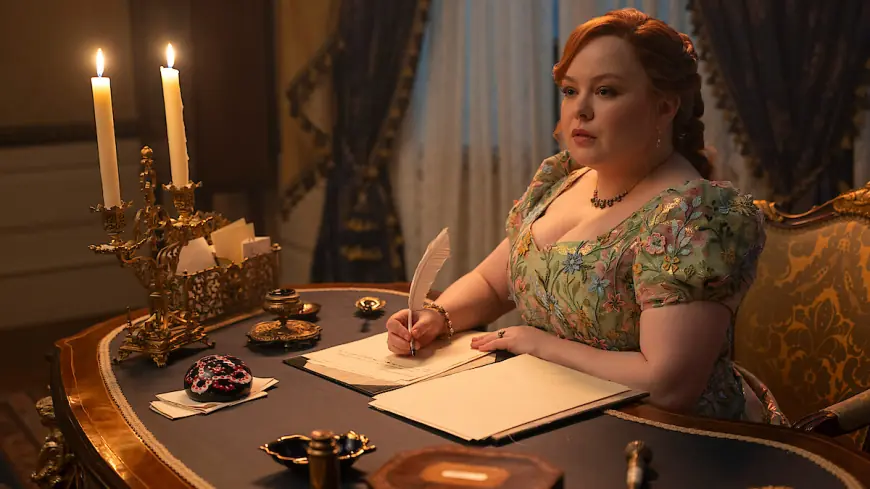
For viewers, the newest stretch of bridgerton matters because several creative choices land at once: a revealed new Lady Whistledown after a shocking Season 4 twist, the on‑screen death that forces Francesca into immediate grief, and a quieter, more restrained approach to sex scenes that changes how intimacy reads across the season. These beats alter the show’s emotional center and reshape how long‑time fans will interpret character arcs going forward.
How Bridgerton fans feel this now — and who notices first
Regular viewers are the first to feel the cumulative effect: tonal pivots pile on a character who was previously peripheral, and a major loss reframes ongoing romance plots. If you care most about character psychology, Francesca’s sudden bereavement will register hardest; if you follow series gossip and plot mechanics, the new Lady Whistledown reveal will dominate conversation. Here’s the part that matters: these shifts are not isolated beats but connective tissue that changes earlier moments when rewatched.
Event details and casting notes (embedded, not step‑by‑step)
Who is the new Lady Whistledown after that shocking Season 4 twist is a central question; the identity tied to that twist is unclear in the provided context. The season’s Part 2 contains spoilers that reposition Francesca’s storyline: in Part 2, John Stirling dies, and Francesca’s immediate grief becomes a focal point. Hannah Dodd, an English actress aged 30, remembers auditioning intensely for Season 1 for the role of Daphne and losing that part to Phoebe Dynevor. She later filmed a self‑tape for a very secretive project without realizing it was bridgerton again. Dodd spoke at London’s 180 House in mid‑February and chose a remote table at the members club to avoid overheard spoilers; Part 2 debuted on Thursday.
Dodd was cast as Francesca for Season 3, replacing Ruby Stokes, who had played the role in the first two seasons and departed due to scheduling issues. She described feeling pressure joining an already close family but said the cast made her feel at home quickly. The showrunner Jess Brownell noted the team had seen many actors and that Dodd was a late discovery who brought a particular blend of shyness and latent strength needed for Francesca’s trajectory. Brownell also discussed Season 3, a debate with Shonda Rhimes over Colin’s virginity, Julie Andrews’ fate as narrator and visual changes coming to Season 4. Dodd met with the show’s team and shortly after was in piano lessons as she prepared for the role.
Francesca’s arc vs. the books — what’s new on screen
Much of Francesca’s screen story so far is imagined by the writers and exists before the events in Julia Quinn’s novel When He Was Wicked, known among fans as “Francesca’s book. ” Readers of that book will note differences: in the novel, John is alive for about ten pages before a time jump, and Chapter 1 of her book begins after his death, so the immediate bereavement the show portrays departs from the source chronology. The creative choice to dramatize Francesca’s earlier life — her entry into the ton, marriage to John Stirling (Victor Alli), and settling in his London home — changes how viewers meet her grief on screen.
Sex scenes and tonal critique: quieter, more measured intimacy
The season’s sex scenes have prompted a formal assessment of tone. One critical evaluation framed Francesca and John’s brief sex scene as neither hot nor heavy: their romance began in Season 3 as two introverts bonding over shared silences, they married and moved to John’s native Scotland, and now that private life reads unevenly on screen. In the scene described, John is on top, slowly thrusting and moaning, while Francesca lies there with a pleasant, if uninspired, smile; John appears to be enjoying the encounter more. That muted depiction sits alongside broader observations of the series’ intimacy choices.
Context for the season’s approach: the show’s family backstory — Violet Bridgerton and her allergic‑to‑bees husband Edmund had eight children named in alphabetical order — has been driving serialized storytelling since Season 1 debuted in December 2020. Critics who rate the show’s erotic charge gave Season 3’s sex scenes a 4 out of 10 and a spinoff miniseries a 3 out of 10; Part 2 arrives a month after Part 1 and invites comparison with those earlier tallies.
- Key plot and casting points to keep in mind: Hannah Dodd was up for Daphne in Season 1 but later joined as Francesca; she replaced Ruby Stokes due to scheduling issues.
- Francesca’s on‑screen wedding lead is John Stirling, Earl of Kilmartin (Victor Alli); his death is central to Part 2.
- Benedict (Luke Thompson) is framed as aimless, experimenting with painting and sketching, drinking late with a bohemian crowd, and discovering interest in both men and women — a development not present in the novels.
- Sophie (Yerin Ha) is introduced as a maid and the illegitimate child of a deceased lord; a masked‑ball meeting with Benedict echoes a Cinderella riff and drives much of the season’s logistical plotting.
- Previous intimacy ratings: Season 3 scored 4/10 for sex scenes; a related spinoff was rated 3/10.
This is read by an automated voice. Please report any issues or inconsistencies here.
What’s easy to miss is that these changes aren’t cosmetic: recentering Francesca, altering grief’s timeline, and dialing intimacy down all push the series toward a different emotional register. The real question now is whether viewers who prefer the show’s earlier theatrical heat will adapt to a quieter, character‑driven rhythm or push back on the narrative choices made this season.