




















Arlene Fraser: New Documentary Reopens the 30-Year Mystery of a Murder Without a Body

arlene fraser vanished from her unlocked Elgin bungalow on 28 April 1998 after waving her two children off to school, and a new two-episode documentary has reopened questions about how a prominent local man was twice convicted despite the absence of a body or physical forensic proof. The revisit matters now because the case’s legal and emotional threads — a five-week-old attempted strangling, a 14-year court process and the prospect of the convicted husband becoming eligible for release — remain unresolved for the family.
Arlene Fraser’s disappearance on 28 April 1998
The last known contact came at 09: 41 on 28 April 1998, when Arlene phoned her children’s school to check when her son would return from a trip. Ten minutes later the school rang back with that information and received no answer. She also failed to attend a planned meeting with a friend at 11: 00. Police were alerted overnight; at about 02: 00 the following morning officers told her sister, Carol Gillies, that the 33-year-old was missing. Carol later recalled waking to a knock at the door and a 200-mile journey from her home in Erskine to the family home.
Elgin bungalow and the absence of forensic evidence
Officers who entered the house found domestic life frozen: a bicycle on its side in the yard, a vacuum cleaner plugged into a hallway socket, the ironing board left out and washing hanging on the line. Children’s toys sat in their normal places and medication Arlene needed for Crohn’s disease remained in the home. The scene was described as offering no signs of disturbance — no crime scene markers, no visible forensics, no eyewitnesses and no CCTV — prompting one investigating officer to deploy a full inquiry team when the lack of clues made foul play seem likely.
Nat Fraser: violence, alibi and the long legal process
The obvious suspect was Arlene’s estranged husband, Nat Fraser. Their marriage had deteriorated; he had been seen with a black eye at their wedding after they met in 1985, and the relationship produced two children — Jamie, born in 1987, and Natalie, born five years later. Five weeks before her disappearance, Nat had placed his hands around Arlene’s neck until she lost consciousness and was facing an attempted murder charge. Later in court a judge accepted the defence’s contention that the attack was out of character, but that ruling did not erase wider concerns about repeated abuse.
Over a tortuous 14-year legal process Nat was twice found guilty of her murder. Yet the conviction coexisted with the prosecutorial reality that there was no body, no weapon and no direct forensic link from the scene. His alibi was judged strong during the inquiry, and his public reading of a prepared statement at a press conference — including an appeal phrased to Arlene — did little to produce new evidence. Almost 30 years on, Arlene’s body has never been found and Nat will soon become eligible for parole, a prospect that has prompted the family to press for legal change that would withhold release unless he reveals the body’s location.
Moray Women’s Refuge, experts and family testimony
Arlene’s history included stays at Moray Women’s Refuge in 1990 and again in 1992, from which she returned to Nat each time. Refuge co-founder Lorna Creswell reflected on why some women go back to abusive partners, and Dr Emma Plant of the Moray Violence Against Women and Girls Partnership emphasised that isolated incidents of strangulation are unlikely, framing domestic violence as a pattern driven by control. Isabelle Thompson, Arlene’s mother, described being "over the moon" with her grandchildren, and family and friends consistently said the disappearance was out of character for someone who would not abandon her children.
Mark Cooper, Carol Gillies and the documentary revival
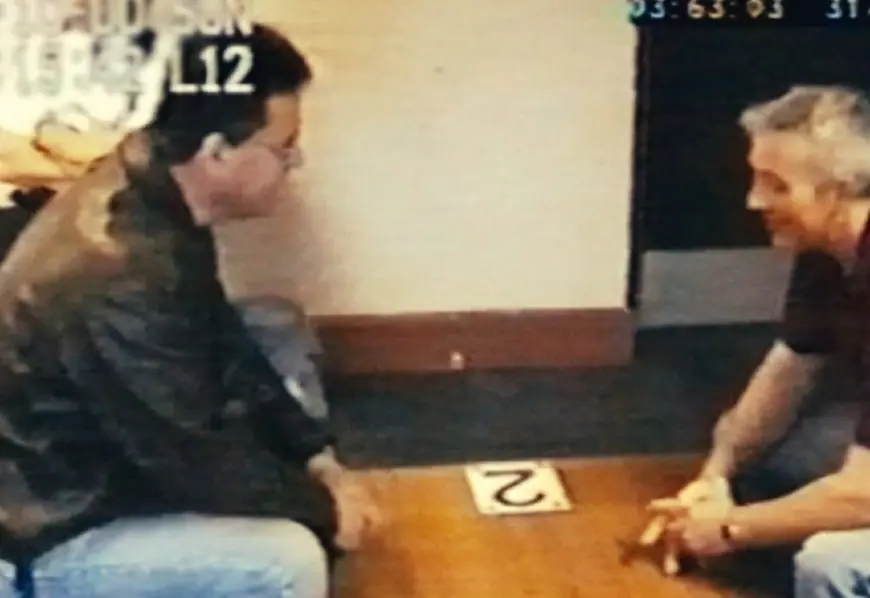
The new programme, drawn from archive footage and firsthand testimony, includes accounts from police officer Mark Cooper, who was on duty when the missing-person report arrived and said the house did not "look like a crime scene. " Carol Gillies appears on camera describing the early-morning knock and the moment police informed her sister was missing. The two-episode film was scheduled to air on Scotland on February 24 at 21: 00, and it stitches together the abruptness of Arlene’s disappearance with the twists of subsequent trials.
What makes this notable is that the public record combines a vivid domestic snapshot — neighbours, household details and family testimony — with a persistent evidential void: despite repeated convictions and months of investigation, the core physical proof that would end the family’s limbo has never been produced. That tension underpins the family’s plea for legal safeguards and keeps the central question — what happened to arlene fraser? — alive three decades on.