























Rolls Royce Share Price Set to Reprice Markets After 2025 Profit Surge, Buyback and Guidance Upgrade

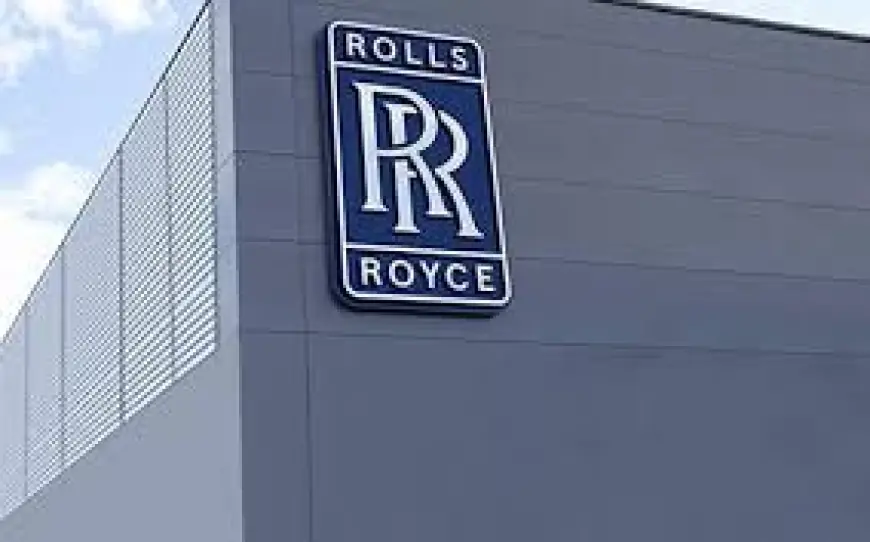
This matters now because the company has layered stronger earnings, a significant cash-return programme and upgraded guidance into a single package — forces that are already moving the rolls royce share price. The combination of a near-40% jump in underlying operating profit, upgraded mid-term targets and a £7bn–£9bn buyback (with £2. 5bn this year) changes the investment calculus for holders and the wider defence-related sector.
Rolls Royce Share Price: immediate consequences for investors and market momentum
Here’s the part that matters: the market reaction was sharp — shares rose about 6% on the announcement and have climbed roughly 120% over the last year — and the company has signalled that it expects to accelerate delivery of its targets. An analyst noted that the announced buyback played a decisive role in the price move, framing the repurchase as the catalyst that turned strong results into fresh highs.
Event details embedded in the financial scorecard
The 2025 full-year results show underlying operating profit of £3. 46bn, up 38% year-on-year on an organic basis. Basic earnings per share rose 46% to 29. 55p. Revenue for the year was £20. 06bn, an increase of 14% on 2024. Free cash flow came in at £3. 27bn, which is £845m higher than a year earlier.
Division-level performance: civil aerospace revenue was £10. 38bn (up 15%); defence revenue was £4. 77bn (up 8%); and the power systems division contributed £4. 89bn (up 19%). The company declared a final dividend of 5p per share, taking the total dividend for the year to 9. 5p — 58% higher than 2024.
Balance-sheet moves, tax adjustments and shareholder returns
The company recognised a £277m credit to underlying profit after tax in 2025 related to deferred tax assets on UK tax losses; that £277m credit has been adjusted in the calculation of earnings per share, the proposed dividend payout ratio, and return on capital. A reconciliation of alternative performance measures to their statutory equivalent is provided on pages 52 to 55, and adjusted return on capital is defined on page 55.
The business announced a substantial share buyback programme of £7bn–£9bn across 2026–2028, with £2. 5bn planned for completion this year. The dividend will be paid on 3 June 2026 to ordinary shareholders on the register on 24 April 2026, and shareholders will be offered a dividend reinvestment plan (see note 7, page 34 for further details).
Sector backdrop and comparative signals
Investors have been piling into UK-listed defence-related stocks over the past year, including names such as BAE Systems and Babcock International. Governments’ increased defence spending commitments are part of that momentum: NATO members committed to ramping defence and related spending to 5% of GDP by 2035, and the UK prime minister said Britain needed to "go faster" on defence spending earlier in February.
Rolls-Royce’s results arrived a week after BAE Systems delivered preliminary annual figures: BAE posted 10% growth in sales to £30. 67bn and underlying EPS rose 12% to 75. 2p. For the year ahead, BAE expects sales to increase 7%–9% and forecasts 9%–11% growth in underlying EPS. Details for Babcock are unclear in the provided context.
Outlook, upgraded targets and signs that would confirm momentum
The company expects to deliver underlying operating profit of £4. 0bn–£4. 2bn in 2026 and free cash flow of £3. 6bn–£3. 8bn for that year. It has upgraded mid-term targets to underlying operating profit of £4. 9bn–£5. 2bn and free cash flow of £5. 0bn–£5. 3bn, versus prior mid-term targets of £3. 6bn–£3. 9bn for operating profit and £4. 2bn–£4. 5bn for free cash flow. Management says the transformation continues with "pace and intensity, " having navigated supply-chain and tariff challenges while building foundations for future growth.
The real question now is how the combination of buybacks, dividends and upgraded targets translates into sustained stock performance — confirmation would come from continued cash generation, execution of the announced buyback schedule and delivery against the 2026 guidance.
- Underlying operating profit: £3. 46bn, up 38% year-on-year (organic).
- Revenue: £20. 06bn, up 14% on 2024; civil aerospace £10. 38bn (up 15%).
- Free cash flow: £3. 27bn, £845m higher than the prior year.
- Dividend: final 5p, total 9. 5p (58% higher than 2024); dividend payment 3 June 2026 (register 24 April 2026).
- Share buybacks: £7bn–£9bn across 2026–2028; £2. 5bn this year.
What’s easy to miss is the way the tax-related £277m credit has been folded into EPS and payout metrics — that technical adjustment matters for how investors assess underlying earnings quality and future distribution capacity.
Writer’s aside: management emphasised multi-year transformation progress and pointed to four strategic pillars that have delivered material advances over the last three years, with two pillars named as advantaged businesses & strategic initiatives and lower carbon & digitally enabled businesses; the company expects significant further progress in 2026. This is a cautious but credible path to higher returns if execution holds.
Key indicators that will confirm the next leg of momentum include consistent free cash flow above the guidance range, visible execution of the £2. 5bn buyback this year, and progression toward the upgraded mid-term targets.