
























Total Lunar Eclipse Blood Moon to Drape Skies March 3; Minnesotans Urged to Wake by 5 a.m.

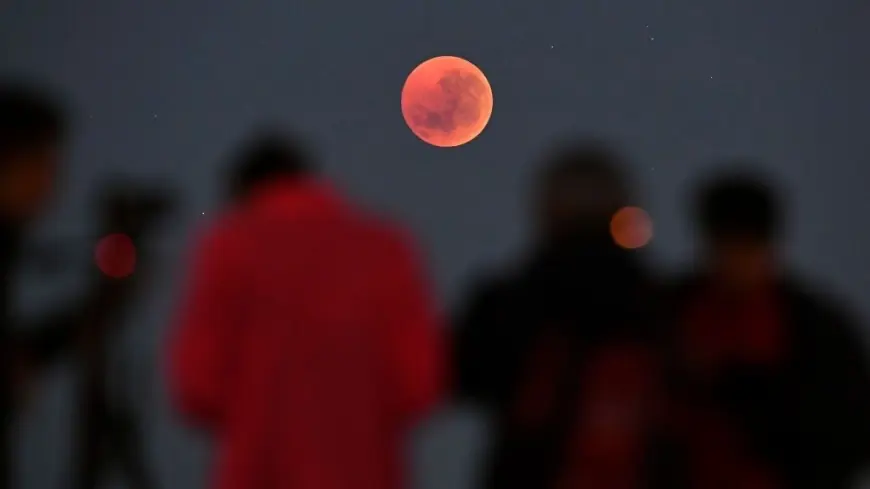
The first lunar eclipse of 2026 will produce a total lunar eclipse blood moon in the early hours of March 3, turning the moon a coppery red for observers across wide swaths of the globe. Skywatchers are being advised to note exact local timings and conditions because visibility will vary sharply by location.
Total Lunar Eclipse Blood Moon: timing, scope and cause
Totality for the event will run 58 minutes, from 6: 04 a. m. EST (1104 GMT) to 7: 02 a. m. EST (1202 GMT). The phenomenon occurs when Earth sits between the moon and the sun, so that the moon is fully immersed in Earth’s shadow and the only sunlight reaching the lunar surface is filtered through Earth’s atmosphere—this filtering is what produces the coppery or “blood” red color.
The eclipse will be visible across the night side of Earth on March 3 and is expected to be seen by billions within its path. The best views will come from the western half of North America, Australia and the Pacific; New Zealand and eastern Asia are also within the visible range. Observers are advised that the clearest results require dark locations and clear skies.
Minnesota: set alarms for 5 a. m. on March 3
Minnesotans who set alarms for 5 a. m. on March 3 are positioned to catch the total lunar eclipse as the moon tints red for nearly an hour. Those who wake early will see a yellow sun rising into blue skies while a red moon sets on a darkened western horizon—an alignment of rising sun and setting blood moon noted by astronomers.
John Zimitsch, vice president of the Minnesota Astronomical Society, urged people to experience the event in person: the ancients had no grasp of the physics and simply watched the moon turn that orange, ruddy color that gave rise to the “Blood Moon” name. He added: “Look up. Put down your cellphone. You can go online and you’re going to be able to see pictures, but seeing astronomical events in person is a wonderful thing. ” He also said, “There’s something inside of us that draws us to these astronomical events. Maybe it’s just primitive, ” and noted that “no one’s using photoshop or AI when you’re actually looking at it. It’s real. ”
For Minnesotans hoping to catch a glimpse, astronomers advise them to: unclear in the provided context.
NASA and future eclipse schedule
Officials at the National Aeronautics and Space Administration note that the last total lunar eclipse visible to the Americas occurred in March 2025; the total before that took place three years earlier. Astronomers project the next total lunar eclipse on New Year’s Eve 2028, while the next total lunar eclipse visible in the Americas is not expected until June 2029.
New York visibility and safe viewing guidance
Local circumstances can change what an observer actually sees: in New York, for example, viewers will see the moon slip into totality and turn blood red, but the maximum eclipse—when the moon moves deepest into Earth’s shadow—will occur after moonset and therefore will not be visible from that location. Unlike solar eclipses, lunar eclipses are safe to watch with the naked eye. As the eclipse unfolds, observers will watch the disk shift from a bright silver to a deep red as Earth’s shadow sweeps across it, an effect some describe as watching all the moon’s phases at high speed.
Minnesota legal and safety notices included in local coverage
Coverage of the event in local reporting also included several distinct developments from Minnesota. The Justice Department has ended an investigation into Mary Moriarty’s office over a policy that considered race in charging decisions; Moriarty’s office called the investigation a “stunt. ” Minnesota’s chief federal judge has said he has found another 113 orders that Immigration and Customs Enforcement has violated since late last month. Separately, a hospital official said a fifth person was injured and was in critical condition. Kyeland Jackson is identified as a general assignment reporter in the local coverage that also discussed the eclipse.
What makes this notable is the timing: in some parts of North America the eclipse’s peak aligns with moonset, offering the unusual tableau of a setting blood moon against a rising sun—conditions that can change quickly by minutes depending on where observers are standing. For exact local visibility details and precise timings, observers can consult established ephemeris tools and local astronomical guides.