

























Who Is The New Lady Whistledown — What Bridgerton Season 4’s Finale Means for Fans

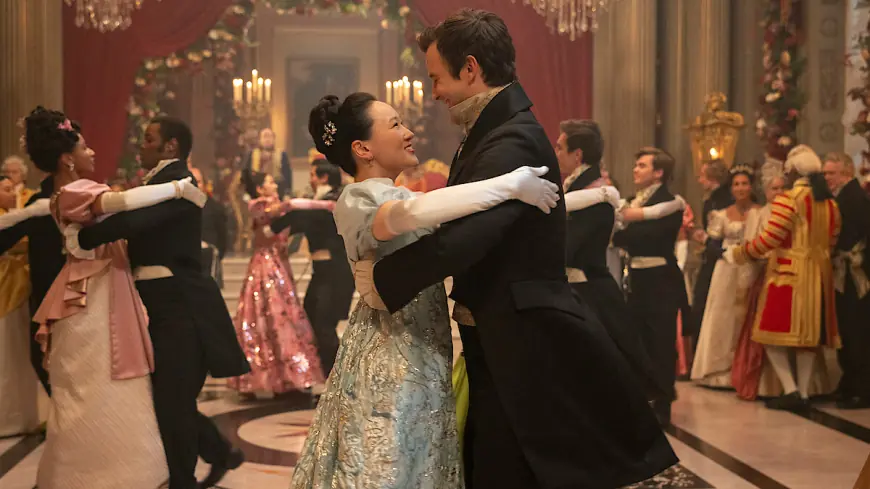
The question who is the new lady whistledown lands at the centre of fan debate now that Sophie and Benedict’s wedding closes the season’s second half. For devoted viewers, the reveal is less a surprise than a pivot — it reframes character stakes while amplifying unanswered threads that critics and commentators say the finale left dangling. If you care about romantic payoff, social status beats, and narrative consequences, this finale demands a close read.
Why fans should care: the emotional payoff and the loose ends
Here’s the part that matters for the audience: the finale trades tension for consummation, which changes how we read every relationship left on screen. The season’s opening run leaned into desperate, hungry yearning; the final four episodes emphasize consummation — secret trysts, steaming hot baths, false identities and genuinely big shocks — and it finishes with Sophie and Benedict’s wedding. That shift gives fans emotional closure in one place while amplifying uncertainty elsewhere, especially around authorship, social standing and future power dynamics.
Who Is The New Lady Whistledown
The reveal of who is the new lady whistledown is threaded through the finale’s climactic moments, but the wedding of Sophie and Benedict reframes what the newsletter represents: not just gossip, but leverage. The plot choice to end on a fairy-tale union makes the anonymous pen feel less like a threat and more like a bargaining chip — a detail likely to matter to viewers who’ve tracked the newsletter’s influence through the season.
Key character beats embedded in the finale
- Sophie Baek (Yerin Ha) remains in service as a maid for the Bridgertons even as her relationship with Benedict Bridgerton (Luke Thompson) intensifies; scenes show them intimately together, including necking on staircases.
- Benedict’s earlier misstep — proposing Sophie be his mistress rather than offering marriage — drives his arc; he spends time mooning and rethinking what he did wrong.
- Will Mondrich (Martins Isoken Imhangbe) frames social reality bluntly: making her a mistress is "the only way tolerated by society, " and no person truly wants to be hidden.
- Violet Bridgerton (Ruth Gemmell) has finally slept with Lord Anderson (Daniel Francis) but worries about telling her children about their relationship.
- Eloise (Claudia Jessie) is actively trying to avoid being put back on the marriage mart, while Penelope Featherington (Nicola Coughlan) attempts to give up writing the Whistledown newsletter but is blocked by the Queen.
- Sophie sleeps with Benedict amid soaring strings and then waits anxiously for her period — a plot beat presented as peril but undercut by the sense that the leads will end up together and Sophie is unlikely to be left penniless.
- Fan-service returns: Jonathan Bailey and Simone Ashley reappear as the Viscount and Viscountess, shown with their new baby to underline their happy marriage.
Critical reactions and tonal complaints
Critics parsed the finale as flatter than the first half of the season. Observers noted that season structure — split parts that resume at the same point — left the show starting part two where it ended, and that the final quartet of episodes traded momentum for exposition and over-explaining. Lines advising men to be brave and tell the truth are presented earnestly (Colin, played by Luke Newton, urges men to follow his oldest brother’s example with Penelope), but some reviewers felt the dialogue was written for viewers with "half an eye on their phones. " The consensus in critical commentary: too much fan service, pretty dresses, and not enough peril.
What's easy to miss is how the series recycles beats: a single genuine moment of risk—the pregnancy anxiety—feels neutered because the narrative has telegraphed a happy union. That tradeoff helps explain why commentators left the finale with more questions than closure.
Micro Q& A: quick clarifications for engaged viewers
Q: Does the finale contain major spoilers? A: Yes — the second part contains major spoilers, including the wedding of Sophie and Benedict.
Q: Did the season shift its priorities between halves? A: Yes — the first four episodes emphasized yearning; the final four emphasized consummation and closure.
Q: Are there thread-strands that remain unsettled? A: Yes — the newsletter’s future, Penelope’s struggle to stop writing, Violet’s secrecy about her relationship, and whether the social consequences of Sophie’s position truly evaporate.
If you’re wondering why this keeps coming up: one long post-finale reaction was a list of 30 burning questions sparked by the wedding and how the season boxed out certain tensions. Other editorial lines in the conversation ranged from fashion features — All The Stars On The BAFTAs 2026 Red Carpet; Everything You Need To Know About London Fashion Week AW26; The Key Spring/Summer 2026 Fashion Trends You Can Already Shop; Every Star On The Front Row At New York Fashion Week — to headline-style chatter about a "costly" declaration and pleas for viewers to give Benedict grace. There were also unrelated lifestyle headlines referenced alongside commentary, including one about a restaurateur opening a final restaurant and items promoting adventurous getaways and an item labeled "Lady Dan. "
To be clear: some readers and critics described the emotional stakes as diminished by narrative choices, and reactions ranged from admiration for the costumes and romantic beats to frustration over missed dramatic opportunities. The real question now is whether the characters’ new positions — Sophie’s marriage, Penelope’s blocked resignation from Whistledown, Violet’s secret — will be enough to drive a future chapter.
One final detail from the review pages: an editorial note about site functionality appeared at the top of commentary text asking for user consent to enable a search feature that may use cookies or similar technologies; that prompt framed how some pieces were presented online alongside the coverage.
Writer’s aside: It’s easy to overlook how much audience expectation shapes whether consummation reads as payoff or narrative surrender — that split explains much of the season’s divided reception.