
























Total Lunar Eclipse Blood Moon: Where to see it in the early hours of March 3

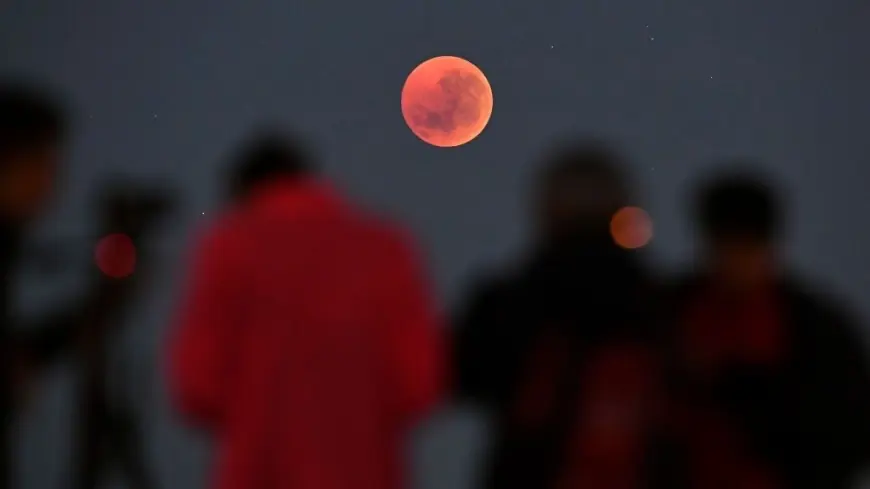
The March 2026 total lunar eclipse blood moon will turn the Moon a coppery red in the early hours of March 3. Observers across North America, Australia, New Zealand and eastern Asia can see the event, but what appears in the sky depends on your location.
Total Lunar Eclipse Blood Moon timing
Totality, when the Moon is fully immersed in Earth’s shadow, will last 58 minutes from 6: 04 a. m. ET (1104 GMT) to 7: 02 a. m. ET (1202 GMT). The eclipse is the first lunar eclipse of 2026 and will be long-lasting and impressive for billions within the path of the eclipse.
Where visibility will be best
The best views are expected from the western half of North America, Australia and the Pacific. The event will be visible across the night side of Earth on March 3, but exactly what skywatchers see depends on where they are watching from. In New York, for example, observers will see the Moon slip into totality and turn blood red but maximum eclipse, when the Moon moves deepest into Earth’s shadow, will occur after moonset and won’t be visible.
Minnesotans: set alarms for 5 a. m.
Minnesotans who set their alarms for 5 a. m. on March 3 will have a rare astronomical treat: a total lunar eclipse. The Moon will tint red for nearly an hour as Earth moves between the Moon and the Sun. Those who wake early that day will see a yellow Sun rising above blue skies while a red Moon sets on a darkened western horizon. Astronomers note the eclipse is expected to be visible in east Asia, Australia, the Pacific and the Americas and will last about an hour.
Viewing tips and safety
You'll have the best view if you can get somewhere dark with clear skies. Unlike solar eclipses, lunar eclipses are completely safe to watch with the naked eye. As the eclipse unfolds, observers will gradually see the shift from a bright silver Moon to a deep red as Earth’s shadow sweeps across it — "like watching all the phases of the moon at high speed!"
Quotes and perspective
John Zimitsch, vice president of the Minnesota Astronomical Society, said: "The ancients had no idea the physics and what was going on. They just saw the moon turning... this orange ruddy [color]. That's where the 'Blood Moon' comes from. " He urged people to look up: "Put down your cellphone. You can go online and you're going to be able to see pictures, but seeing astronomical events in person is a wonderful thing. " Zimitsch added: "There's something inside of us that draws us to these astronomical events. Maybe it's just primitive. And no one's using photoshop or AI when you're actually looking at it. It's real. "
Other timing notes and next eclipses
Lunar eclipses occur several times a year, and they happen more often than solar eclipses, but total eclipses that create a "Blood Moon" are less common. Astronomers predict the next total lunar eclipse will be on New Years Eve 2028, though the next one visible in the Americas won't happen until June 2029.
Related local and miscellaneous items
The Justice Department announced it had ended an investigation into Mary Moriarty’s office over a policy considering race in charging decisions; her office called the investigation a "stunt. " Minnesota’s chief federal judge said he has found another 113 orders that ICE has violated since late last month. Separately, a hospital official said a fifth person was injured and was in critical condition. Kyeland Jackson is a general assignment reporter.
For some local specifics — such as precise local start and end times for your city on March 3 — the context is unclear in the provided context.
The March 3 event will be the first lunar eclipse of 2026 and will offer viewers a striking coppery red Moon if conditions and local timing permit. The total lunar eclipse blood moon will be visible from wide swaths of the globe, with peak viewing favored in the western halves of North America and across the Pacific region.