












Katie Gaudreau’s Family at the Olympics: How a Last-Minute Invitation Turned a Tribute into a Shared Moment

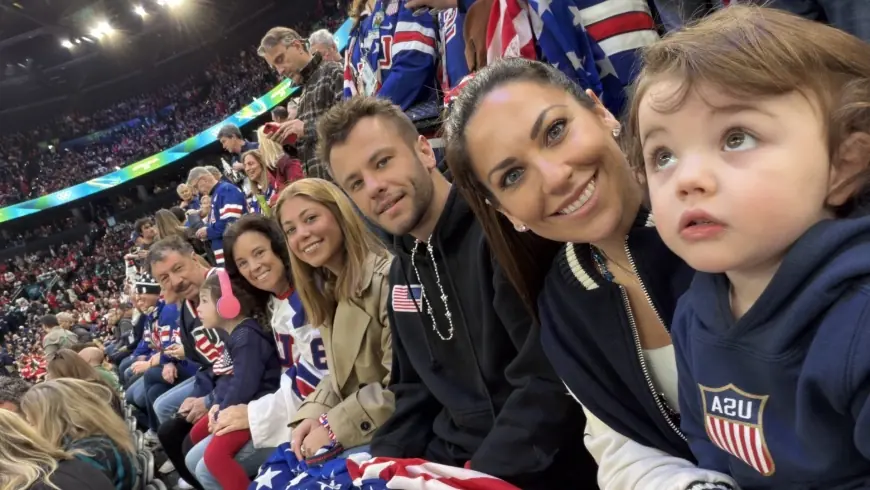
The presence of katie gaudreau’s family at the Olympic men’s hockey final reframed a competitive victory into a public act of remembrance, centering the widow, young children and parents in a moment millions saw. That shift mattered first to the players who carried a fallen teammate’s jersey, and most sharply to the two eldest children who were brought onto the ice—changing how viewers processed the win and spotlighting the family’s private loss on one of the sport’s biggest stages.
Katie Gaudreau’s family became the focal point for teammates, kids and viewers
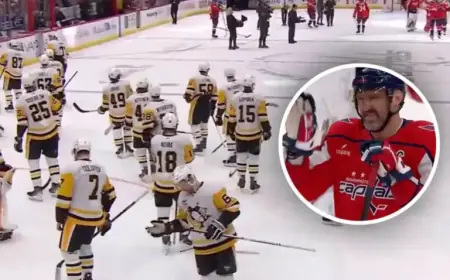
Here’s the part that matters: the tribute didn’t just honor a player; it redirected attention toward the grieving household and created a new, public point of care. Team leaders paraded the late player’s No. 13 jersey after the overtime victory, then brought two of his children onto the ice for the team photo. The result was an emotional image that fused sport and family grief in front of a global audience.
Players described feeling their teammate’s presence throughout the tournament, and the captain said the team thought of him often as they competed. The family in the stands included the widow, two of the couple’s young children and the parents of the deceased brothers—figures who, eighteen months after the tragedy, watched the semifinal and final in person. For viewers, the sight of toddlers on championship ice made the loss more immediate and personal than a name or number could.
What’s easy to miss is how many moving parts had to line up to make the family’s attendance possible; this was not an incidental appearance but the product of outreach by senior figures in the media and hockey communities who coordinated travel and invitations.
How the family got to the Games and what happened on ice
After the two brothers were killed by a suspected drunk driver while riding their bikes in New Jersey just before a family wedding, leaders across media and hockey circles discussed ways to honor the player. A media CEO suggested inviting the family to the Games; a top Olympic executive embraced the idea and reached out to hockey officials who had personal ties to the family. That chain of contacts led to an invitation relayed through the player’s father-in-law, and the widow accepted. The family then took a roughly ten-hour flight to Italy to arrive in time for the semifinal and final.
In the final, Team USA beat its opponent in overtime. After the win, teammates carried the fallen player’s jersey around the ice and gathered with his children—his son and daughter, who are toddlers—on the rink for the team photograph. The moment was widely seen as both heartbreaking and inspiring: a ritual of remembrance incorporated into a championship celebration.
- August (year detail in original context): the two brothers were killed by a suspected drunk driver while riding bikes in New Jersey, just before a sister’s wedding.
- Approximately eighteen months later: the family attended the Olympic semifinal and final after receiving an invitation coordinated by media and hockey officials.
- Final game: teammates paraded the No. 13 jersey and brought the two eldest children onto the ice for the team photo.
The real question now is how public displays like this reshape the boundaries between team ritual and family mourning. For teammates, bringing the children onto the ice was a way to make the tribute tangible; for the family it was a rare, public opportunity to be surrounded by those closest to their late loved one during a significant moment.
Signals to watch that could confirm whether this becomes a pattern include whether teams adopt similar in-game or postgame gestures tied to family presence at future events, and whether leagues or organizers formalize invitations for relatives in comparable situations. Recent coordination among network leadership and hockey officials shows that logistics can be arranged quickly when there’s intent to include a grieving family on short notice.
It’s easy to overlook, but the choice to bring young children onto the ice turns a symbolic act into a living impression that will likely linger in how fans and teammates remember both the player and the game.