



















Celtics Vs Nuggets loss in Denver underscores who feels the Western swing toll first — Brown still optimistic

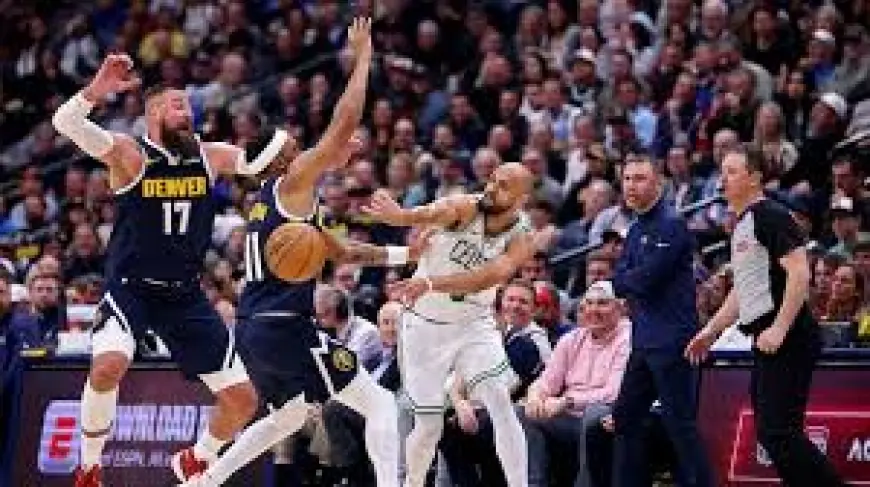
What matters first in the celtics vs nuggets game isn’t the final score but who absorbs the cost: Boston’s players. Fatigue and a string of missed shots in the third quarter left the Celtics exposed late in a 103-84 loss in Denver, yet Jaylen Brown said the roster’s overall trajectory remains encouraging. The setback was the team’s first loss of a four-game Western swing, and it exposed conversion and rebounding gaps.
Immediate impact: players and momentum took the hit
Denver’s late burst flipped the game away from Boston and landed squarely on the players who had to carry minutes at the end of a long trip. The Celtics had dominated the first three games of the road trip — beating the Golden State Warriors, Los Angeles Lakers and Phoenix Suns by a combined 49 points — but the second leg of a back-to-back in Denver proved one of the toughest assignments on that stretch. Jaylen Brown acknowledged there were takeaways and said the team had many good looks that didn’t fall; that missed execution and extra second-chance points on the glass were costly.
Celtics Vs Nuggets: how the second half unraveled
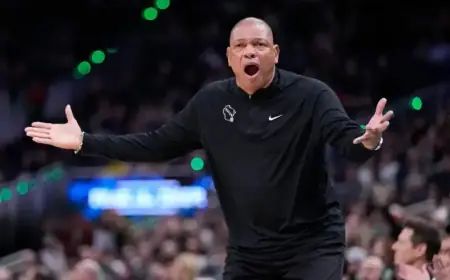
Coach Joe Mazzulla called one timeout and then another late in the third; the third quarter ended and the fourth began with those breaks unable to stop Denver’s momentum. Fatigue appeared to loosen Boston’s defense late in the third. With 1: 27 left in the quarter — after the Nuggets had scored on three straight possessions (a dunk and two layups) — Mazzulla’s timeout failed to halt the stretch that followed. On the first possession after the timeout, Nikola Vučević missed a layup and Denver pushed the other way for a fast-break score. Moments later, Nikola Jokić hit a 3-pointer that stretched Denver’s lead, then a Jaylen Brown turnover led to a K. J. Simpson dunk that put Boston down by 10. Boston went scoreless for the first 1: 57 of the fourth quarter as Denver capped a 15-0 run.
Numbers and turning points
The Celtics had their least efficient offensive night of the season, shooting 34. 9 percent from the field. Nikola Jokić finished with 30 points, 12 rebounds and six assists on 11-of-28 shooting, and Denver’s run in late third and early fourth created the decisive separation. Trailing 70-67 late in the third, Boston couldn’t stop the sequence that turned the game, and opportunities to cut the deficit in the fourth repeatedly produced missed looks. Mazzulla emptied the bench midway through the fourth quarter as the game slipped away.
Roster context and game environment
The Celtics were chasing their first setback of the Western swing in Denver while dealing with the grind of travel and schedule. Aaron Gordon was sidelined with a hamstring issue, and Jamal Murray left the game in the first half with an illness — both details that shaped how the Nuggets matched up and how the game flowed at altitude. Denver’s environment and physicality were noted by Boston as contributing factors when shots began to miss and turnovers created transition chances for the home team.
Coaching, execution and what was said
Mazzulla described the decisive run as a mix of missed shots, live-ball turnovers and transition points; about half of the run came in transition off misses, rim reads, or turnovers. Jaylen Brown emphasized competition and learning, saying the team must convert the open looks it created and trust teammates to shoot confidently. For the second straight game, it is unclear in the provided context how scoring distribution beyond Derrick White settled out — the available report cuts off mid-sentence on that point.
- Here’s the part that matters: missed conversions and extra-chance points on the glass shifted the game’s balance into Denver’s hands.
- Who felt it most first: the players logging heavy minutes late in a long road swing, where fatigue showed up on defense.
- Immediate confirmation signals: improved offensive efficiency or fewer live-ball turnovers on the next game would suggest the late collapse was an anomaly.
- Coaching reaction to late-game lapses (timeouts and bench changes) will influence rotations in the remaining road games.
What’s easy to miss is how much the trip’s earlier dominance (a 49-point edge across three wins) reshaped expectations; that context makes this loss feel more like a course correction than a reversal. The real question now is whether Boston can convert those open looks and shore up rebounding on the next stop of the swing.
Image credit: Jamie Schwaberow