





















Bridgerton Cast: How Season 4’s Sex Scenes Shift the Show’s Intimacy and Character Stakes

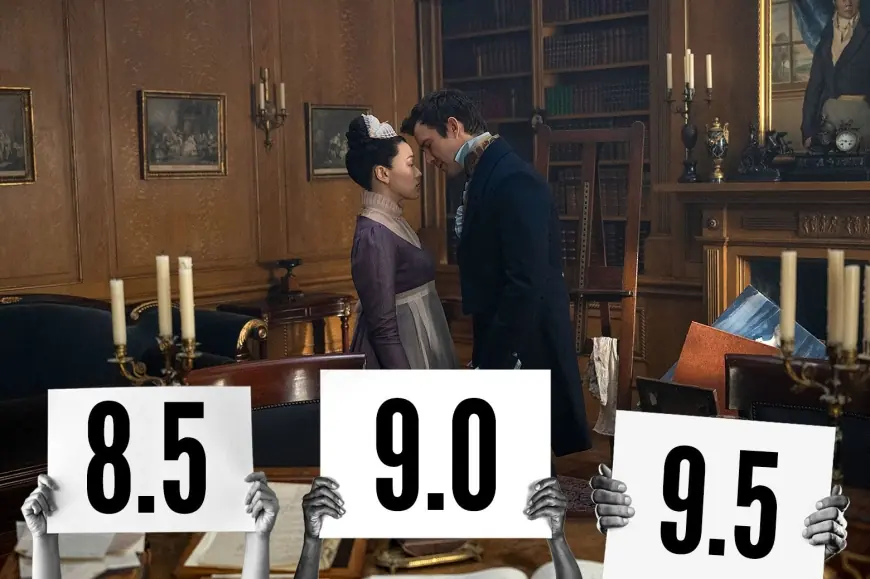
The way intimacy is staged in Season 4 changes expectations for the bridgerton cast — shifting the show from suggestion toward awkward realism in some pairings while leaving other relationships emotionally muted. This matters because those shifts redirect focus from courtship rituals to how desire alters character trajectories, and they will shape how viewers judge future pairings and the season’s finale pairing of Benedict and Sophie.
Consequences for the Bridgerton Cast and viewer expectations
Here’s the part that matters: the season nudges several characters into less-romantic, more-uncomfortable territory, and that reorientation has consequences for casting, chemistry, and fan conversations. Benedict’s arc moves beyond aimlessness into questions of orientation and commitment; Francesca’s brief physical scene with Lord John Stirling lands emotionally flat, which may alter how audiences read both performers’ trajectories. The Queen’s desire for Benedict to marry adds pressure that reshapes his choices on-screen.
Embedded scene and arc details
Sex Reviews offers a sober critical assessment and flags several concrete moments from Season 4. Benedict (Luke Thompson) has been framed historically as aimless: an affable second son who picks up painting and sketching and drops it, drinks late at night with a bohemian crowd, and is contrasted with the exacting eldest son Anthony (Jonathan Bailey), cast as the model viscount. At the season’s start Violet (Ruth Gemmell) is in despair about Benedict’s future, and the Queen presses for Benedict to marry.
Benedict meets Sophie (Yerin Ha), described in the provided context as a maid in another house and the illegitimate child of a deceased lord who sneaks into a masked ball in borrowed finery. Their meeting is framed as a Cinderella riff; much of the season focuses on logistics to reunite them, Benedict learning Sophie’s backstory, and both figuring out whether marriage can work.
Francesca and Lord John Stirling: the sex scene breakdown
The season’s first explicitly intimate moment centers on Francesca Bridgerton (Hannah Dodd) and her husband Lord John Stirling (Victor Alli), Earl of Kilmartin. Their romance began in Season 3 with quiet, introverted connection; by the end of that season they were married and moved to John’s native Scotland, and now they return. The brief scene opens with John on top of Francesca, slowly thrusting and moaning, while Francesca lies with a pleasant, if uninspired, smile. For John the interaction registers as “very nice, ” while for Francesca it reads as run-of-the-mill. Here’s the rub: Francesca — the review excerpt cuts off at that phrase and is incomplete in the provided context.
Reviewer history and comparative scores
Seasonal comparison is explicit in the coverage: veteran Sex Reviews writers have previously scored Season 3’s sex scenes a 4 of 10 and rated a related spinoff miniseries, Queen Charlotte: A Bridgerton Story, a 3 of 10. The central evaluative question raised is whether Season 4 improves on those not-so-carnal scores. The pieces note that Benedict’s onscreen exploration of interest in both men and women is an invention of this adaptation and is not present in the Julia Quinn novels.
- Season 1 debuted in December 2020.
- Season 4 is presented in parts; Part 2 is streaming a month after Part 1 debuted (the platform name is omitted in the provided context).
- Key named performers called out: Luke Thompson, Jonathan Bailey, Ruth Gemmell, Yerin Ha, Hannah Dodd, Victor Alli.
- Critical scores to keep in mind: Season 3 = 4/10; the spinoff miniseries = 3/10.
The real question now is how these tonal choices affect the finale’s emotional payoff: the season spends most of its energy on the logistics of reunification and whether sex scenes serve narrative intimacy or merely physical plotting.
Implications and unresolved items
What changes next is practical: chemistry and staging choices will influence how future pairings are written and cast, and the season’s quieter or flatter physical moments may prompt a recalibration of how intimacy is used to signal growth. The review fragment leaves at least one detail unclear in the provided context — the critique that begins "Here’s the rub: Francesca" is not completed here, so some of the intended analysis remains unresolved.
What’s easy to miss is how much of Season 4’s storytelling rests on social pressure (the Queen pushing Benedict to marry) versus private revelations (Sophie’s background). That tension is likely to be the enduring narrative consequence for these characters.
Sex Reviews includes spoilers for Season 4 of the series; readers who proceed should expect plot-level revelations.
Writer’s aside: Observing a shift from idealized passion to awkward, realistic encounters is a subtle editorial signal — it can deepen character work if matched by payoff, but it risks undercutting romance if left emotionally unresolved.