























Nasa Astronaut Medical Emergency Prompts First-Ever ISS Evacuation; NASA Shares Full Timeline

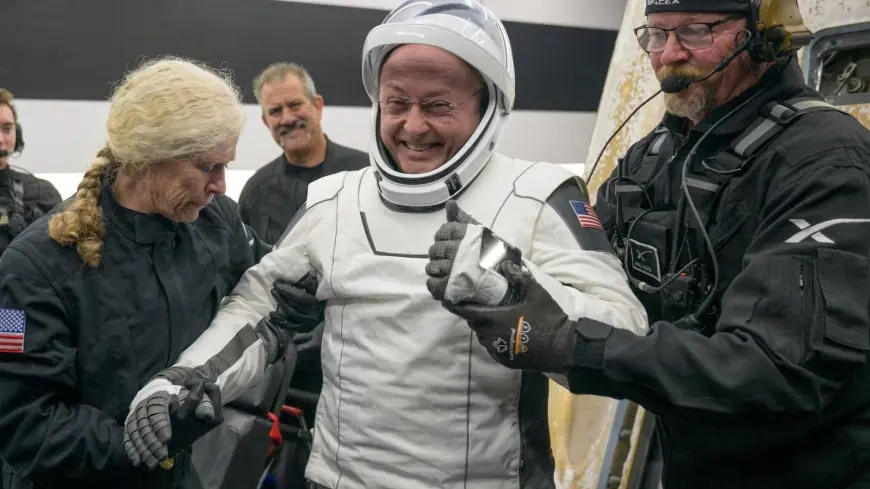
NASA has disclosed new details about a nasa astronaut medical emergency that occurred aboard the International Space Station on Jan. 7, when astronaut Mike Fincke experienced a medical event requiring immediate attention. The incident led NASA to arrange a carefully coordinated early return for Crew-11, culminating in a splashdown on Jan. 15 and marking the station's first medical evacuation in its 25-year history.
Nasa Astronaut Medical Emergency: what happened on Jan. 7
On Jan. 7, Mike Fincke experienced a medical event aboard the ISS that required immediate attention from his crewmates and the guidance of NASA flight surgeons. Fincke's condition quickly stabilized following the crew's response and medical guidance. After further evaluation, NASA determined the safest course was an early return for the Crew-11 vehicle so Fincke could receive advanced medical imaging not available on the station. NASA characterized the operation as not an emergency but a carefully coordinated plan.
Crew-11 return and post-flight care
The Crew-11 members who returned early included Mike Fincke, Zena Cardman, Kimiya Yui and Oleg Platonov. The crew splashed down off the coast of San Diego on Jan. 15 after spending five and a half months on the station. Fincke expressed gratitude to his fellow Expedition 74 members and medical teams, and is doing very well while continuing standard post-flight reconditioning at NASA's Johnson Space Center in Houston. He also thanked the medical professionals at Scripps Memorial Hospital La Jolla near San Diego and acknowledged the roles of both NASA and SpaceX teams in ensuring a positive outcome.
Broader crew roster mentioned in update
In a shared statement, Fincke acknowledged the wider Expedition 74 team by name. He included fellow crew members Chris Williams, Sergey Kud-Sverchkov and Sergei Mikayev among those whose professionalism and dedication contributed to the outcome. The account of the incident was released at Fincke's request so that his experience and the response could be publicly shared.
Operational impact on the International Space Station
The early return and evacuation reduced the station crew complement temporarily, leaving three astronauts aboard—one American and two Russian cosmonauts. That reduced staffing prompted a pause in spacewalks and a reduction in research output while the station operated with fewer hands on deck. Four new astronauts joined the station in February, after which normal service resumed.
Leadership reaction and context
NASA leadership described the episode as a serious situation in orbit but emphasized that the affected crew member had been safe and stable since the return to Earth. The agency framed the decision to bring Crew-11 back early as a precaution to enable access to advanced medical imaging and care on the ground rather than an in-orbit emergency response beyond station capabilities.
What this means going forward
The episode underlines the limits of on-orbit medical capabilities and the contingency planning required for crew health. The station has since returned to normal operations following the resupply of personnel in February. Recent coverage used strong language—describing astronauts as briefly 'stranded' and highlighting the uniqueness of an emergency return—but official descriptions emphasize coordinated action, rapid stabilization, and a planned medical evaluation on Earth.
Details remain limited to the facts publicly released about the Jan. 7 event, the Jan. 15 splashdown, the list of named crewmembers and the steps taken for post-flight care. Further clinical details have not been disclosed; updates will depend on additional medical evaluations and any future public statements from the astronaut or agency representatives.