
















Gorton And Denton By-election opens amid tactical voting row and questions over First Past the Post

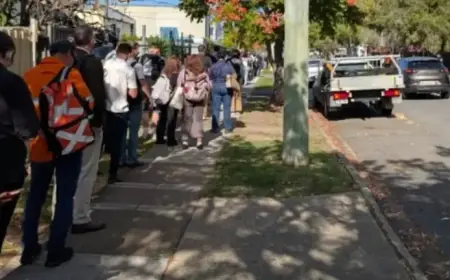
The gorton and denton by-election opened Thursday with polling stations in parts of Greater Manchester operating from 07: 00 GMT until 22: 00, and voters set to decide who becomes the constituency’s new MP after Labour’s Andrew Gwynne resigned on 22 January on grounds of ill health.
Polls open and a result due overnight
Polling stations opened at 07: 00 GMT and will close at 22: 00, with the result of the vote set to be declared overnight and in the early hours of Friday morning. The by-election was triggered by the resignation of the now former Labour MP Andrew Gwynne on 22 January on the grounds of ill health, and will decide who becomes the new MP for the constituency.
Gorton And Denton By-election: a three-way contest
What had been expected to be a straightforward hold for Labour instead became a three-horse race, with Labour, Reform UK and the Green Party all fighting the seat strongly. Candidates listed in alphabetical order include Sir Oink A-Lot of The Official Monster Raving Loony Party and Sebastian Moore of the Social Democratic Party, and commentators and campaigners have focused on who might be best placed to beat Reform.
Tactical voting and the strain on First Past the Post
Commentators described the contest as nail-biting and evidence of cracks in First Past the Post. For some voters motivated chiefly by keeping Reform’s Matt Goodwin out of Manchester, the campaign involved calculating votes and second-guessing what others might do. The Electoral Reform Society has argued the by-election shows FPTP’s shortcomings when three or more parties are competitive, saying the system encourages tactical questions about who can win rather than debate about policy.
Broader warnings: models, 2024 results and alternative systems
The debate has referenced wider trends: a YouGov model last autumn suggested Reform could in theory win 48% of seats at Westminster on as little as 27% of the vote, and the UK general election of 2024 was described as the most disproportional ever, with Labour securing almost two-thirds of MPs from just over one-third of votes. Campaigners pointed to Scottish local elections using the Single Transferable Vote (STV) as an example of preferential voting where voters number candidates and votes transfer until someone wins a majority.
Campaign dynamics, messaging and media attention
The by-election, scheduled for Thursday 26 February, has garnered much media attention and prompted tactical messaging from major parties: both Labour and the Green Party have sought to persuade voters they are the only option to "stop Reform. " Critics say that emphasis shortchanges voters by crowding out discussion of policies and representation. Observers note the outcome will be closely scrutinised for what it might mean for parties and leaders.
Local engagement avenues are in play: listeners were invited to hear radio coverage on regional stations and to follow local social channels such as Facebook, X and Instagram, and readers were encouraged to send story ideas WhatsApp to 0808 100 2230.
Voices across the debate remain split. Some argue FPTP’s winner-takes-all design was built for a two-party era and has helped keep extremists out of British politics for decades even as the far right surged across Europe; others say FPTP cannot cope with the emergence of three- or four-party contests where candidates can win large on low vote shares. One commentator said they had revisited their stance on proportional representation but remained unconvinced that reform would solve all problems of tactical voting and compromise in politics.
The immediate next milestone is the count and declaration: with polling stations closing at 22: 00 GMT, the result is expected to be declared in the early hours of Friday morning.