

























Nvidia results: nvidia posts record fourth-quarter and fiscal 2026 revenue

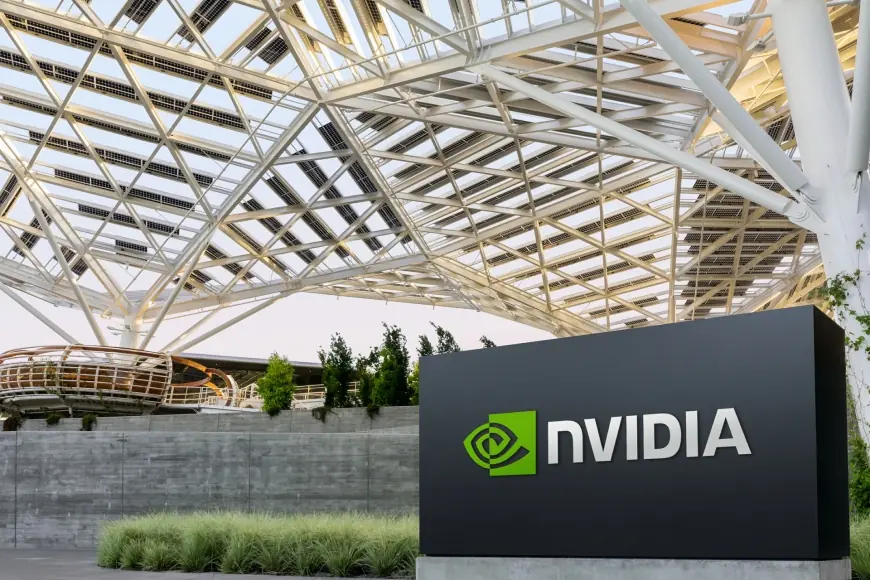
NVIDIA (NASDAQ: NVDA) reported record revenue for the fourth quarter ended January 25, 2026, and for fiscal 2026, with management highlighting rapid enterprise adoption of AI. fourth-quarter revenue was $68. 1 billion and fiscal 2026 revenue was $215. 9 billion.
Nvidia revenue and margins
For the quarter ended January 25, 2026, NVIDIA reported revenue of $68. 1 billion, up 20% from the previous quarter and up 73% from a year ago. For fiscal 2026, revenue was $215. 9 billion, up 65% from a year ago. For the quarter, GAAP and non-GAAP gross margins were 75. 0% and 75. 2%, respectively. For fiscal 2026, GAAP and non-GAAP gross margins were 71. 1% and 71. 3%, respectively.
Profitability and earnings per share
For the quarter, NVIDIA reported GAAP earnings per diluted share of $1. 76 and non-GAAP earnings per diluted share of $1. 62. For fiscal 2026, GAAP earnings per diluted share were $4. 90 and non-GAAP earnings per diluted share were $4. 77.
Shareholder returns and dividend
During fiscal 2026, NVIDIA returned $41. 1 billion to shareholders in the form of shares repurchased and cash dividends. As of the end of the fourth quarter, the company had $58. 5 billion remaining under its share repurchase authorization. NVIDIA will pay its next quarterly cash dividend of $0. 01 per share on April 1, 2026, to all shareholders of record on March 11, 2026.
Executive commentary and agentic AI
Jensen Huang, founder and CEO of NVIDIA, said: “Computing demand is growing exponentially — the agentic AI inflection point has arrived. Grace Blackwell with NVLink is the king of inference today — delivering an order-of-magnitude lower cost per token — and Vera Rubin will extend that leadership even further. ” He added that “Enterprise adoption of agents is skyrocketing. Our customers are racing to invest in AI compute — the factories powering the AI industrial revolution and their future growth. ”
CFO commentary and non-GAAP measures
Commentary on the quarter by Colette Kress, NVIDIA’s executive vice president and chief financial officer, is available on the company’s investor relations site. NVIDIA said it uses non-GAAP measures to supplement condensed consolidated financial statements; those non-GAAP measures include non-GAAP gross profit, non-GAAP gross margin, non-GAAP operating expenses, non-GAAP operating income, non-GAAP other income (expense), net, non-GAAP net income, non-GAAP net income or earnings per diluted share, and free cash flow. The company has shown a reconciliation of GAAP to non-GAAP financial measures; the reconciliations for fiscal years 2025 and 2026 adjust the related GAAP financial measures to exclude stock-based compensation expense, acquisition-related and other costs, other, gains/losses fr unclear in the provided context.
Outlook and accounting change
NVIDIA’s outlook for the first quarter of fiscal 2027 is as follows: unclear in the provided context. For the full year fiscal 2027, GAAP and non-GAAP tax rates are expected to be between 17. 0% and 19. 0%, excluding any discrete items and material changes to NVIDIA’s tax environment. Beginning in the first quarter of fiscal 2027, NVIDIA will include stock-based compensation expense in non-GAAP financial measures; stock-based compensation is a foundational component of NVIDIA’s compensation program to attract and retain world-class talent.
Conference call and webcast details
NVIDIA will conduct a conference call with analysts and investors to discuss its fourth quarter and fiscal 2026 financial results and current financial prospects today at 2 p. m. Pacific time (5 p. m. Eastern time). A live webcast in listen-only mode of the conference call will be accessible on NVIDIA’s investor relations website. The webcast will be recorded and available for replay until NVIDIA’s conference call to discuss its financial results for its first quarter of fiscal 2027.
NVIDIA (NASDAQ: NVDA) presented a set of quarter and full-year figures, margin and EPS metrics, shareholder-return details, executive commentary and a timetable for dividend and reporting changes as summarized above.