






















Cameron Johnson Dominates Week 2 With Heavy Sinker; College Baseball Data Standouts From Week 2

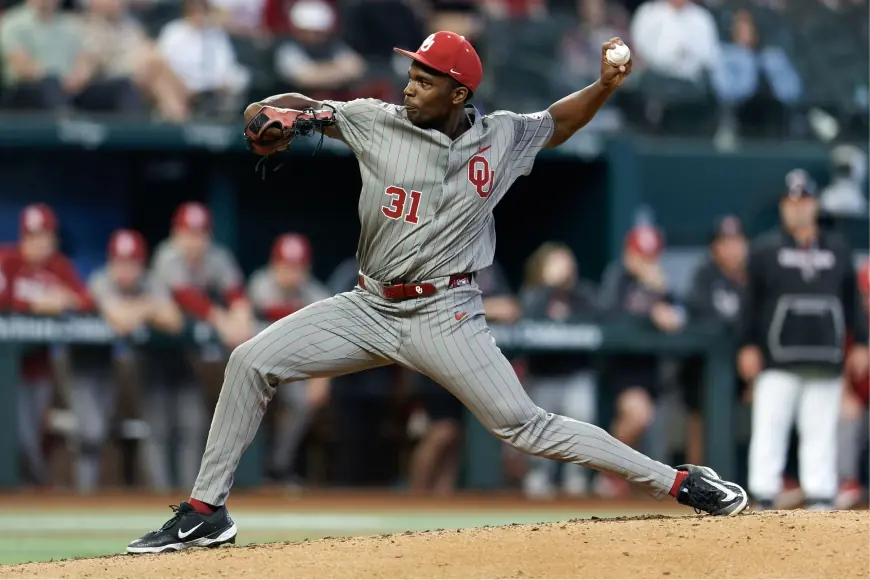
Oklahoma lefty cameron johnson turned in a commanding Week 2 outing, fanning seven over five innings and showing the kind of sinker-run profile that drew attention after an impressive opening appearance. His performance highlights several pitchers who produced advanced-data standouts in the second week of the Division I slate, and it raises immediate questions about command, secondary development and workload going forward.
Cameron Johnson: sinker dominance, shaky command and secondaries to watch
Cameron Johnson’s Week 2 start against Coppin State was notable for heavy reliance on a sinker that lived in the mid-90s. He worked five innings, struck out seven, allowed one run on three hits and issued no walks, throwing 83 pitches total. Of those pitches, 73 were sinkers that sat 94–95 mph and touched 97 with pronounced armside run.
Johnson mixed in eight changeups and two breaking balls — a curveball and a sweeper — as his secondary offerings. The sinker’s profile projects at least as an above-average offering, while the evolution of his changeup and breaking balls will be important to watch in coming starts. The outing also underscored an ongoing trait: his command remains somewhat shaky even when results look dominant, a characteristic that will influence his usage and projection in the near term.
Other Week 2 data standouts: pitchers who pushed sample sizes forward
Week 2 produced several complementary performances that expand early-season evaluative samples for draft-eligible arms and breakout candidates. The following summaries stick to quantified highlights from the weekend’s outings.
- LJ Mercurius (Oklahoma): Delivered five scoreless innings with one hit, three walks and seven strikeouts in the same Coppin State game. Velocity dipped from the previous week — sitting 92–93 mph and touching 96 after earlier work at 95–98 mph — but his plus ride and cut shape remained intact. A low-to-mid-80s changeup again showed as his best swing-and-miss pitch.
- Hunter Dietz (Arkansas): A draft-eligible, 6-foot-6 redshirt sophomore who had limited appearances in prior seasons, Dietz made his second start of the year and improved from an initial outing. In his Saturday start he went four innings, allowed two runs on five hits and one walk, and struck out nine. His stuff includes a four-seam averaging 95–96 mph and touching 98 from a high release, a cutter in the 86–90 mph range thrown as often as the fastball, and a curveball sitting 79–81 mph with roughly 19 inches of drop and spin rates near 2, 700–2, 800 rpm. How he develops command and mixes those offerings will shape his trajectory.
- Jacob Dudan (NC State): The right-hander set a career high with 11 strikeouts against Princeton, tossing seven scoreless innings while allowing three hits and issuing no walks. At the time of the start summarized here, he had yet to allow a run over his first 12 innings of the season.
These performances illustrate a recurring theme: week-to-week velocity and secondary effectiveness can swing evaluative impressions. For pitchers like Mercurius and Dietz, measurable shifts in velocity and pitch usage will be key inputs; for arms like Dudan, early-season command and strikeout output are building a cleaner sample.
Across the Division I slate, power-conference matchups and top-10 showdowns provided the environment for these data points to matter — not just the box scores but the movement, spin and usage patterns that project across a longer season. For cameron johnson and the other named arms, the immediate next steps are straightforward: sustain the positive elements — heavy sinker run, effective offspeed shapes, high strikeout totals — while tightening location and expanding reliable secondary options. Recent starts give evaluators usable evidence, but the months ahead will determine how these early Week 2 narratives evolve.