






















Samsung Galaxy S26 privacy feature may tempt an iPhone user — samsung in the spotlight

The author visited Unpacked in San Francisco for the Galaxy S26 launch and found one feature on the Galaxy S26 Ultra that stood out: a Privacy Display that can limit visibility to notifications alone. That selective notification redaction and the phone’s other changes matter now because they sit alongside new prices, colorways, and hardware choices that position the S26 family directly against the iPhone 17 line.
Hands-on at Unpacked in San Francisco and a reluctant iPhone fan’s reaction
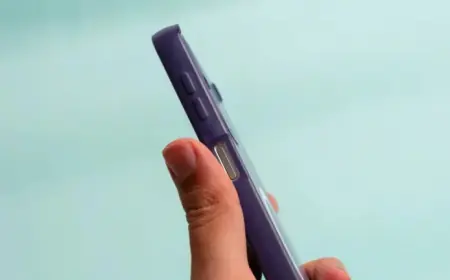
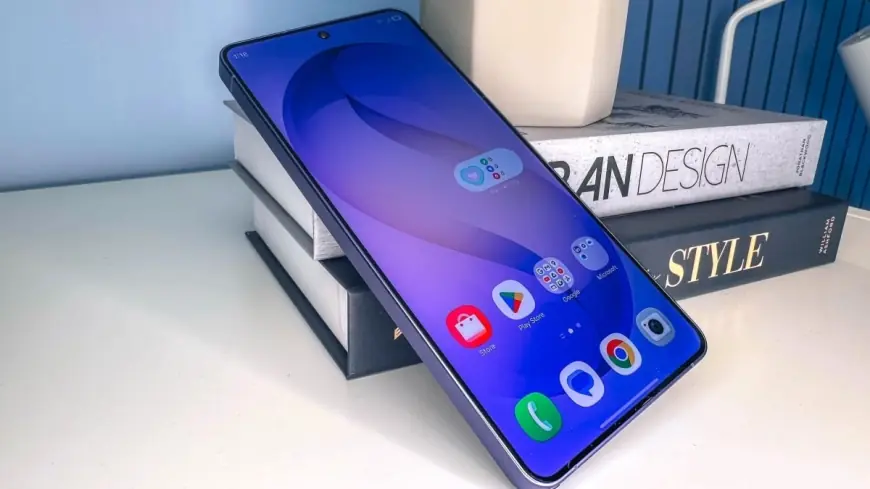
The writer arrived at Unpacked in San Francisco with an iPhone, iPad, AirPods and a MacBook, expecting to report on the launch rather than be tempted by Android. After hands-on time with the top-of-the-range Galaxy S26 Ultra, the device gave the writer a compelling reason to consider switching sides. The S26 Ultra’s thinness and lightness were noticeable, and the deep, shiny "cobalt violet" shade registered strongly with the author.
Privacy Display: notifications-only redaction and the "shoulder surfing" defense
What most bewitched the writer was not the camera nor the device’s overall specs but a privacy-screen option that can limit the privacy treatment to notifications alone. The S26 Ultra can reduce on-screen visibility to block what Samsung called "shoulder surfing, " a problem that can arise in crowded situations such as public transit. Rather than always relying on Do Not Disturb, the writer highlighted the common awkwardness of sharing a screen and suddenly revealing private messages.
How the Privacy Display behaves in use and its customization
In hands-on photos the S26 Ultra sits barely tilted yet a notification is already very greyed-out; tilt the screen further and the notification becomes thoroughly redacted. The privacy settings are also surprisingly customizable: users can pick which apps always receive the privacy-screen treatment, with the banking app offered as a concrete example of what people are likely to lock down.
Pricing, preorder and shipping dates for the Galaxy S26 family versus iPhone 17
The Galaxy S26 line carries new prices: the Galaxy S26 starts at $900, the larger S26+ at $1, 100, and the flagship S26 Ultra at $1, 300 — the same launch price as the Galaxy S25 Ultra. Those baseline non‑Ultra S26 phones cost $100 more than the prior generation. By comparison, the iPhone 17 starts at $800, while the iPhone 17 Pro Max starts at $1, 200 for 256GB. Samsung opened S26 preorders on Feb. 25, with shipping beginning Mar. 11.
Design, weight, displays and where the S26 Ultra differs
Both the Galaxy S26 and the iPhone 17 use 6. 3-inch displays; the Galaxy S26 lists a 2, 340 x 1, 080 resolution and the iPhone 17 a 2, 622 x 1, 206 resolution, with the iPhone carrying a slightly higher pixels‑per‑inch figure (460 versus 411). Both phones support refresh rates up to 120Hz. The Galaxy S26 is lighter at 167g compared with the iPhone 17’s 177g. New devices on both sides use aluminum frames rather than the titanium seen on last year’s Galaxy Ultra and iPhone Pro models — a change said to reduce weight and overheating risk at the expense of some durability.
Ultra-specific advantages: S Pen, higher resolution and the unique Privacy Display
The Galaxy S26 Ultra keeps support for an included S Pen that slots into the phone’s base and offers a 3, 120 x 1, 440 resolution screen with a stated 500 PPI. By contrast, the iPhone 17 Pro Max, with a similar 6. 9-inch display, lists a lower 2, 868 x 1, 320 resolution with 460 PPI. The S26 Ultra is also described as the only phone currently offering this special Privacy Display that blacks out parts of the screen so onlookers cannot read texts from any angle other than directly in front of the phone.
Memory, chips, colors and other small distinctions
Phone makers are contending with ballooning memory prices; Samsung avoided downgrading its memory specs despite an ongoing RAM shortage, a choice linked to preserving the phones’ AI processing capabilities. All three Galaxy phones are powered by the Snapdragon 8 Elite Gen 5 for Galaxy chip. Color options include the classic cobalt violet, plus sky blue, black and white, with silver and pink gold available online. By contrast, the regular iPhone 17 comes in black, white, "Mist Blue, " "Sage" and "Lavender, " while the iPhone 17 Pro’s most popular color was "Cosmic Orange, " a tone no Galaxy S26 model currently matches. One small user-facing difference: Galaxy phones lack a programmable Action button and carry a different logo on the back.
Final verdict from the Unpacked hands-on
The author noted that the camera is "undeniably fantastic" but that it was the privacy display — not the camera — that felt like a true differentiator. An initial preference for the slimmer three-camera rear layout over what the author called the iPhone 17’s "plateau" reversed after placing the S26 Ultra screen-up on a table and seeing it tilt; that tilt helped the author understand the reasoning behind Apple’s larger bump. The author’s honest answer about switching was "maybe, " and wrote that this should terrify Apple into action, assuming unclear in the provided context.