















Cavaliers Vs Bucks: Short-Handed Cavs Lose 118-116 as Schroder and the Bench Spark a Comeback

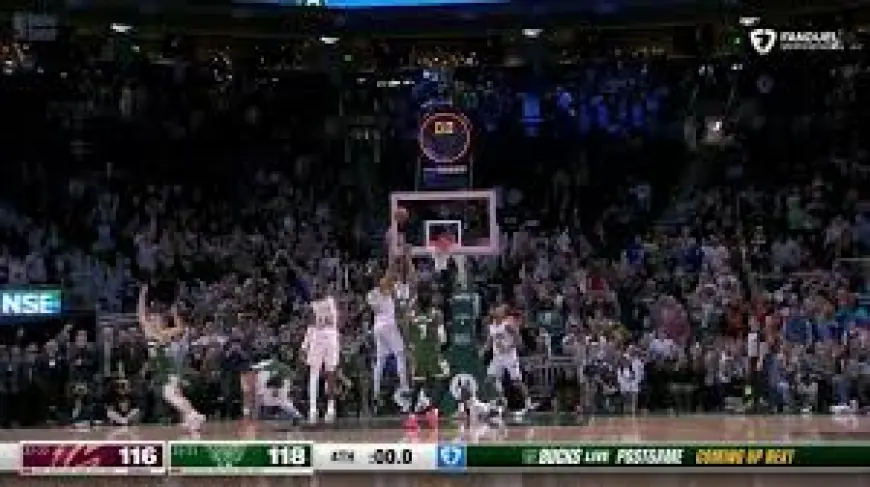
The short-handed matchup of cavaliers vs bucks ended in a 118-116 loss for Cleveland on Feb 25, 2026, a game defined by a bench surge, Milwaukee’s barrage from deep, and a late scoring sequence that left the Cavs one call from tying or taking the lead.
Cavaliers Vs Bucks — Game Overview
Cleveland entered the game without Donovan Mitchell, James Harden, and Evan Mobley, forcing a reliance on depth and role players. The Cavaliers fought back from deficits multiple times and came within a hair of stealing the result, but Jarrett Allen’s game-tying putback was waved off, and the short-handed Cavs ultimately fell 118-116.
Bench Breakdowns and Winners
The evening was framed as a winners-and-losers night where the winners category was dominated by Cleveland’s second unit. That group did far more than merely hold the fort: they injected energy, hustle, and timely shooting that kept the Cavs competitive despite the absences. Thomas Bryant provided a reliable frontcourt option when called upon, and the collective intensity of the bench prevented the game from turning into a rout.
Schroder's Debut Start and Late Heroics
Dennis Schroder earned his first start as a Cavalier and delivered a standout performance: 26 points and 5 assists. Schroder attacked as a primary ball-handler and a point-of-attack disruptor, and even after rolling his ankle he continued to play through the injury. He converted the game-tying floater with under 40 seconds to play, a sequence that underscored how pivotal his night was to Cleveland’s comeback push.
Support Cast: Keon Ellis, Craig Porter Jr., and Jarrett Allen
Keon Ellis and Craig Porter Jr. combined with Schroder to form a chaotic, energizing trio. Porter’s downhill drives in the third quarter helped break Milwaukee’s defensive shell; he attacked space and fed Jarrett Allen, re-establishing Cleveland’s presence in the paint. Ellis showcased frenetic defensive energy—diving for loose balls and creating steals—while also hitting 4-of-8 from three-point range. Jarrett Allen was involved in the late attempt that would have tied the game before the putback was waved off.
Milwaukee’s Three-Point Plan and Key Shooters
Milwaukee’s clear strategy was to hunt three-point shots, and it paid off. The Bucks made 19 of 45 attempts from long range (42. 2%), a volume and efficiency combination that the short-handed Cavs struggled to contain. AJ Green was 5-of-10 from deep, and Kyle Kuzma also went 5-of-10 from beyond the arc; Kuzma’s night stood out in context of his season three-point percentage of 32. 5%. The Bucks repeatedly capitalized when Cleveland failed to rotate and recover: penetration at the point of attack created easy drive-and-kick opportunities that led to open perimeter looks.
Turning Points, Takeaways, and What’s Next
This game showcased both the upside of Cleveland’s depth and the thin margin that separates a steal from a loss. The Cavs’ bench forced the issue and nearly pulled off an upset in a road environment while missing three starters. Defensive lapses at the point of attack and an opponent hitting 42. 2% from three ultimately decided the outcome. With the score finishing 118-116 and Jarrett Allen’s late putback waved off, the immediate takeaways are the value of the bench’s energy and the need for cleaner rotations when key defenders are absent.
For the Cavs, the performance reinforces that their depth can compete on the road even when depleted. For the Bucks, the game validated a perimeter-first plan that produced high-volume success. Details about adjustments and roster availability for upcoming games are unclear in the provided context.