

















Larry Summers Resignation Forces Immediate Shifts at Harvard — Teaching Role, Center Leadership and a Broader Review

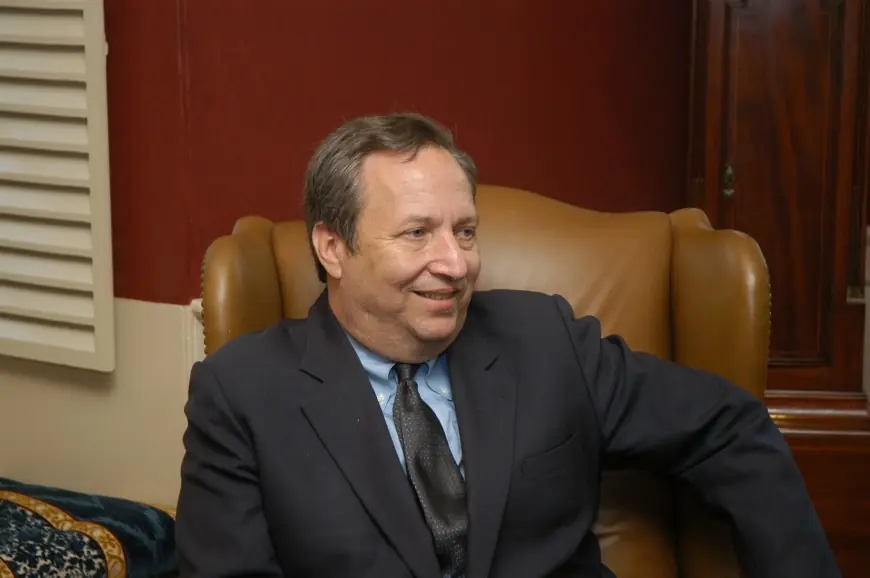
Why this matters now: The decision by larry summers to leave his Harvard teaching appointments and surrender the University Professorship triggers immediate leadership gaps, a formal review that reaches beyond one faculty member, and fresh questions about institutional ties exposed in newly released documents. This changes who occupies key classroom and center roles and accelerates administrative scrutiny across the university.
Larry Summers’ departure and immediate institutional consequences
Former Harvard president Larry Summers will resign from his academic and faculty appointments at Harvard at the end of the academic year, relinquishing his University Professorship — described as the university’s highest faculty distinction — and remaining on leave until that time. He also resigned from his role as co-director of the Mossavar-Rahmani Center for Business and Government at the Kennedy School, a position he had held since 2011. While on leave he will not teach or take on new advisees; he has said the decision was difficult and expressed gratitude to thousands of students and colleagues he has worked with since arriving at Harvard as a graduate student 50 years ago. Free of formal responsibility as President Emeritus and a retired professor, he has said he expects in time to engage in research, analysis and commentary on global economic issues.
How the disclosures led here and what changed in public standing
Summers’ standing eroded after a cache of emails disclosed in November revealed an extended personal relationship with convicted sex offender Jeffrey E. Epstein. The correspondence shows regular exchanges about women, politics and Harvard-linked projects over at least seven years, with contact continuing as late as July 2019 — the day before Epstein’s final arrest. A later tranche of records released by the Justice Department showed Summers had been designated as a successor executor in a 2014 draft of Epstein’s will; a spokesperson for Summers said he had absolutely no knowledge that he was included in an early version of that will. The volume of exchanges tallies thousands of messages and produced rapid fallout: after initially saying he would continue teaching, Summers stepped back from public commitments and later announced he would leave his teaching post. In short order he parted ways with a number of outside organizations, and a leading professional association in his field issued a lifetime ban against him.
Institutional review and the probe’s scope
Harvard has launched a formal review of Summers’ ties to Epstein as part of a broader re-investigation into the university’s historical connections to the financier. That review encompasses other university affiliates and donors implicated in the documents. A university spokesperson, Jason Newton, framed Summers’ resignation in connection with the ongoing review of documents related to Epstein that were recently released by the government. The probe now links personnel decisions to a wider institutional reckoning.
- Summers will leave teaching at the end of the academic year and remain on leave until then.
- He relinquishes the University Professorship and resigned as co-director of the Mossavar-Rahmani Center, a role held since 2011.
- A large tranche of emails showed sustained contact with Jeffrey E. Epstein through July 2019; later records named Summers in a draft of Epstein’s will, which Summers’ spokesperson said was unknown to him.
- A major academic association issued a lifetime ban, and Summers separated from several external organizations in the weeks after the releases.
Contextual signals and related university news
Here’s the part that matters for readers tracking campus affairs: the resignation arrives amid a clutch of other Harvard developments that together change the administrative calendar and campus conversations. Recent headlines on campus noted coordination between Jeffrey Epstein and Gerald Chan on a proposed Tsinghua University campus in Boston, a reported drop in A grades by nearly seven percentage points in the fall term, seven university affiliates named as Schwarzman Scholars for 2027, public health faculty protesting the removal of the FXB Center director Mary Bassett, and debate over double concentrations and student pressure. These items suggest a university already managing multiple operational and reputational stresses as the Epstein-related review proceeds.
Wider fallout referenced in recent coverage beyond the campus story
News summaries running alongside the Summers coverage highlighted broader national and international items: his name appearing hundreds of times in recently released Epstein files, regional winter storms bringing new snow to parts of the northeastern U. S. and related travel hazards, a major flooding and landslide emergency in Brazil with dozens missing and at least dozens killed and thousands evacuated, and diplomatic commentary on developments in Venezuela. These items were circulated in the same reporting cycles that amplified the university investigation.
It’s easy to overlook, but the reach of the documents extends beyond one person: donations, visiting appointments, and earlier administrative decisions also came under scrutiny. Epstein’s past donations — and an earlier visiting fellowship — intersected with institutional choices; the university had previously stopped accepting donations after Epstein’s 2008 guilty plea for child sex offenses.
The real question now is how the formal review, professional penalties and external departures will reshape faculty governance, center leadership and external partnerships over the coming months. The review remains ongoing and details may evolve.
Writer's aside: The bigger signal here is that a single personnel move has already triggered administrative, reputational and governance consequences across several university units; that pattern is likely to inform how the review proceeds.