

























Hurricane Melissa Upgraded to 190 MPH: Now Tied for Strongest Atlantic Hurricane Ever Recorded

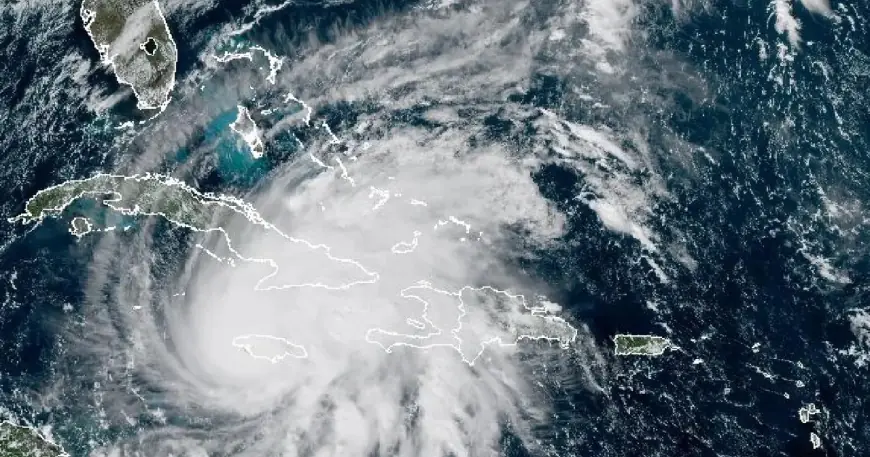
Hurricane Melissa just rewrote the record books — again. The National Hurricane Center released its final Tropical Cyclone Report on Wednesday, February 25, 2026 ET, officially upgrading Hurricane Melissa's peak sustained winds from 185 mph to 190 mph. That adjustment ties Melissa with Hurricane Allen in 1980 for the strongest winds ever measured in an Atlantic hurricane.
National Hurricane Center Final Report Confirms Historic Hurricane Melissa Upgrade
The 190 mph peak intensity was determined using a combination of aircraft reconnaissance data, satellite imagery, and dropsonde observations collected by Air Force Reserve and NOAA Hurricane Hunter aircraft. The Jamaica landfall wind speed of 185 mph, however, was not revised upward and remains unchanged in the final report.
At its peak intensity on the morning of October 28, 2025 ET, Hurricane Melissa was located approximately 40 miles south-southwest of Jamaica, where the Air Force Reserve C-130J and NOAA P-3 were conducting flight paths through the storm but were unable to sample the areas estimated to have the strongest winds.
Hurricane Melissa's Record-Shattering Wind Gust of 252 MPH
Beyond the 190 mph sustained wind record, Hurricane Melissa produced the single most extreme wind measurement ever documented in a tropical cyclone anywhere on Earth. Melissa shattered the global record for the highest wind gust ever measured by a dropsonde, clocking in at 219 knots — or 252 mph — surpassing the previous record of 209 knots set by Super Typhoon Megi in 2010.
Aircraft measurements during peak intensity included a maximum flight-level wind of 173 knots and a dropsonde recording a mean wind of 188 knots in the lowest 150 meters of the atmosphere. Climate scientists analyzing Hurricane Melissa concluded that human-driven climate change, which raises ocean temperatures, intensified the storm's destructive winds and rainfall.
Catastrophic Jamaica Landfall: The Strongest in the Island's History
Upon landfall on the coast of Jamaica, Hurricane Melissa was still a Category 5 storm with maximum wind speeds of 185 mph — the strongest landfall in Jamaica's history, and tied for the strongest landfalling hurricane in Atlantic Basin history alongside Hurricane Dorian in 2019 and the Labor Day Hurricane in 1935.
Around 150,000 structures were damaged by Hurricane Melissa, with the storm ripping the roofs off approximately 120,000 buildings and completely destroying around 24,000. Western Jamaica — including Montego Bay — experienced what officials described as total devastation, with the city's port, industrial park, and the terminal at Sangster International Airport all sustaining severe damage.
Death Toll, Damage, and Pressure Records
The National Hurricane Center estimates that 95 people were killed by Hurricane Melissa — 45 in Jamaica, 43 in Haiti, and seven elsewhere. AccuWeather's total damage and economic loss estimate for the storm reached $48 to $52 billion.
Jamaica suffered the most devastating blow, with damages reaching $8.8 billion USD — equal to 41% of the island's entire 2024 GDP. Haiti was battered by severe flooding, with more than 35 inches of rain falling in localized areas. Hurricane Melissa's minimum central pressure dropped to 892 millibars — the third lowest in Atlantic basin history, behind only Hurricane Wilma at 882 mb in 2005 and Hurricane Gilbert at 888 mb in 1988.
Caribbean Recovery: Power, Health, and Humanitarian Aid Four Months Later
As of Thursday, February 19, 2026 ET, approximately 97% of Jamaica's power customers had their supply restored, down from 77% without power at the start of restoration efforts. Recovery work continues across the island, with an estimated 3% of customers still awaiting full reconnection.
Three months after Hurricane Melissa, countries across the Caribbean transitioned from emergency response toward longer-term recovery while confronting public health risks linked to damaged infrastructure and disrupted services. At its peak, the storm displaced more than 100,000 people — a figure that has since fallen to fewer than 6,000, about half of whom remain in temporary shelters. Direct Relief has delivered more than $11.5 million in medical aid to Jamaica, Haiti, Cuba, and the Dominican Republic as part of the ongoing Hurricane Melissa recovery effort.