
























Ms State Vs Alabama: Oats turns to Jalil Bethea to contain Josh Hubbard

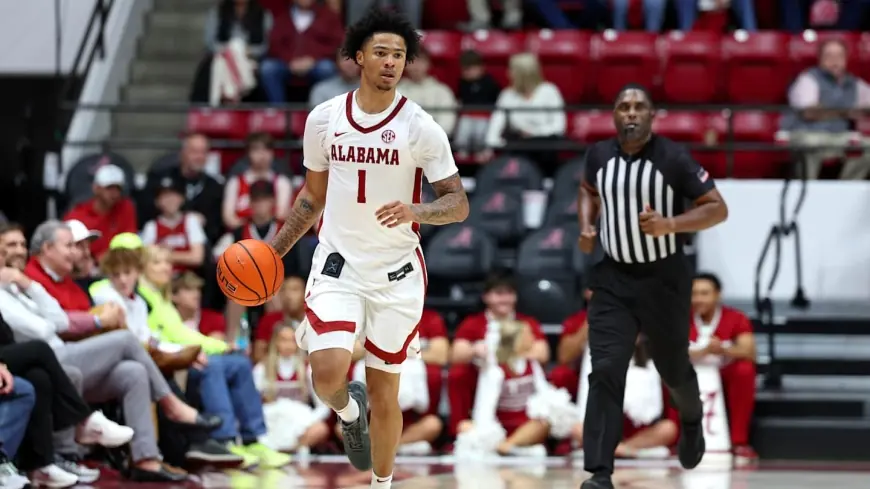
The rematch between Mississippi State and Alabama has prompted a specific defensive response from Alabama coach Nate Oats, who named sophomore guard Jalil Bethea as a likely matchup to shadow Bulldogs star Josh Hubbard. The decision matters because Hubbard is one of the SEC's top scorers and has shown the capacity for explosive outputs that can swing a game.
Ms State Vs Alabama matchup shifts as Oats praises Jalil Bethea
Oats highlighted Bethea’s attitude and work ethic on both his Monday night radio show and during a Tuesday press conference, pointing to the sophomore as a prime candidate to guard Hubbard. He noted Bethea missed many offseason reps but has been improving, playing hard in practice and staying focused on the scouting report. Those factors have led Oats to say Bethea could see increased playing time, with the coach expecting more minutes for the little-used transfer guard in the immediate game plan.
The cause is straightforward: Hubbard’s scoring makes him the central threat. Oats connected Bethea’s size and length to a potential advantage in trying to slow Hubbard, framing the personnel change as a direct defensive countermeasure meant to reduce Hubbard’s effectiveness on the perimeter and in one-on-one situations.
Josh Hubbard’s scoring runs force Alabama adjustments
Hubbard’s statistical footprint has driven the urgency behind Alabama’s adjustment. He averages 22 points per game in conference play and is capable of both cold stretches and outbursts that alter outcomes. In State’s recent eight-point loss to South Carolina, Hubbard went 4-of-20 from the field, a performance that illustrated his volatility. By contrast, just a week earlier he produced a 46-point game against Auburn, including a 35-point first half that overwhelmed the opposition.
Those highs and lows are not new: in the previous meeting between these teams last month in Starkville, Hubbard scored 23 points even as Alabama secured a 15-point victory. A year earlier he poured in 38 points in Tuscaloosa, nearly engineering a road upset. The pattern of occasional massive scoring nights explains why Oats is altering rotations: limiting Hubbard’s opportunities or forcing him into lower-percentage situations is intended to blunt the primary mechanism through which Mississippi State can become dangerous.
Oats articulated the relationship between personnel and outcome plainly. By inserting Bethea, Alabama aims to create a defensive matchup that reduces Hubbard’s scoring efficiency. The effect Oats seeks is fewer easy looks for Hubbard, increased pressure on the ball, and an elevated chance that Hubbard has an off night like the 4-of-20 outing, rather than another 46-point eruption.
What makes this notable is how narrowly targeted the adjustment is. Rather than overhauling schemes, Oats is choosing a specific guard matchup and the possibility of increased minutes for a player who had been mostly on the bench. That micro-level tweak signals a belief that discrete personnel changes can meaningfully alter the game’s momentum against a pinpoint scorer.
For Mississippi State, the consequence is clear: its primary offensive engine draws focused attention, and the Bulldogs’ margin for error shrinks. For Alabama, the move tests Bethea’s readiness after missed offseason reps and gauges whether a single defensive assignment can reduce a player who has repeatedly swung outcomes with both 46- and 38-point performances.
As the teams meet again, the matchup will hinge on execution. If Bethea logs the expected increase in minutes and can use his size and length to disrupt Hubbard, Alabama may further limit the Bulldogs’ upside. If Hubbard finds ways to score through or around the adjustment, Mississippi State’s scoring volatility could once again decide the contest.